From Readiness to Momentum: Women Leading AI Change at INP-HB
What distinguishes the WLCA case in Cote d'Ivoire is not the scale of activity but its shape: a later start, followed by faster-than-expected expansion, carried primarily through French-language micro-certifications and digital platform delivery.
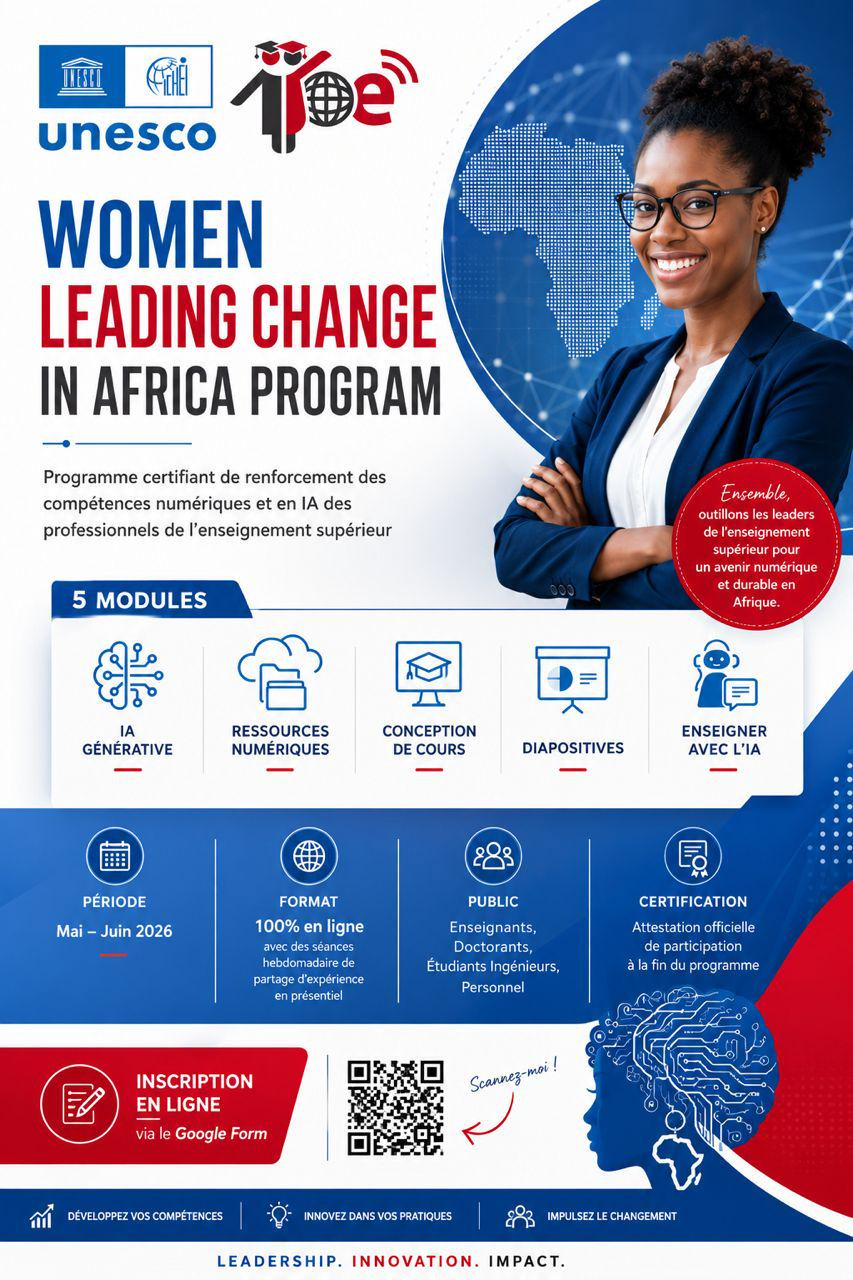
Poster for the Women Leading Change in Africa project at INP-HB
In June 2026, Women Leading Change in Africa project moved quickly from plan to practice at the National Polytechnic Institute Félix Houphouët-Boigny (INP-HB) in Côte d'Ivoire. Built around generative AI, digital educational resources, course design, digital presentations, and AI-assisted teaching, the French-language micro-certifications training extended beyond INP-HB itself to reach Université Félix Houphouët-Boigny (UFHB), the country's top-ranked university. The speed with which demand formed said as much about the readiness of Ivorian higher education for AI capacity-building as it did about the programme itself.
Anchoring Women's Leadership in a Digitalising Institution
How does a women's leadership initiative take root inside an institution that is already transforming itself digitally?
INP-HB at a Glance
At INP-HB, the answer lies less in a standalone training programme than in timing. Côte d'Ivoire's National AI Strategy 2030, a 10,000 m² national data centre, five active FabLabs, and master's programmes in data science and AI developed with partners including École Polytechnique and ENSEA all point to an institution already mid-transformation — one where digital and AI certification is becoming a formal requirement for CAMES 2027 academic promotion applications.
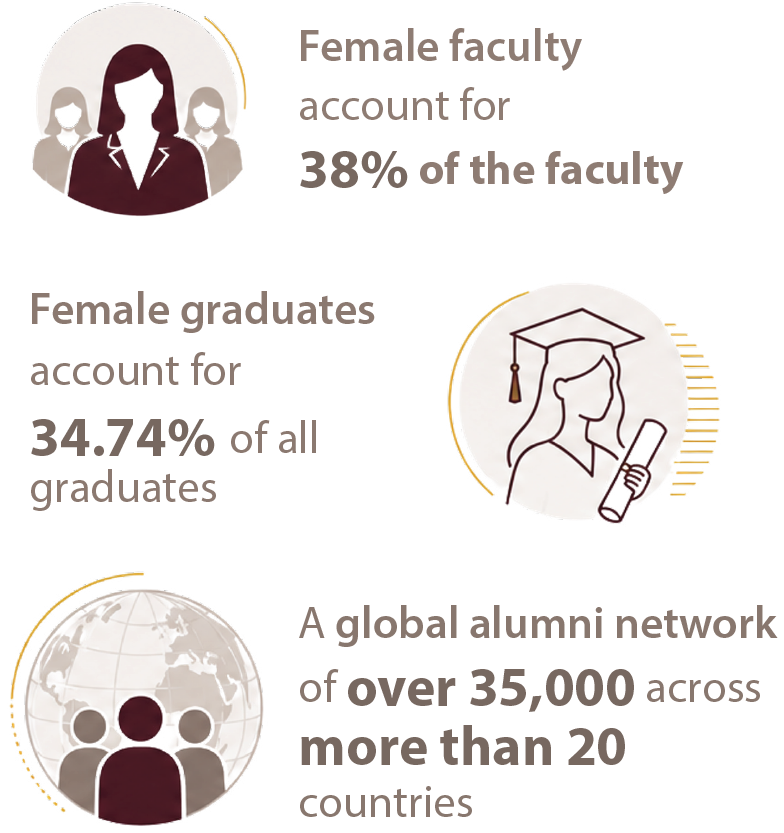
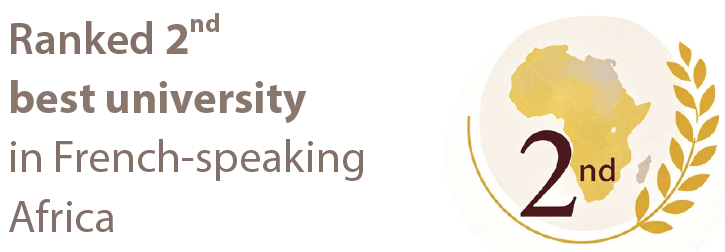
WLCA enters this landscape not as an isolated intervention, but as one further step in that transformation: a door opened specifically for women within a digital ecosystem INPHB was already building. Prof. Georges Loum, Deputy Director-General of INP-HB shared that ranked second among French-speaking African universities, with 7,317 students (34.74% women) and 403 faculty members (28% women) across strong programmes in AI, data science, and cybersecurity, INP-HB had already partnered with industry, international universities, and UNESCOICHEI before the project began, and had set a target of reaching 1,500 participants through the WLCA project, a figure the training has since surpassed. This builds on UNESCO-ICHEI's earlier Francophone Africa AI capacity-building work, which had already brought together 172 higher education professionals from 20 universities across 10 French-speaking countries, which is an evidence of a sustained regional demand for AI education resources in French.
For INP-HB, the project marks a new phase in that ongoing collaboration: a shift from general faculty digital development towards capacitybuilding that is explicitly gender-responsive.
Read More
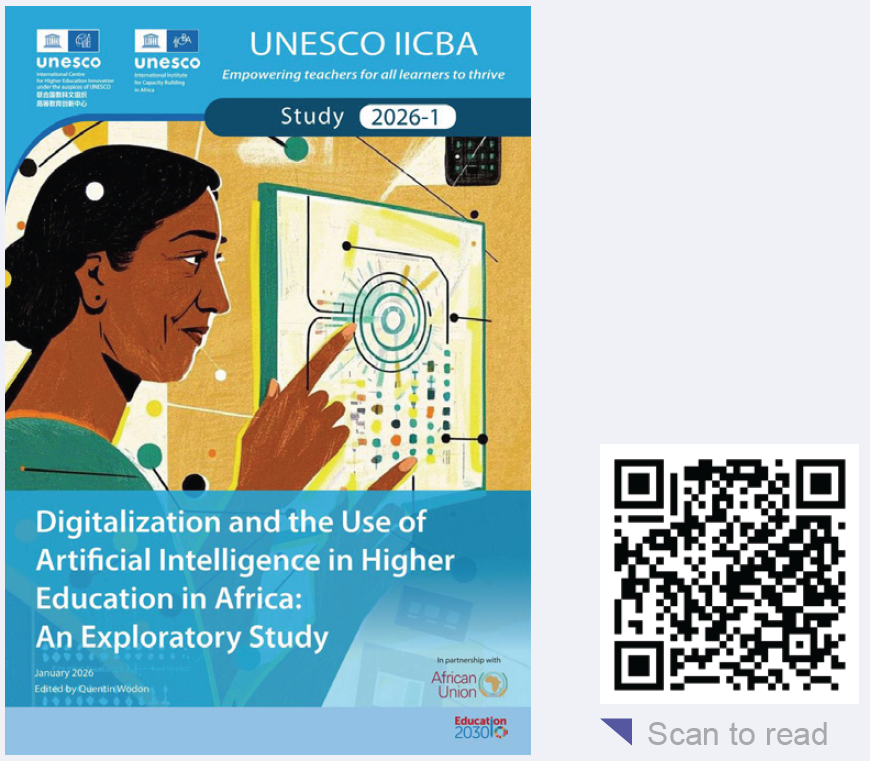
UNESCO-ICHEI in partnership with the UNESCO International Institute for Capacity Building in Africa (IICBA), conducted a joint survey and research study examining the state of digital transformation across higher education institutions in five sub- Saharan African regions (West, Central, East, Southern, and North Africa) alongside the key challenges shaping AI's integration into higher education systems.
Why Weeks, Not Months?
Rapid uptake rarely happens by accident. Three conditions converged at INP-HB.
The first was demand that already existed. Findings drawn from Digitalization and the Use of Artificial Intelligence in Higher Education in Africa: An Exploratory Study, point to funding and infrastructure as the most significant constraints on digitalisation, alongside limited student programming and coding skills and a broader shortage of AI specialists across the continent, while more than 90% of French-speaking respondents expressed a wish for guidance in using AI tools. Broad participation, in this sense, was less a surprise than a response to conditions already in place.
The second was a digital foundation already under construction. INP-HB's existing programme offerings, its AI and data science research base, its FabLab and digital infrastructure, its industry partnerships, its deployment of the IIOE platform, and the gradual incorporation of digital and AI certification into faculty development together meant that the WLCA project did not need to build capacity from zero. It only needed to open a door that was already within reach.
The third was a learning path designed to be modular, French-language, and sustainable. Structured around five IIOE micro-certification modules, including Fundamentals of Generative AI in Higher Education, Obtain and Evaluate Digital Education Resources, Co-Design Engaging Courses with Generative AI, Design and Produce Presentation, and Teaching with AI: Practical Tips and Prompts. The programme met educators where their daily work already was, rather than opening with an abstract case for women's leadership. Capacity, networks, and leadership space were left to form gradually, from there. The original design paired online learning with in-person feedback sessions, assessment, micro-certification, and experience-sharing, with a legal and ethical framework for AI use in Ivorian higher education planned for discussion as the project draws to a close, allowing the programme to move naturally from technical skills, to classroom practice, to questions of ethics and governance. move naturally from technical skills, to classroom practice, to questions of ethics and governance.
By the Numbers
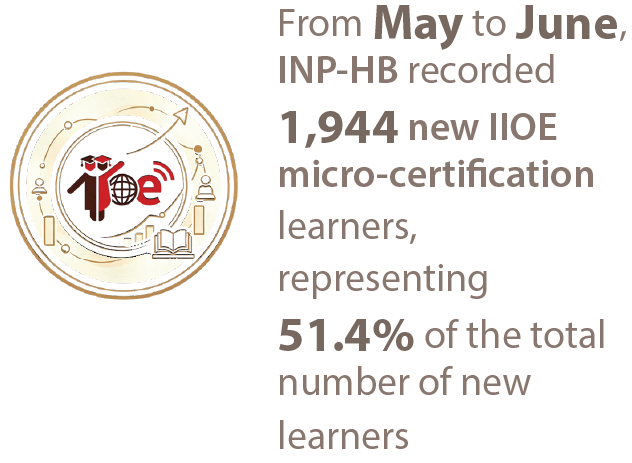
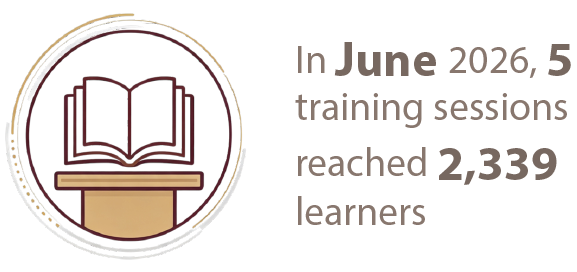
Across five training sessions in June 2026, spanning INP-HB and UFHB, the programme reached 2,339 learners (by June 2026). Over the same May–June window, IIOE platform registrations across all participating institutions rose by 1,352 accounts, of which 393, or roughly 30%, came from INP-HB alone (the highest share of any institution on the platform). Micro-certification courses enrolment grew by 3,779 learners platform-wide, with 1,944 of them, again the largest share of any single institution coming from INP-HB.
An Approach in Its Own Right
The WLCA project at INP-HB designed around women's digital capacity and leadership found its momentum by first entering through the wider gateway of institutional capacity-building. Looking ahead, an October workshop on legal and ethical frameworks is planned, alongside the formation of working groups bringing together teachers from INP-HB and other Ivorian universities — the next stage in translating rapid uptake into lasting practice.

- From Readiness to Momentum: Women Leading AI Change at INP-HB
- Makerere's Leadership Experience: Initiatives, Barriers and AI Hopes for the Future
- Bridging the Divide: Empowering Ghanaian Female Educational Leaders in the Intelligence Era
- Building Women's Leadership through Learning, Networks and Partnerships: The UCA Experience
- Mulungushi University: Zambia's Journey Towards Inclusive AI Leadership in Higher Education
- Ahmadu Bello University: Building Women's Confidence in AI Through Practical Learning and Community
- Featuring Ethiopia's Experience in Advancing Women's Leadership in Higher Education Institutions
- From Access to Agency: Ain Shams University Advances Women's Digital Leadership