Mulungushi University: Zambia's Journey Towards Inclusive AI Leadership in Higher Education
Meaningful digital transformation begins with people. The IIOE Zambia National Centre shows when universities collaborate, invest in women's leadership and create opportunities for continuous learning, AI becomes more than a technological innovation.
In Zambia, the journey of the Women Leading Change in Africa project was launched on 6 March 2026 when educators, university leaders, policymakers and development partners gathered in Livingstone, Zambia. Officiated by Zambia's Minister of Education, Honourable Douglas Syakalima, MP, the event brought together 50 participants for leadership dialogues, practical Generative AI sessions and discussions on the future of women in higher education.
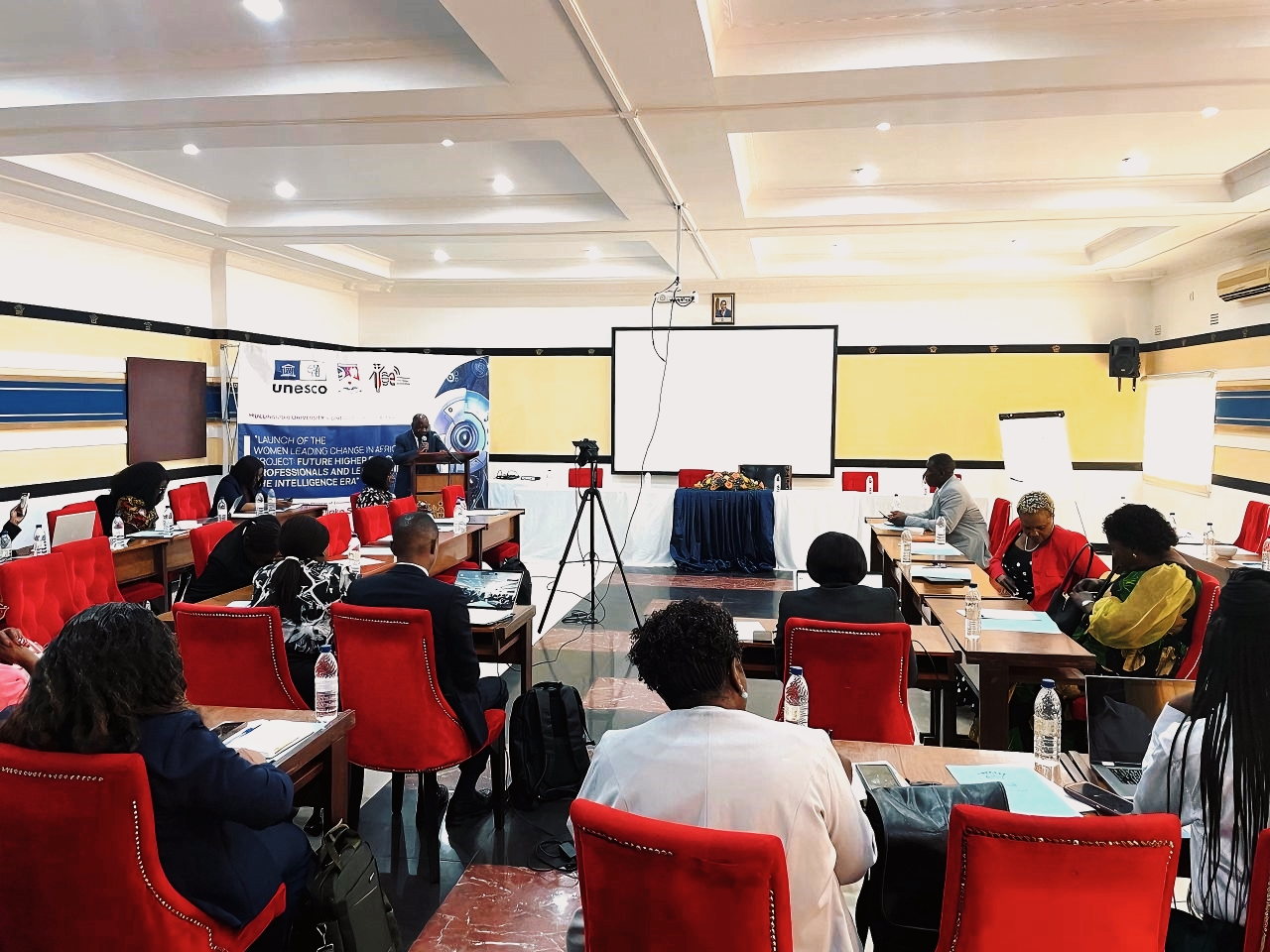
The Women Leading Change in Africa project was launched on 6 March 2026 in Livingstone, Zambia (© Mulungushi University)
Targeted Mobilisation, Broader Access, Practical Relevance
The network of WLCA project builds on the work of the IIOE Zambia National Centre, hosted by Mulungushi University. Before extending its activities across institutions, the Centre had already begun strengthening digital capacity among educators, administrators and university leaders. In May 2025, Mulungushi University and UNESCO-ICHEI convened representatives from eight Zambian HEIs for AI training and formal cooperation through the National Centre. Mulungushi University later became the 2026 IIOE Rotating Presidency Unit, identifying women's professional development and institutional collaboration among its priorities.
Behind women's strong participation across the network sat a set of deliberate choices. The University of Zambia created a dedicated women-focused stream, while regional outreach encouraged partner institutions to nominate senior women in academic, management and leadership positions. Others widened who counted as an AI learner in the first place, as training was never reserved for computer scientists or technical staff, but reached lecturers, administrators, senior managers, support staff and technical educators alike, opening a door for women whose roles had never been labelled "technical," even as AI increasingly shapes their work. And where training worked best, it stayed close to the ground: the implementation report found stronger uptake wherever AI was tied directly to institutional work (teaching, curriculum design, administration, governance, service delivery), rather than presented as an abstract subject.
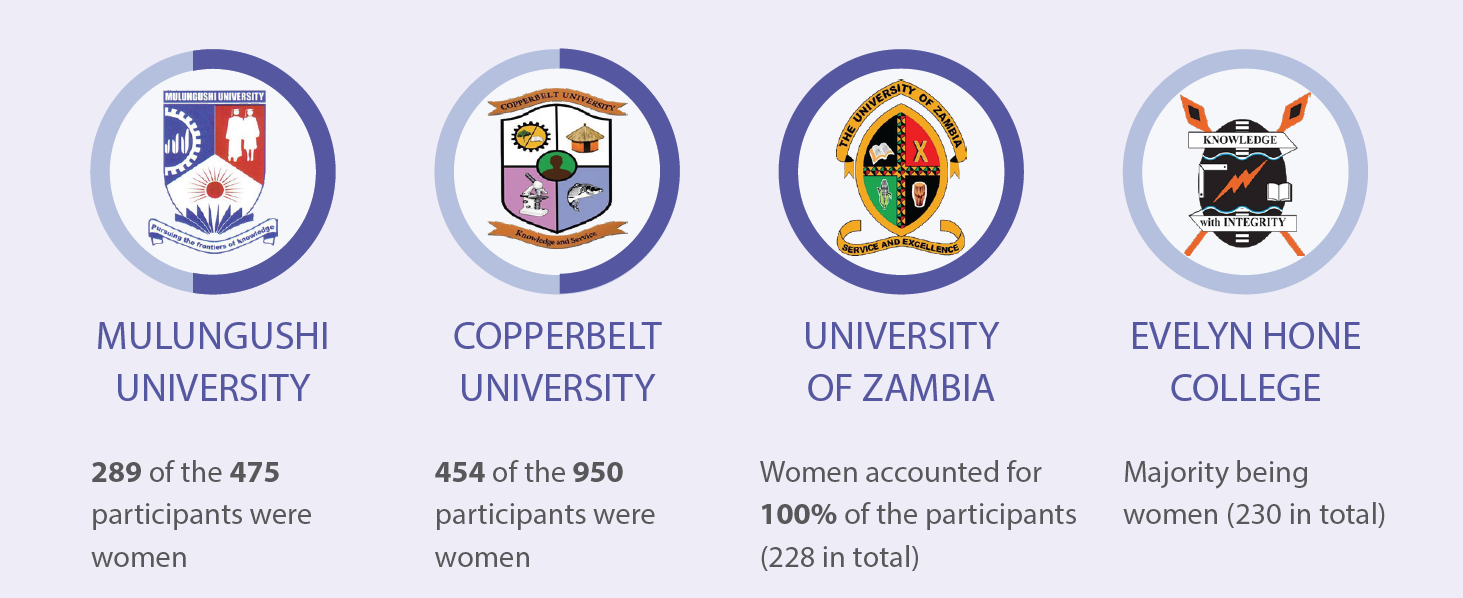
The launch signalled a shared commitment to ensuring that women are not only participants in digital transformation but also leaders who influence how AI is developed, governed and applied within higher education.
The project has since grown into a collaborative national network connecting 18 universities and colleges in Zambia and the region. Through this partnership, universities have shared experiences, exchanged good practices and worked together to strengthen digital and AI competencies among higher education professionals. Today, the project has reached more than 1,653 verified participants, including at least 971 verified women, demonstrating the value of collaboration in building institutional capacity and expanding opportunities for women across Zambia's higher education sector.
Creating an environment where women can lead has been central to every stage of the programme. Rather than focusing only on technology, learning activities combined practical AI skills with leadership development, ethical decision-making, collaboration and innovation. Participants explored how Generative AI can strengthen teaching, research, curriculum design and institutional management while recognising that transformative leadership depends equally on vision, empathy, inclusion and responsible governance. This reflects the programme's belief that AI should empower people rather than replace them.
Women also played visible roles as speakers, facilitators and mentors throughout the project, demonstrating that diverse leadership strengthens innovation and helps create more inclusive approaches to AI. Their experiences encouraged participants to see leadership not simply as holding positions of authority, but as the ability to inspire change, build partnerships and support others to succeed.
The momentum generated during the launch continued through the Women Leading Change in Africa Webinar Series. The inaugural webinar attracted 143 registered participants, bringing together academics, researchers, university leaders, students and development partners to exchange experiences on AI, ethical leadership and digital transformation. Participants valued the opportunity to learn from international and local experts while discussing practical approaches to strengthening women's leadership in higher education. The webinar reinforced the importance of continued capacity building through mentorship, micro-certification, institutional collaboration and responsible AI policies.
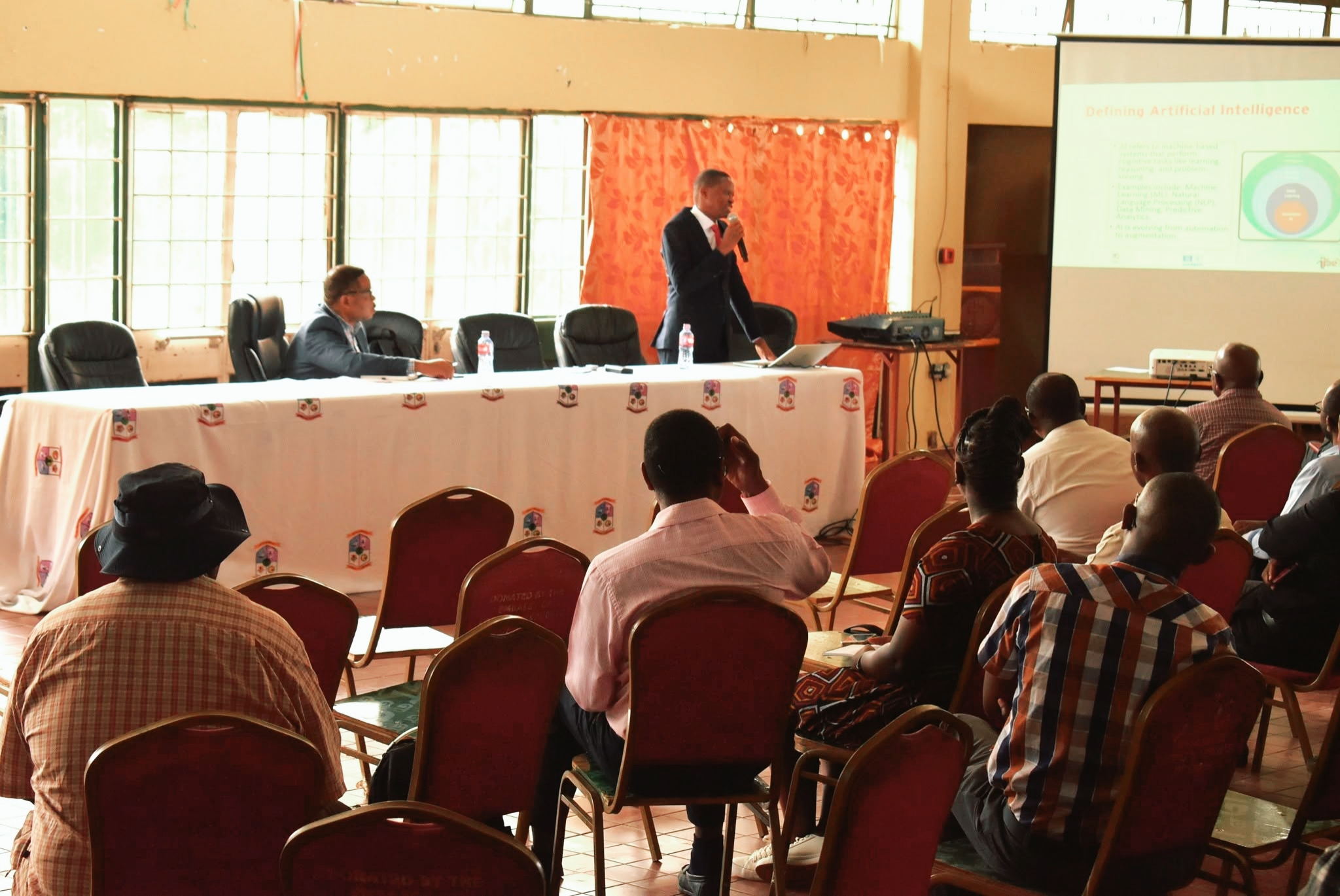
The IIOE Zambia National Centre facilitates AI training for academic and administrative staff at the Copperbelt University (© The Copperbelt University)
-
Dr. Brian HalubanzaAthor
Director, IIOE Zambia National Centre

- From Readiness to Momentum: Women Leading AI Change at INP-HB
- Makerere's Leadership Experience: Initiatives, Barriers and AI Hopes for the Future
- Bridging the Divide: Empowering Ghanaian Female Educational Leaders in the Intelligence Era
- Building Women's Leadership through Learning, Networks and Partnerships: The UCA Experience
- Mulungushi University: Zambia's Journey Towards Inclusive AI Leadership in Higher Education
- Ahmadu Bello University: Building Women's Confidence in AI Through Practical Learning and Community
- Featuring Ethiopia's Experience in Advancing Women's Leadership in Higher Education Institutions
- From Access to Agency: Ain Shams University Advances Women's Digital Leadership