From Access to Agency: Ain Shams University Advances Women's Digital Leadership
At Ain Shams University, an initiative is connecting AI learning with practice, women-led innovation, public recognition and academic promotion.
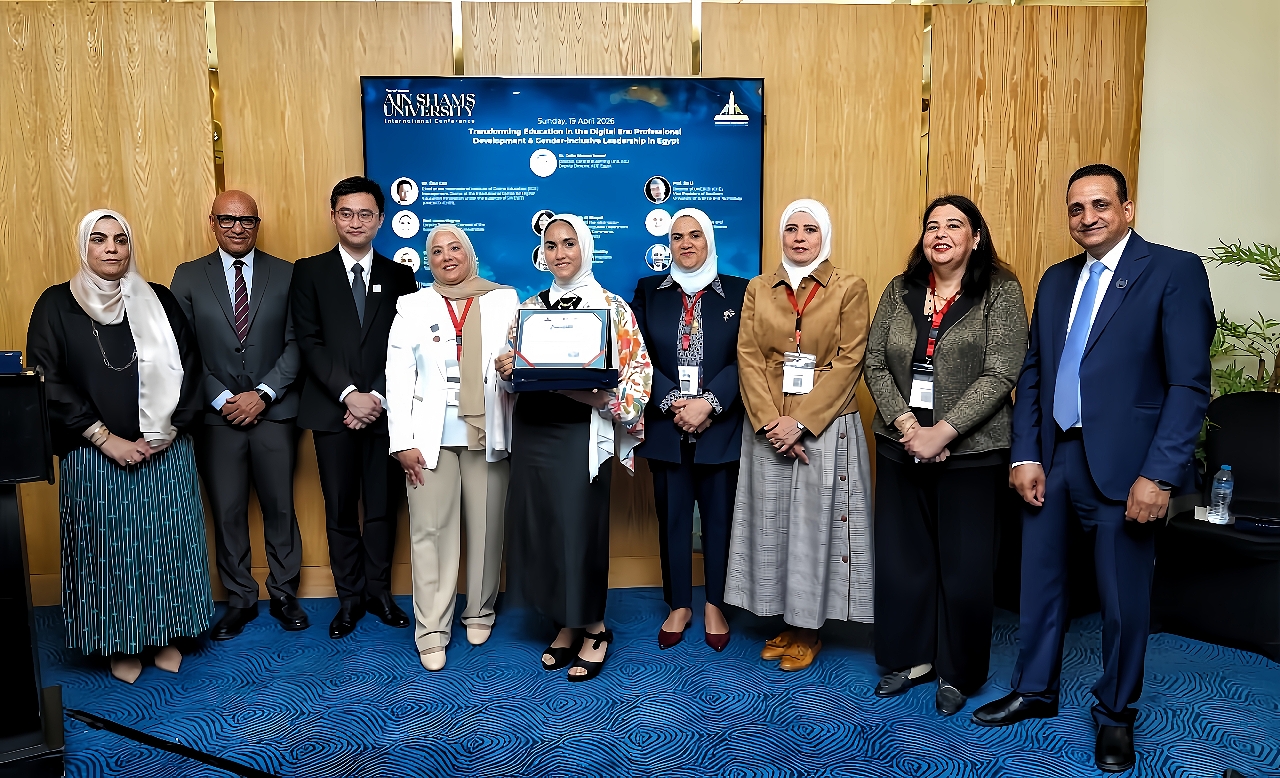
"She Leads" award ceremony was held on 19 April 2026 (© Ain Shams University)
On 19 April 2026, at the IIOE Egypt session of the Ain Shams University (ASU) International Conference, three women academics took the stage.
Prof. Enjy Abouzeid Mohammed of Suez Canal University and Prof. Fatima Elzahraa Abd-Elraheem of Alexandria University won the Teaching Innovation category of the "She Leads: Digital Education Excellence Award." Prof. Eman Mohamed Mohamed of Ain Shams University won in Research Empowerment. Before an audience of educators, university leaders, policymakers and technology partners, their work offered clear examples of how women academics in Egypt are using AI to improve teaching and research. For the Women Leading Change in Africa (WLCA) project, their recognition marked a meaningful milestone.
Behind that moment was a wider effort led by the IIOE Egypt National Centre — a connected pathway bringing together training, practical application, professional recognition, public visibility and institutional support.
Opening a Broad Door
The first link in that chain is a learning mechanism capable of operating at scale. By early 2026, more than 4,000 participants in Egypt had enrolled through the IIOE platform's micro-certification programmes; over 2,300 had completed one. Women accounted for 66% of certified participants, which is well above the project's original target.
The network now reaches 25 Egyptian public universities, giving the initiative a foundation beyond any single campus.
Moving to Practice
To deepen the transition from knowledge to application, the National Centre organised an intensive, hands-on programme titled The AI Educator's Toolkit: Transforming Your Teaching Practice. 336 academics applied for thirty places, selected for a balance of gender, institution and discipline. Participants learnt to use AI “across the full teaching cycle.”
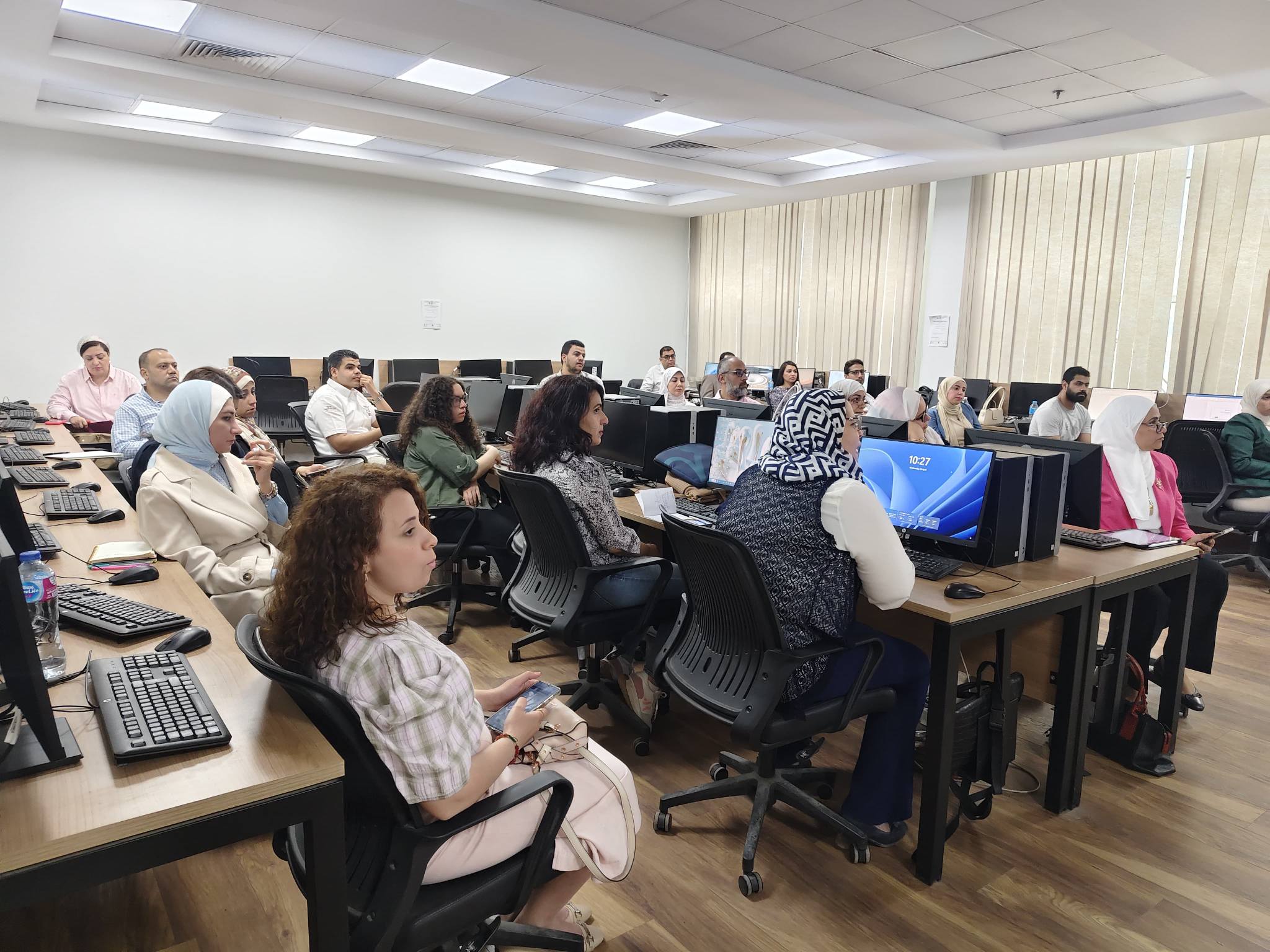
Hands-on practical training, The AI Educator's Toolkit: Transforming Your Teaching Practice, in April 2026 (© Ain Shams University)
Participants practised prompt engineering, generated lesson plans and instructional content, explored tools for differentiating materials according to students' learning needs, and compared platforms such as DeepSeek, ChatGPT, Copilot and Magic School AI. They developed course-specific tutoring chatbots that could answer questions and guide students using designated course materials. They also designed multiple-choice questions, essays, case studies and assessment rubrics aligned with Bloom's Taxonomy.
" Access can be counted. Agency is seen in what women are able to create, influence and change. "
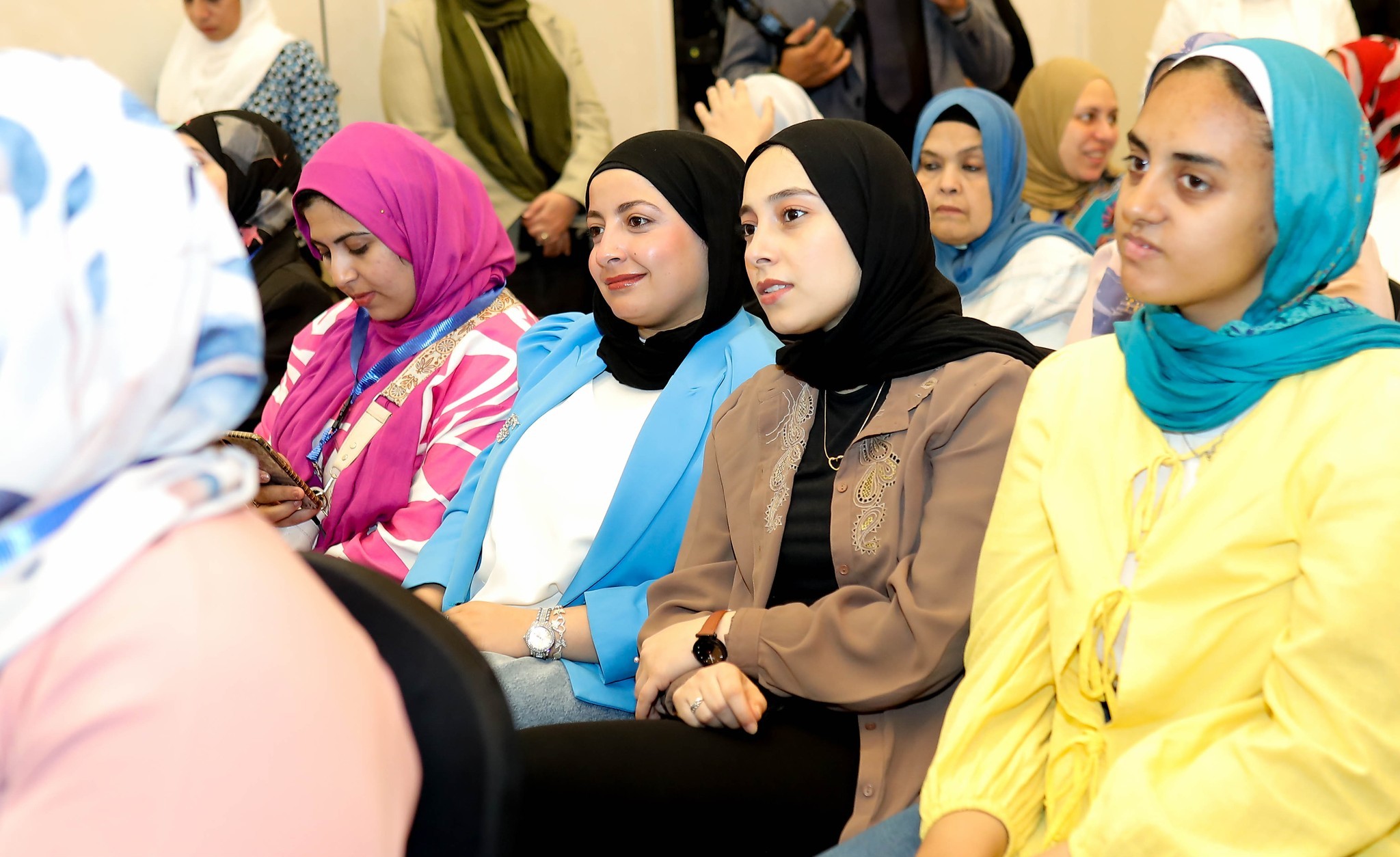
Participants at the Third Annual Conference of the Measurement and Evaluation Scientific Association, on 14 May 2025 (© Ain Shams University)
Making the Invisible Visible
The "She Leads: Digital Education Excellence Award 2026" was open to women academic and professional staff across Egypt, built to surface work already underway: women using AI and digital tools to innovate in teaching and research. It drew 28 submissions, 15 in Teaching Innovation and 13 in Research Empowerment.
The inclusion of a gender perspective signalled that inclusive design was part of innovation, not an optional extra.
The winners received a cash prize of EGP 15,000, an official certificate, gifts from the project partners and a Microsoft certification examination voucher. These forms of recognition created an incentive mechanism with both material and professional value. The cash award could support further development, while certification and industry-linked opportunities strengthened the visibility and professional standing of the winners.
Awards alone cannot create women leaders, but help address a persistent problem: valuable work often remains invisible when it takes place within an individual classroom, research group or department. By creating a national platform specifically for women educators, the award gave such work a route into wider professional recognition.
Beyond the Campus
The ASU initiative has also involved actors beyond universities. Praxilabs and Qorrect backed "She Leads"; Microsoft supplied certification vouchers; technology-sector experts joined the wider policy dialogue. The Ministry of Higher Education and Scientific Research and the Supreme Council of Universities lent formal backing, with a senior Council representative sitting on the judging panel itself.
Together, these partners gave promising ideas more than one route. Universities provide the institutional environments in which new practices can be tested. Technology companies contribute tools, specialist knowledge and links to professional certification. International organisations connect local activity with global experience. Government and sector-level bodies help align individual initiatives with broader priorities for higher education.
Entering the Promotion System
The clearest sign of institutionalisation sits at Ain Shams University itself. In August 2025, the university introduced seven training programmes on the application of AI in education and learning through the IIOE platform. Academic staff seeking promotion are required to complete at least one of these courses. A guidance page has been created for academic staff, supported by experts who evaluate course assignments and by administrative and technical teams responsible for reviewing, accrediting and issuing certificates. When professional learning depends only on project funding or individual enthusiasm, participation may decline once an initiative ends. When the same learning is connected to the formal professional development and promotion system, it acquires a different status. It becomes part of what the institution expects, supports and recognises.
For women academics, such recognition is particularly important. It places newly acquired digital capability within a structure that can influence professional progression. This is the point at which capacity building begins to move beyond individual change. It starts to alter the environment in which academic careers develop.
Learning provides broad access, online courses and micro-certification, with women certified. Practice lets academics move past introductory knowledge and apply AI across the full teaching cycle. Incentive, embodied in "She Leads," turns knowledge into original work, backed by prizes, certification, opportunity. Display carries that work into public and international view, where ideas get discussed and partnered. And institutional recognition (AI training folded into promotion) gives it all a chance to outlast the project itself.

- From Readiness to Momentum: Women Leading AI Change at INP-HB
- Makerere's Leadership Experience: Initiatives, Barriers and AI Hopes for the Future
- Bridging the Divide: Empowering Ghanaian Female Educational Leaders in the Intelligence Era
- Building Women's Leadership through Learning, Networks and Partnerships: The UCA Experience
- Mulungushi University: Zambia's Journey Towards Inclusive AI Leadership in Higher Education
- Ahmadu Bello University: Building Women's Confidence in AI Through Practical Learning and Community
- Featuring Ethiopia's Experience in Advancing Women's Leadership in Higher Education Institutions
- From Access to Agency: Ain Shams University Advances Women's Digital Leadership