Ahmadu Bello University: Building Women's Confidence in AI Through Practical Learning and Community
At Ahmadu Bello University, a women-led team of the IIOE Nigeria National Centre is turning apprehension about AI into confidence, competence, and community; showing how leadership, learning communities, and hands-on training can widen women's participation in digital higher education.
The Women Leading Change in Africa project in Nigeria, implemented by the IIOE Nigeria National Centre at Ahmadu Bello University (ABU) with the support of UNESCO-ICHEI, was established to strengthen digital and AI competencies among women in higher education while promoting gender-inclusive leadership. Between March and July 2026 alone, it supported 251 successful IIOE micro-certification course completions (149 by women and 102 by men) through awareness campaigns, hands-on training, online micro-certification, mentoring, and peer learning. Although the initiative centres on women, participation has remained open to all, creating an inclusive space where knowledge is shared across disciplines.
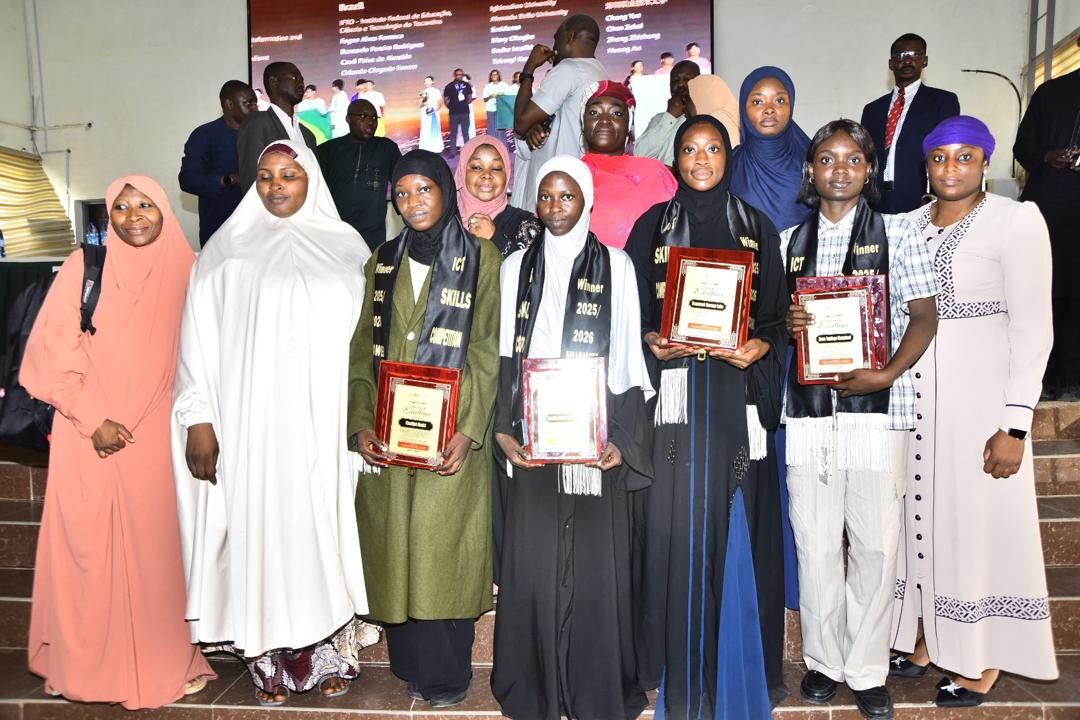
In July 2026, the Women Leading Change in Africa project and the IIOE Nigeria National Centre hosted a reception celebrating four female students who won the Grand Prize at the Huawei ICT Competition Global Final in China (© Ahmadu Bello University)
A Women-Led Team Shaping the Programme
The WLCA project is coordinated by a team of women academics and professionals who bring both technical expertise and a clear understanding of the reality women face in higher education. That perspective shaped every design decision, the timing of activities, publicity strategies, and the balance of support, while coordinating a national project alongside teaching, research, administration, and family commitments demanded careful planning and flexibility.
Leading as women also changed how participants engaged. Many who had viewed AI as intimidating or male-dominated grew more confident after learning from women who were themselves facilitating the training and demonstrating AI in practice. The team became visible role models, and the programme became living proof that women can contribute meaningfully to AI, digital innovation, and leadership.
A Learning Community that Sustains Engagement
Engagement continued well beyond each training session through a dedicated WhatsApp learning community. Rather than a noticeboard, it functions as an active community of practice; sharing course information and registration guidance, announcing webinars, answering questions, sending reminders, celebrating completed certificates, and encouraging members throughout their learning journey.
Early exposure to the IIOE platform, through introductory webinars and hands-on orientation, helped participants master registration, navigation, and certificate acquisition before starting their courses: lowering barriers and building confidence. Regular online sessions on AI for research and data analysis, AI policy, and academic integrity kept interest alive between courses, while peer support turned individual study into shared momentum.
Read More
The WLCA project formed part of the IIOE Nigeria National Centre's continuing efforts to advance a consensus-driven approach to digital transformation. Issue 14 of CLOUD features an article led by the National Centre's Director, Professor Muhammed Bashir Mu'azu, and co-authored with colleagues from the National Centre. It offers a fuller account of how dialogue, capacity-building, micro-certification and localised practice have been brought together to shape an AIready academic future in Nigeria.

Scan to read
What Participants Tell Us
Participants consistently describe the training as practical, relevant, and easy to follow. They value tools they can apply immediately such as ChatGPT, Google Workspace, NotebookLM, Litmaps, Calendly, and Notion AI; with the NotebookLM session, on generating lecture content and explainer videos, among the most popular. Many returned for one-on-one guidance on using these tools in their own classrooms, in assessment design, and in research supervision.
Motivation was the greatest early challenge: many were unfamiliar with microcertification, so the team added orientation sessions, platform demonstrations, and followup webinars. Constructive feedback, such as occasional difficulty downloading certificates, was resolved through mentor support and fed back into delivery.
"A workshop can open a door. A community helps people keep walking. "
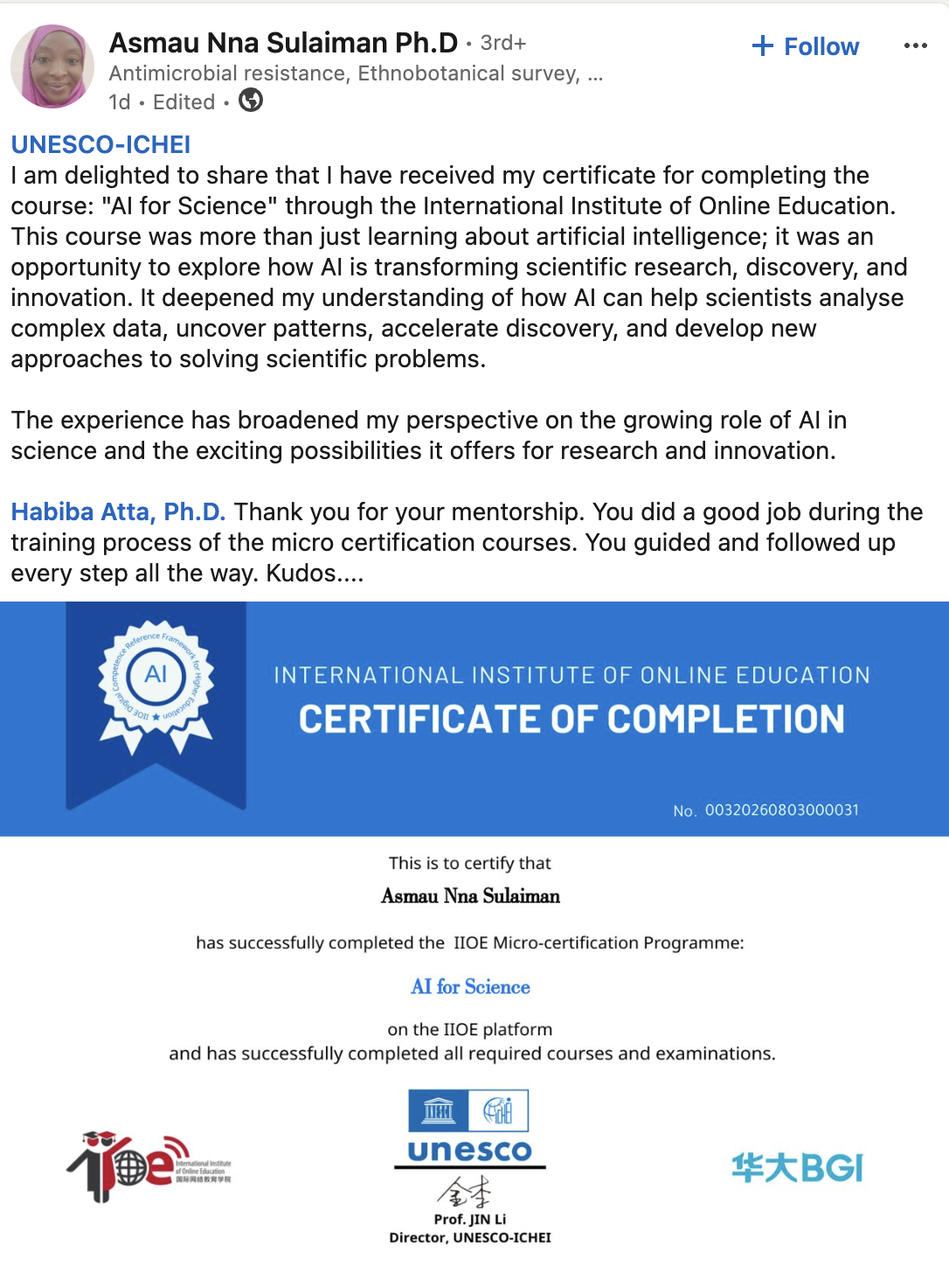
One participant shares her feedback on IIOE courses on LinkedIn (© LinkedIn)
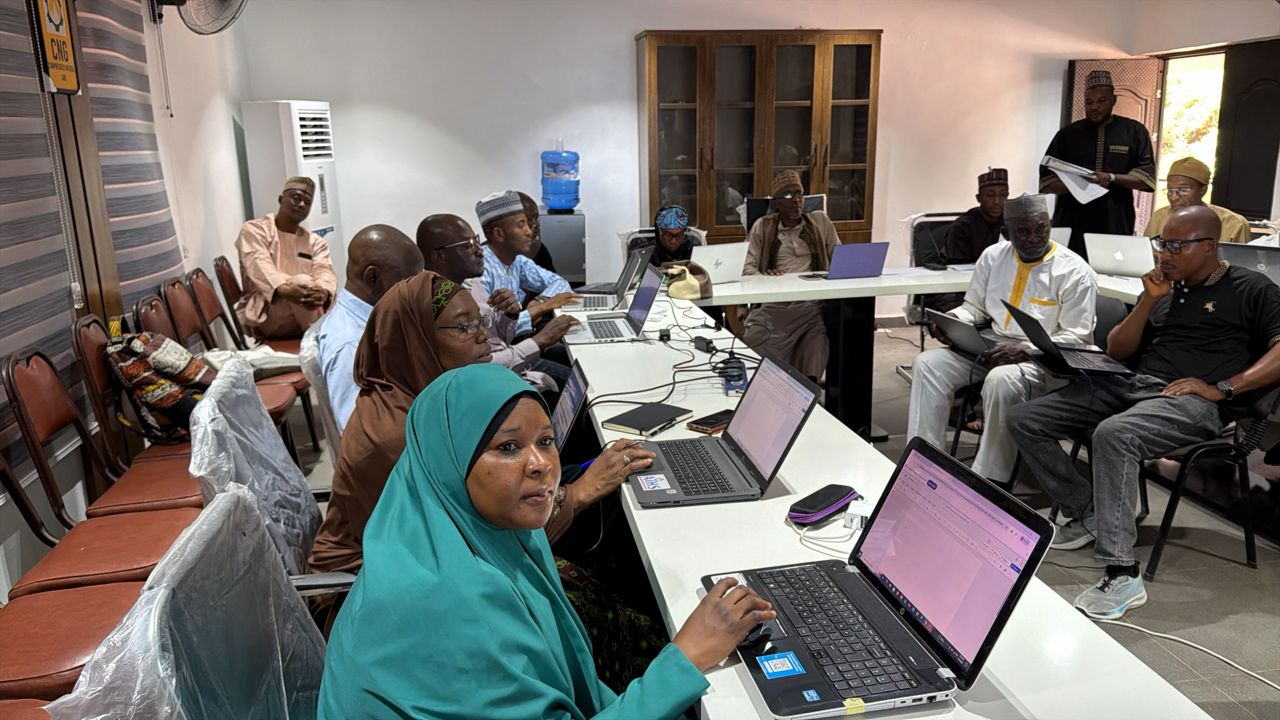
The IIOE Nigeria National Centre conducted digital capacity-building training for the Department of Political Science in March 2026 (© Ahmadu Bello University)
Participation in Motion
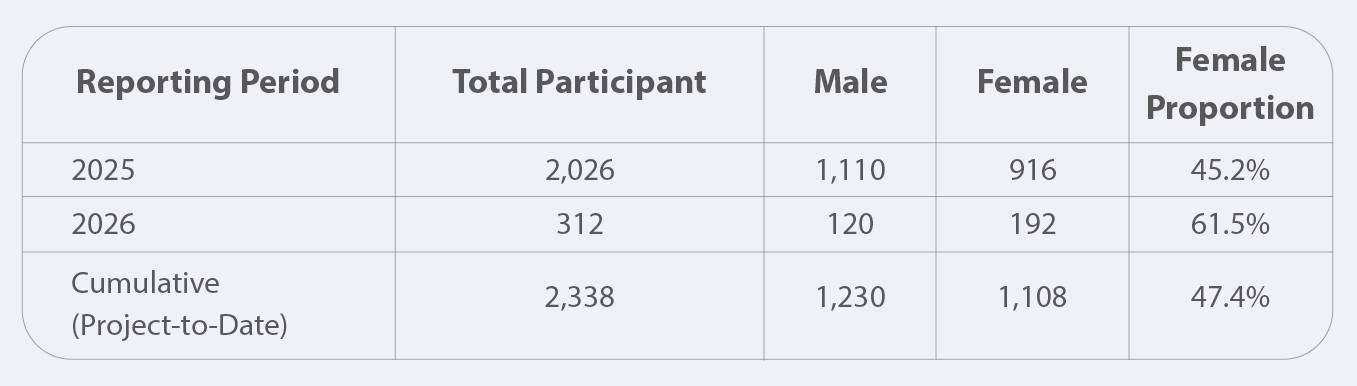
The participation figures also tell a more complicated story.
In 2025, women represented 45.2% of those reached through the project. In the consolidated figures for 2026 activities, their share rose to 61.5%. Across the project to date, 2,338 participants have been recorded, including 1,108 women, or 47.4%.
The project's response has been gradual rather than fixed from the outset. More focused activities, such as platform onboarding and women-centred mobilisation, have begun to produce a different balance. ABU's experience therefore offers a dynamic version of participation by design: not a model that was perfect at the beginning, but one that is learning from its own data and adjusting as it proceeds.
-
Ramatu UmahabaAthor
Ahmadu Bello University
-
Fidelia WhongAthor
Ahmadu Bello University
-
Nafisa Shehu UsmanAthor
Ahmadu Bello University
-
Rahila YakubuAthor
Ahmadu Bello University
-
Aisha AbdulkadirAthor
Ahmadu Bello University
-
Aminatu MakarfiAthor
Ahmadu Bello University
-
Binta ZakariAthor
Ahmadu Bello University
-
Habiba AttaAthor
Ahmadu Bello University
-
Basira YahayaAthor
Ahmadu Bello University

- From Readiness to Momentum: Women Leading AI Change at INP-HB
- Makerere's Leadership Experience: Initiatives, Barriers and AI Hopes for the Future
- Bridging the Divide: Empowering Ghanaian Female Educational Leaders in the Intelligence Era
- Building Women's Leadership through Learning, Networks and Partnerships: The UCA Experience
- Mulungushi University: Zambia's Journey Towards Inclusive AI Leadership in Higher Education
- Ahmadu Bello University: Building Women's Confidence in AI Through Practical Learning and Community
- Featuring Ethiopia's Experience in Advancing Women's Leadership in Higher Education Institutions
- From Access to Agency: Ain Shams University Advances Women's Digital Leadership