Bridging the Divide: Empowering Ghanaian Female Educational Leaders in the Intelligence Era
In joining WLCA, IEPA hopes to help Ghana's women educators move from adapting to digital transformation toward shaping it, and build the AI skills and institutional support to ease the barriers that have long held them back.
A well-known Ghanaian Adinkra symbol is Aya (the fern). The fern grows in the harshest, most unwelcoming corners of the forest floor, yet it endures, spreads, and thrives. Across Ghana, it has long stood as a symbol of resourcefulness and of independence. It is a fitting image for the work now about to unfold at the Institute for Educational Planning and Administration (IEPA).
As artificial intelligence reshapes classrooms, campuses, and education ministries around the world, the question of who gets to lead that transformation has never mattered more. IEPA, a UNESCO Category II Centre of Excellence hosted at the University of Cape Coast, has answered that question with a clear commitment: equity cannot be an afterthought in digital transformation. That commitment is what brought us into the Women Leading Change in Africa project, supported by UNESCO-ICHEI and IIOE.

Aya (the fern) © Freepik
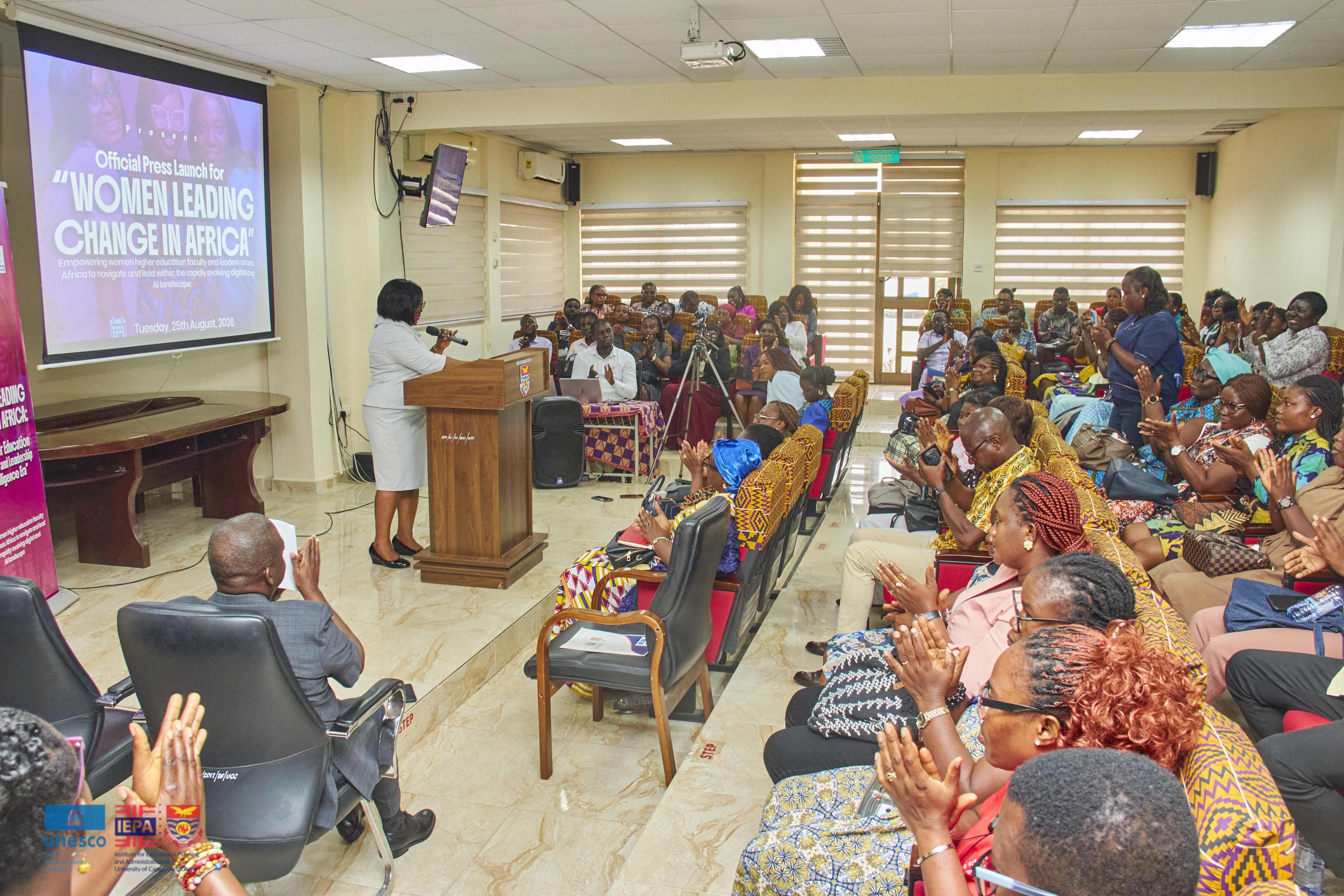
Launch workshop of the Women Leading Change in Africa project at University of Cape Coast in August 2026
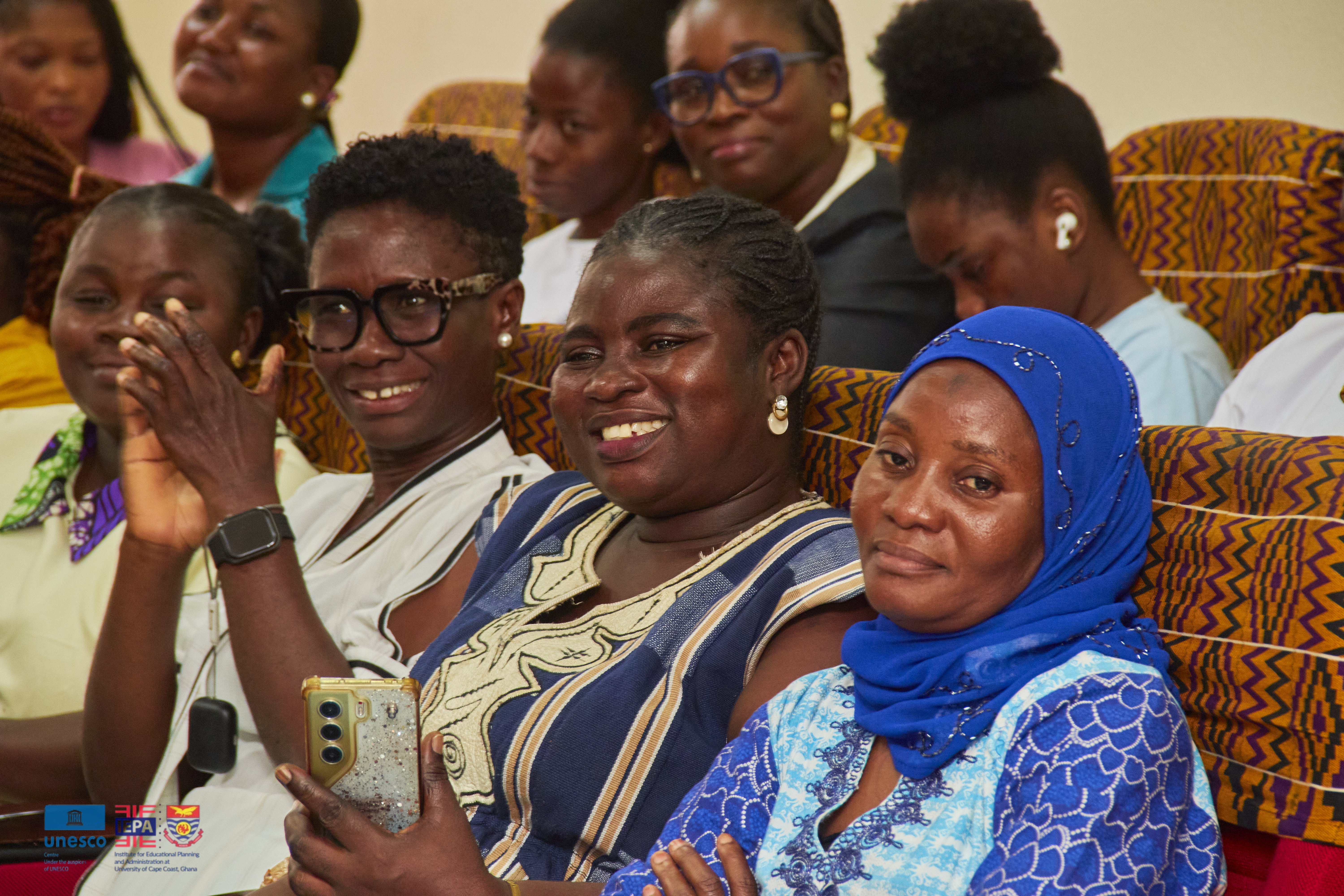
Participants at the projct launch workshop
The numbers tell a story Ghana already knows well. Enrolment at the basic level has moved encouragingly close to gender parity, but somewhere along the way, a leaky pipeline quietly drains women out of the leadership track.
Ambition isn't the problem; the barriers are structural. Women hold only 24% of tertiary academic positions across the region, and just 8% of full professorships in Ghana. Further down the pipeline, only 11% of rural headteachers are women. The talent is there. The system simply hasn't made room for it. Nationally, most administrators sense that AI is about to upend how they work, but only one in five feels equipped to actually lead that shift. Left unaddressed, these gaps risk pushing women further to the margins just as digital fluency becomes the price of admission to leadership.
IEPA is setting out to change that through the delivery of IIOE micro-certifications, hands-on workshops, and sustained policy engagement. The goal is to train 1,000 women digitally and deliver in-person leadership development to more than 100 female leaders every year. We're not asking Ghanaian women educators to simply keep pace with the intelligence era ; we want them steering it.
The model IEPA has built to deliver this joint initiative with UNESCO-ICHEI is rigorous online learning paired with support systems rooted in local reality; a technical hotline, WhatsApp and Telegram groups for real-time troubleshooting, and a network of regional peer local champions who understand the terrain because they live in it. Crucially, none of these stops at the individual level. It feeds directly into systemic reform, building toward a June 2027 Policy Dialogue aimed at securing formal recognition of digital micro-credentials within promotion criteria so that what women learn actually counts toward where they can go.
Like the fern that roots itself where the ground is hardest, this generation of Ghanaian women educators isn't waiting for easier conditions. They are growing through them and IEPA intends to make sure the system finally makes room for what they've already shown they can do.
-
Ama Serwah Nerquaye-TettehAthor
Institute for Educational Planning and Administration

- From Readiness to Momentum: Women Leading AI Change at INP-HB
- Makerere's Leadership Experience: Initiatives, Barriers and AI Hopes for the Future
- Bridging the Divide: Empowering Ghanaian Female Educational Leaders in the Intelligence Era
- Building Women's Leadership through Learning, Networks and Partnerships: The UCA Experience
- Mulungushi University: Zambia's Journey Towards Inclusive AI Leadership in Higher Education
- Ahmadu Bello University: Building Women's Confidence in AI Through Practical Learning and Community
- Featuring Ethiopia's Experience in Advancing Women's Leadership in Higher Education Institutions
- From Access to Agency: Ain Shams University Advances Women's Digital Leadership