Global Future Higher Education Summit Convenes in Shenzhen to Jointly Build a New Ecosystem for AI-Driven Industry-Academia Collaborative Talent Development
On 6 June 2026, the "Global Future Higher Education Summit: A New Ecosystem for AI-Driven Industry-Academia Collaborative Talent Development" was held at the Southern University of Science and Technology (SUSTech) Convention Center in Shenzhen, China. Jointly convened by the UNESCO Regional Office for East Asia (UNESCO Beijing), the UNESCO Institute for Information Technologies in Education (UNESCO IITE), SUSTech, and the International Centre for Higher Education Innovation under the auspices of UNESCO (UNESCO-ICHEI). Leaders, experts, and representatives from government authorities, international organisations, higher education institutions, and frontier technology enterprises gathered to explore how to restructure the connection between higher education and industry and to build a new ecosystem for talent development.
This summit brings together more than 200 participants from 32 countries and regions. They include leaders of international organizations such as UNESCO Future of Learning and Innovation Division, UNESCO Institute for Information Technologies in Education (UNESCO IITE), the Southeast Asian Ministers of Education Organization (SEAMEO), the Association of Arab Universities, the Arab League Educational, Cultural and Scientific Organization (ALECSO), the ASEAN University Network (AUN), and the Inter-University Council for East Africa (IUCEA); leaders of 14 universities including Universitas Terbuka (Indonesia), Mulungushi University (Zambia), University of Engineering and Technology, Lahore (Pakistan), Tashkent University of Information Technologies(Uzbekistan), Ahmadu Bello University (Nigeria), Ain Shams University (Egypt), Universiti Putra Malaysia (Malaysia) and Mongolian University of Science and Technology (Mongolia); representatives from leading enterprises such as Huawei, Tencent, Alibaba, BGI Group — gathering to explore a new ecosystem of industry-academia collaboration in the digital and intelligent age.
The Summit unveiled a series of key outcomes: UNESCO-ICHEI, in collaboration with UNESCO Headquarters, the UNESCO International Institute for Higher Education in Latin America and the Caribbean, and representatives of the UNESCO field offices, released the research report From Digitalisation to AI Empowerment – The Future of Higher Education across the Global South. The International Institute of Online Education (IIOE), in partnership with the China Association of Trade in Services, launched the "AI + Cross-Border E-Commerce" micro-certification programme; with BGI Group, launched the "AI + Life Sciences" micro-certification programme; and with Universiti Putra Malaysia, launched the "AI + Agricultural Technology" micro-certification programme. In coordination with IIOE National Centres, Training Centres, and other alliance members, UNESCO-ICHEI released the International Institute of Online Education (IIOE) Development Report (2019–2026). In partnership with the Association of Arab Universities and the Southeast Asian Ministers of Education Organization, UNESCO-ICHEI established the IIOE Arab Regional Centre and the IIOE Southeast Asia Regional Centre. UNESCO-ICHEI and IIOE alliance members jointly issued the Consensus of the IIOE Ecosystem Partners.
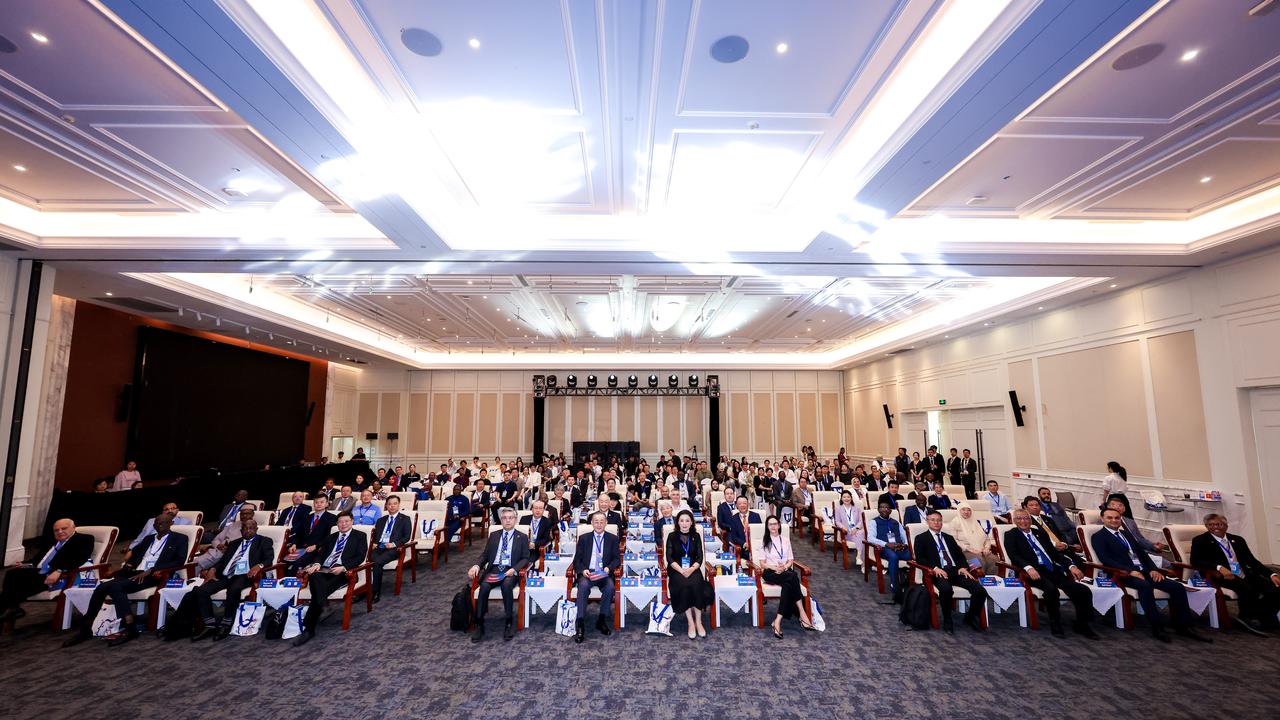
Group Photo
Opening Remarks
Dr. Shafika Isaacs, Director a.i., UNESCO Institute for Information Technologies in Education; Chief of Section for Technology and AI in Education, Future of Learning and Innovation Division, UNESCO, noted that higher education institutions(HEIs), international organizations and the AI ecosystem should lead consensus-making and create public good, mend the gaps in AI era to ensure equity and inclusion. Prof. JIANG Hong, Chairperson, Southern University of Science and Technology, presented SUSTech's exploration in AI and stressed that higher education in the intelligent era must embrace technological change while holding fast to its founding mission of nurturing people. She expressed the university's readiness to draw on SUSTech's experience in talent cultivation and industry-education integration to advance the digital and intelligent transformation of higher education together with all parties. Mr. QIN Changwei, Secretary-General, Secretariat of the National Commission of the People's Republic of China for UNESCO, called for advancing the development of higher education worldwide through pragmatic multilateral cooperation, oriented towards deepening industry-academia-research collaboration, deepening international cooperation, and building consensus on "guardrails" for AI applications. Prof. Shahbaz Khan, Director, UNESCO Regional Office for East Asia, stressed that AI should serve as an aid to humanity, that the human spirit and wisdom must always remain at its core, and that AI should be harnessed as a powerful means of reshaping higher education and innovation. Prof. JIN Li, Director, UNESCO-ICHEI; Vice President, Southern University of Science and Technology, noted that in the AI era, UNESCO-ICHEI stands ready to help build bridges between academia and industry through the IIOE ecosystem alliance, expressing the hope of unleashing new, future-oriented momentum through multilateral cooperation and pragmatic action in the years ahead.
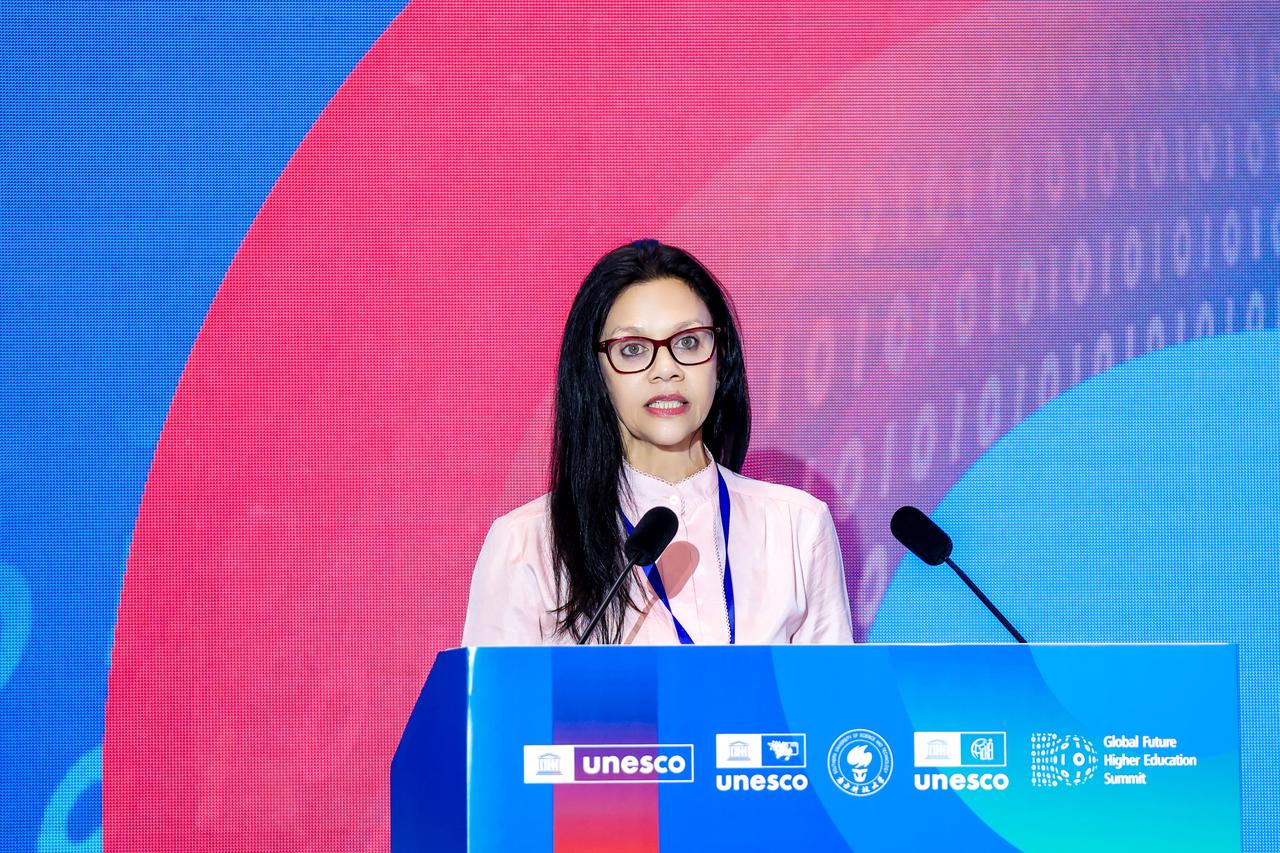
Dr. Shafika Isaacs Director a.i., UNESCO IITE; Chief of Section for Technology and AI in Education, Future of Learning and Innovation Division, UNESCO
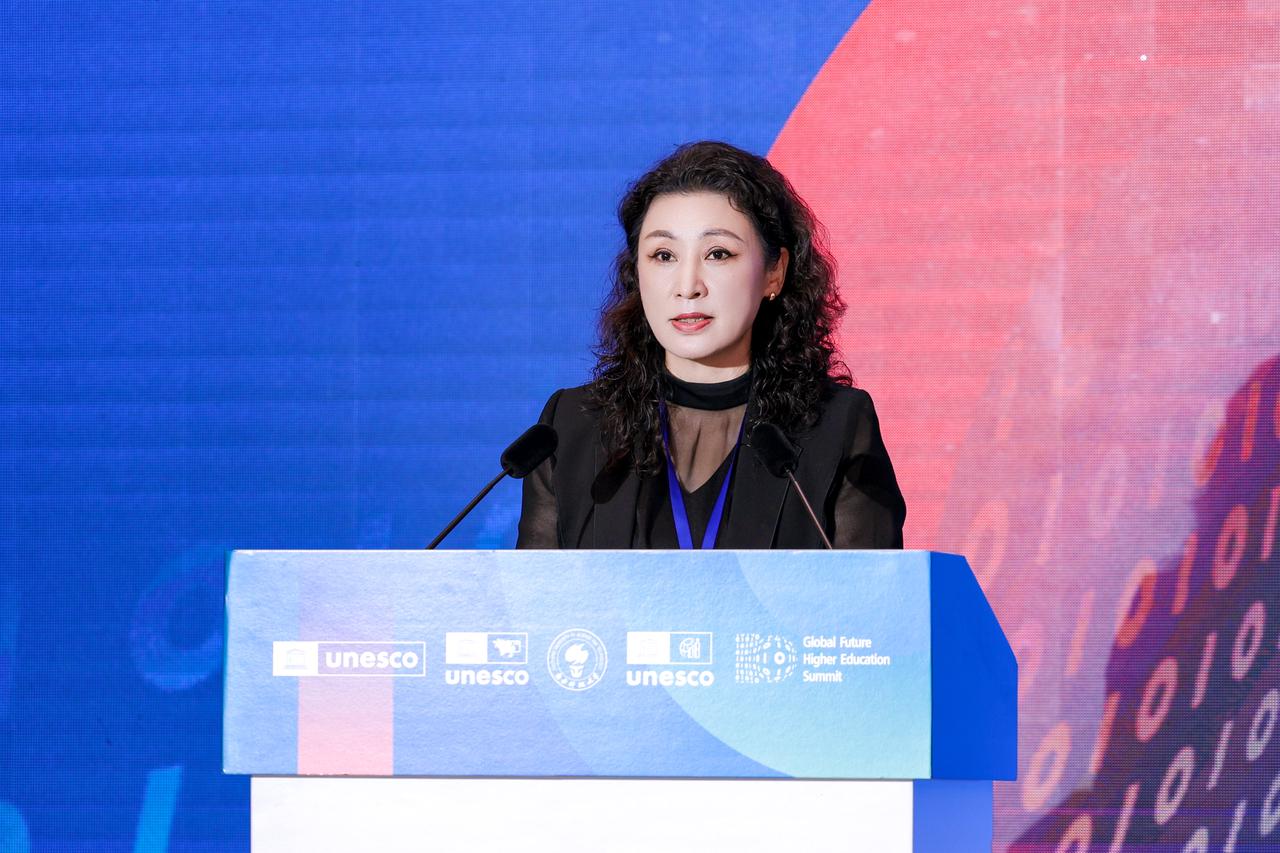
Prof. JIANG Hong Chairperson, Southern University of Science and Technology
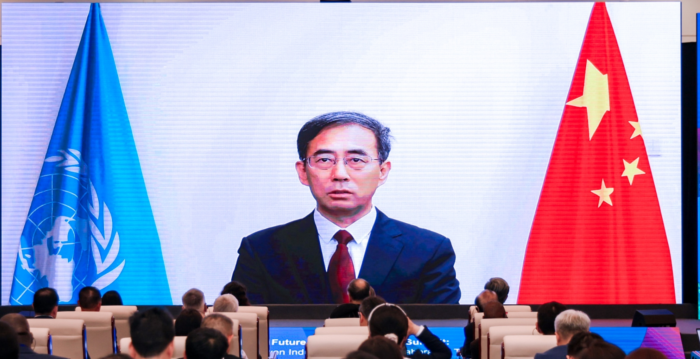
Mr. QIN Changwei Secretary-General, Secretariat of National Commission of the People’s Republic of China for UNESCO
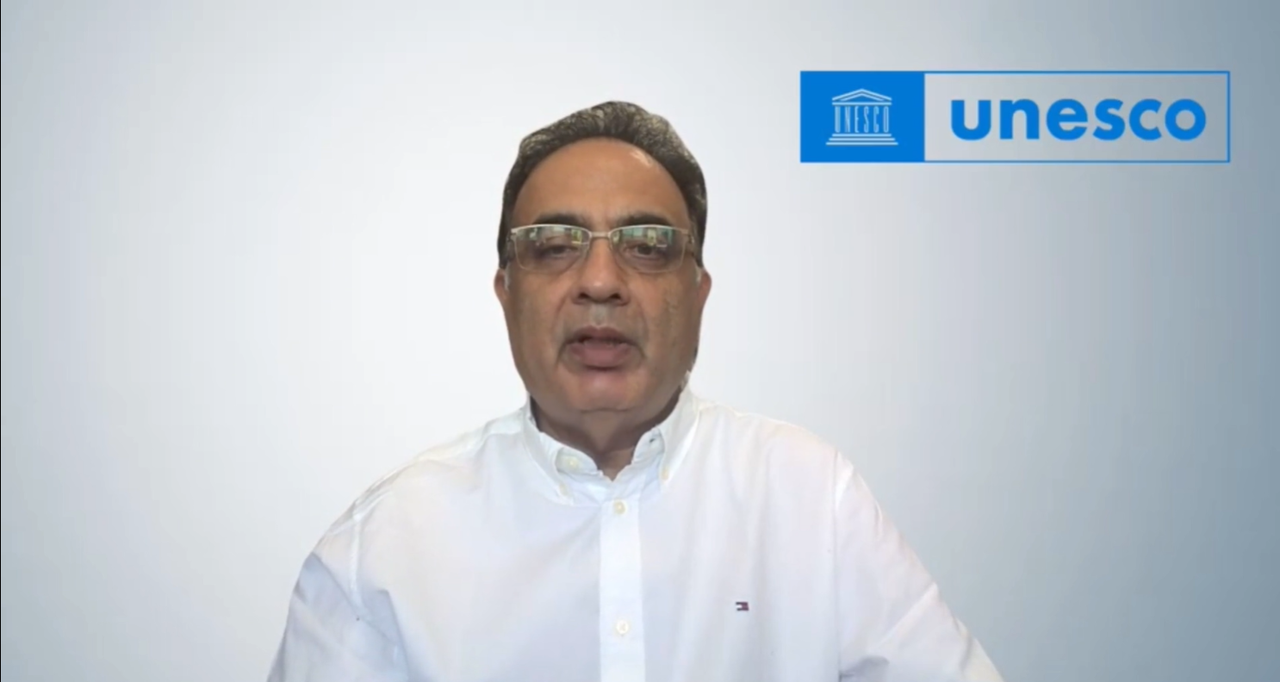
Prof. Shahbaz Khan Director, UNESCO Regional Office for East Asia
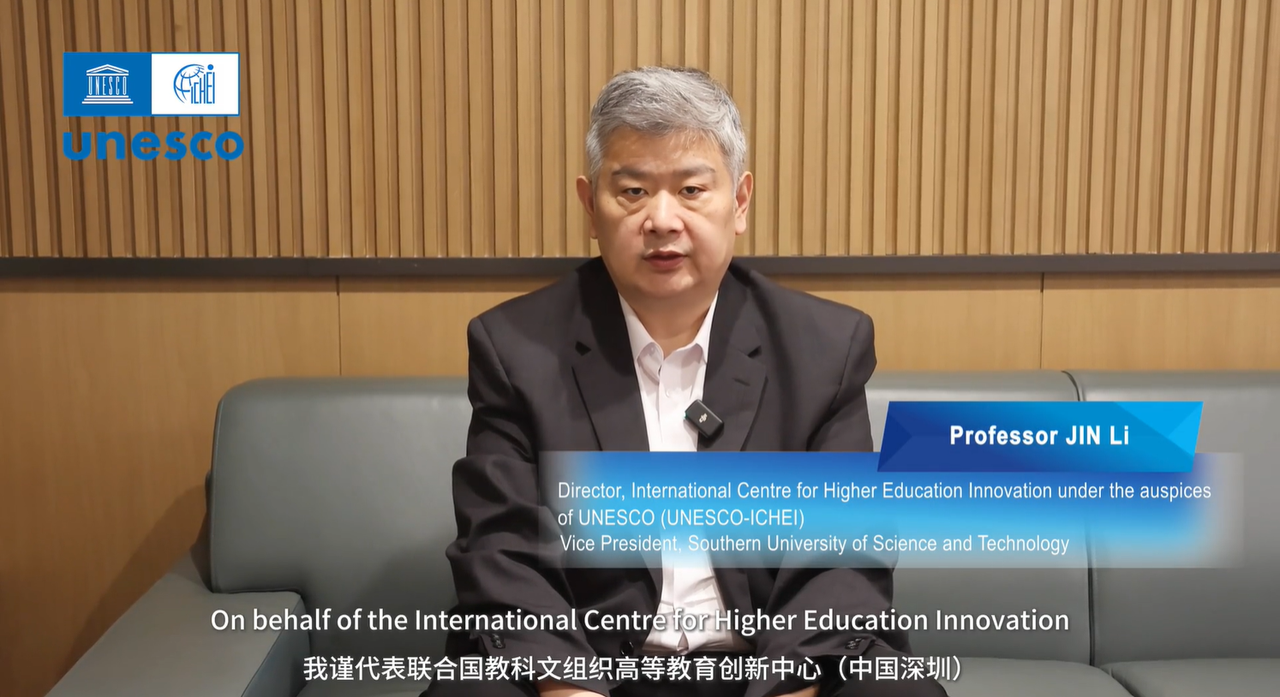
Prof. JIN Li Director, UNESCO-ICHEI; Vice President, Southern University of Science and Technology
Keynote Speech
Mr. TANG Qian, Chairman of the International Advisory Committee, UNESCO-ICHEI; Former Assistant Director-General for Education, UNESCO, moderated the keynote session and guided participants to focus on higher education's core mission of cultivating talent for industry and society. Prof. GONG Ke, Executive Director, Chinese Institute for New Generation Artificial Intelligence Development Strategies; Former President, World Federation of Engineering Organizations, argued that the present is an age of "dual transformation"—digital-intelligent and sustainable—and that higher education must move from patchwork fixes to systemic change. The conventional single-discipline classification can no longer address complex systemic problems such as carbon neutrality, smart cities, and biodiversity; the barriers between disciplines and between universities and industry must be broken down to build a borderless learning ecosystem. Datuk Dr. Habibah Abdul Rahim, Director, Southeast Asian Ministers of Education Organization (SEAMEO) Secretariat, noted that drawing on technological connectivity, Southeast Asia has generated many new opportunities through the flow of talent and the convergence of technologies. Yet as the region enters the AI era, it still needs to advance the interconnection of multiple elements such as policy, capacity building, and infrastructure. Looking ahead, she expressed the hope that, through regional cooperation and drawing on the strengths of all, the building of the IIOE Southeast Asia Regional Centre can be accelerated, jointly creating a collaborative and shared platform and ecosystem. Prof. XI Youmin, Executive President, Xi'an Jiaotong-Liverpool University; Pro-Vice-Chancellor, University of Liverpool, United Kingdom, argued that future education will shift from knowledge transfer to "whole-person education"—personalised, interest-driven, lifelong, and integrative. He noted that XJTLU has built seven cross-disciplinary platforms and several multimodal learning centres on its new campus, engaging deeply with industry and seamlessly connecting vocational education, K-12 education, and higher education. H.E. Prof. Amr Ezzat Salama, Secretary-General, Association of Arab Universities, stated that the Arab region, as one of the youngest regions in the world, regards AI as a technology of strategic opportunity. Many institutions across the region are already implementing digital capacity-building and innovation initiatives, yet still need opportunities for cooperation in talent cultivation, industry-academia collaboration, and teacher empowerment. The establishment of the IIOE Arab Regional Centre here will enable all parties to adapt to technology and shape a new future together. Mr. HUANG Chunxiao, Vice President, Education Business Unit, Huawei, observed that composite, specialised "X + AI" professionals—those who both understand an industry and can harness AI—are especially scarce today. To this end, Huawei is building bridges that connect and empower universities and its partner ecosystem, using new tools to carry forward and put into practice quality education, working with all parties to cultivate the "knowledgeable insiders" capable of solving industry pain points, and jointly advancing talent cultivation in higher education.
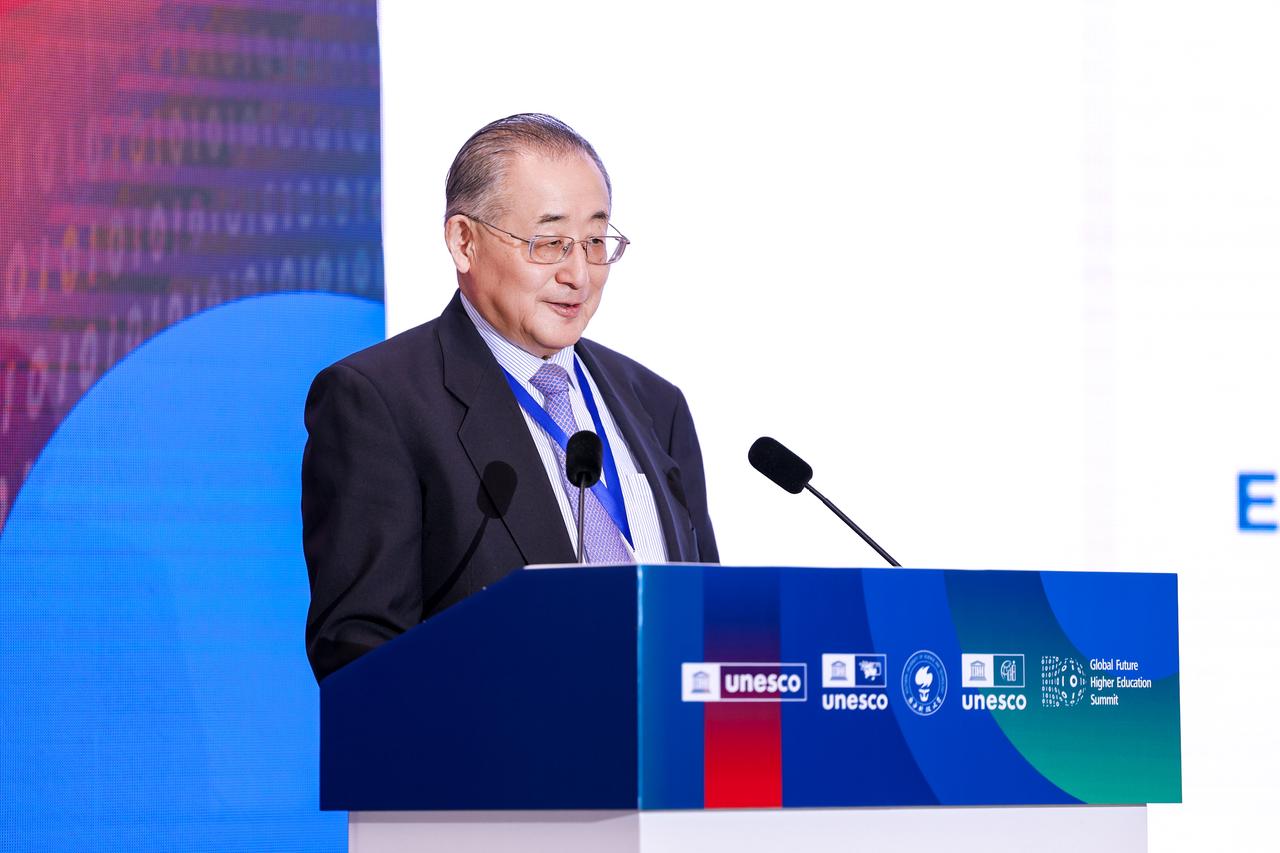
Mr. TANG Qian Chairman of the International Advisory Committee, UNESCO-ICHEI; Former Assistant Director-General for Education, UNESCO
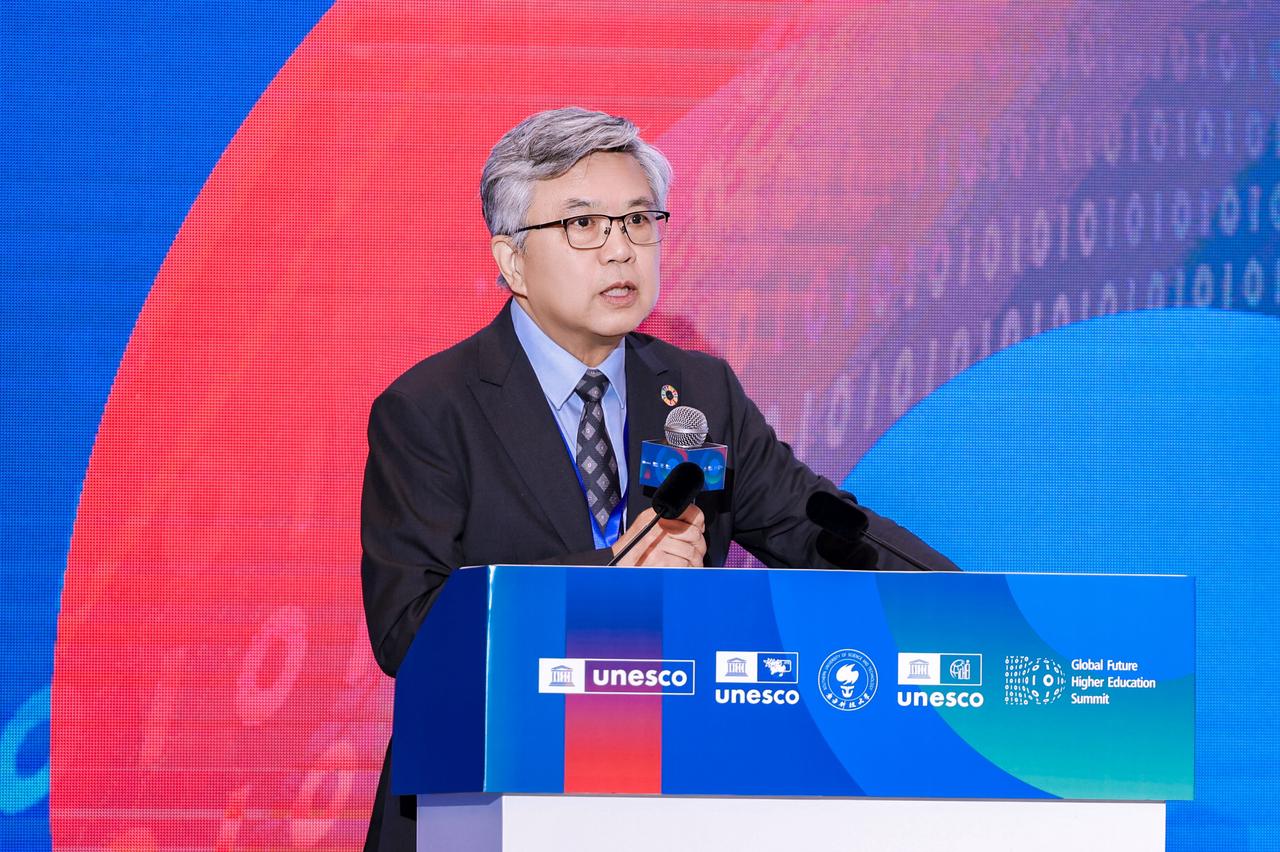
Prof. GONG Ke Executive Director, Chinese Institute of New Generation Artificial Intelligence Development Strategies; Former President, World Federation of Engineering Organizations
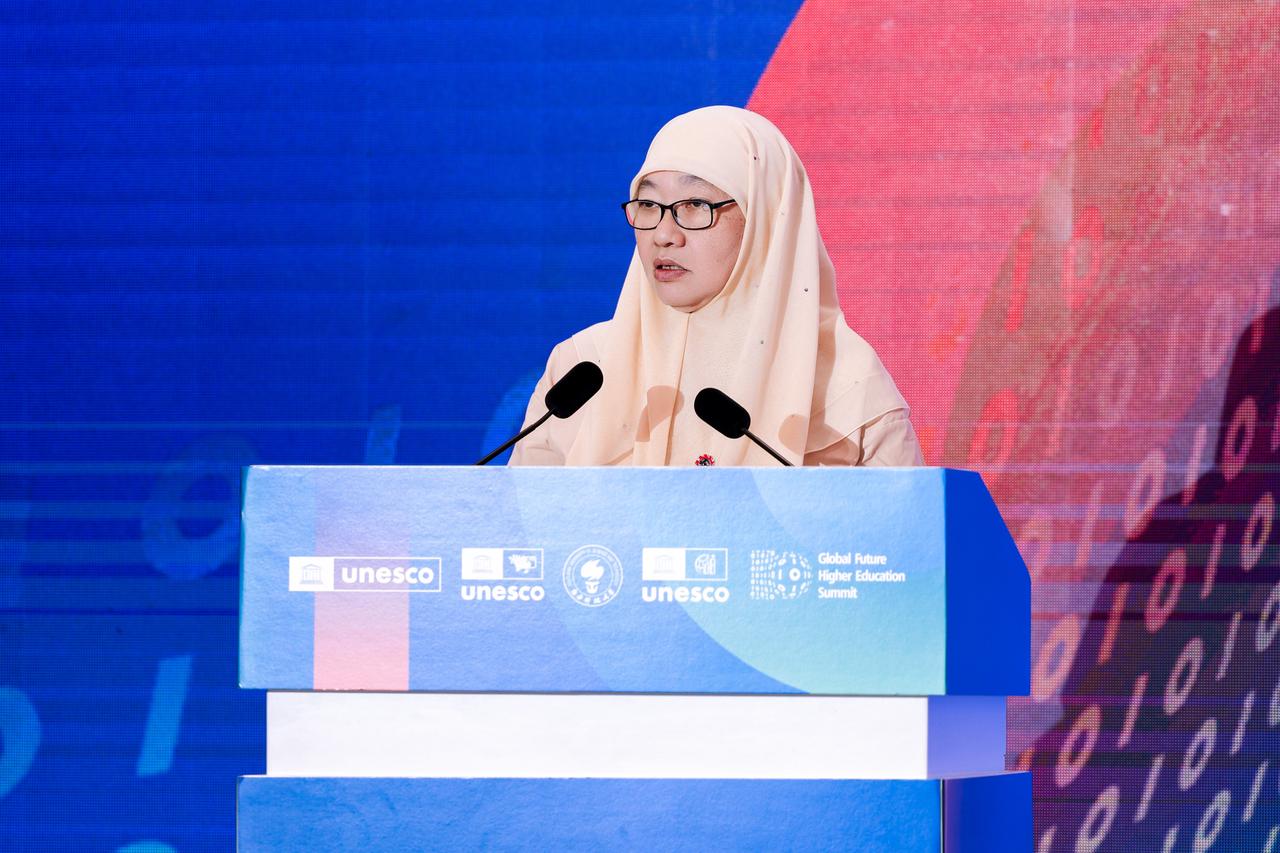
Datuk Dr. Habibah Abdul Rahim Director, Southeast Asian Ministers of Education Organization (SEAMEO) Secretariat
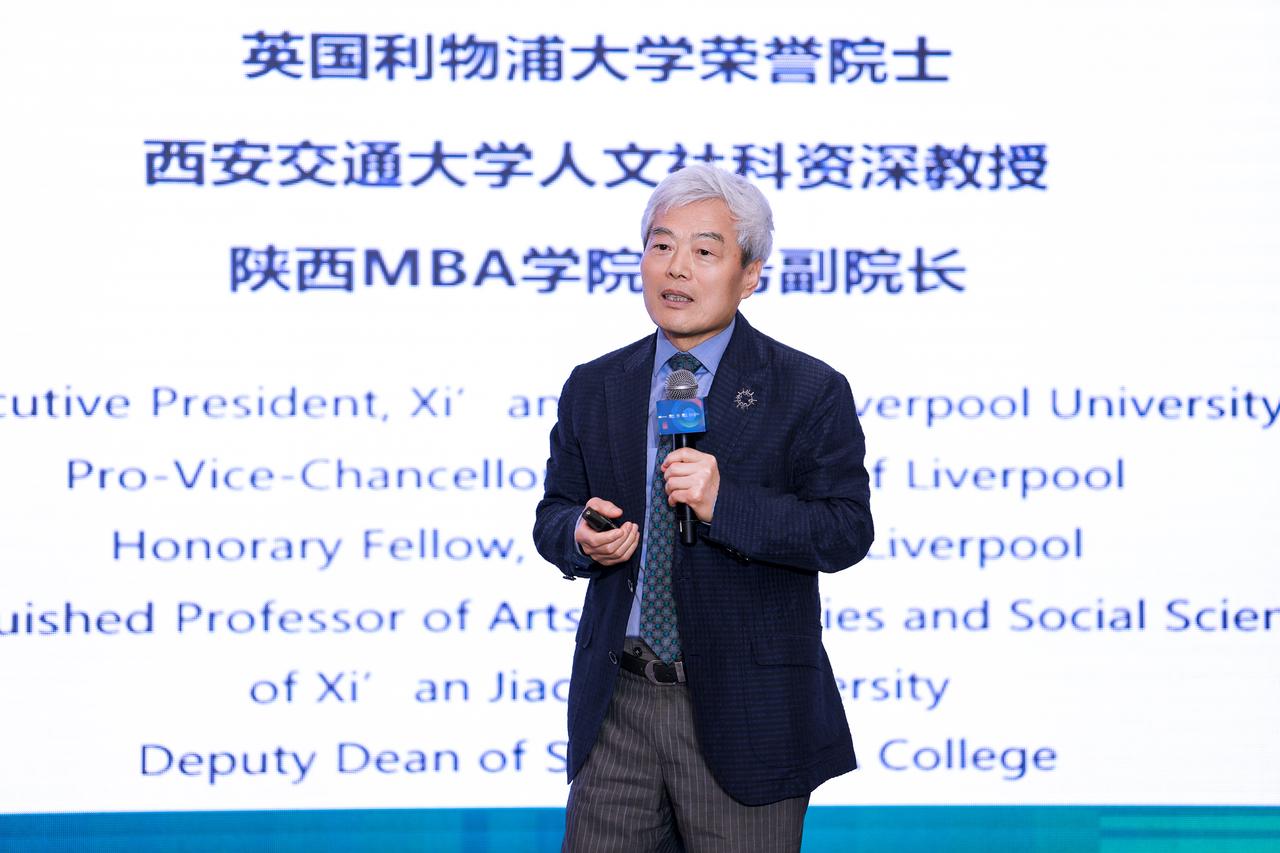
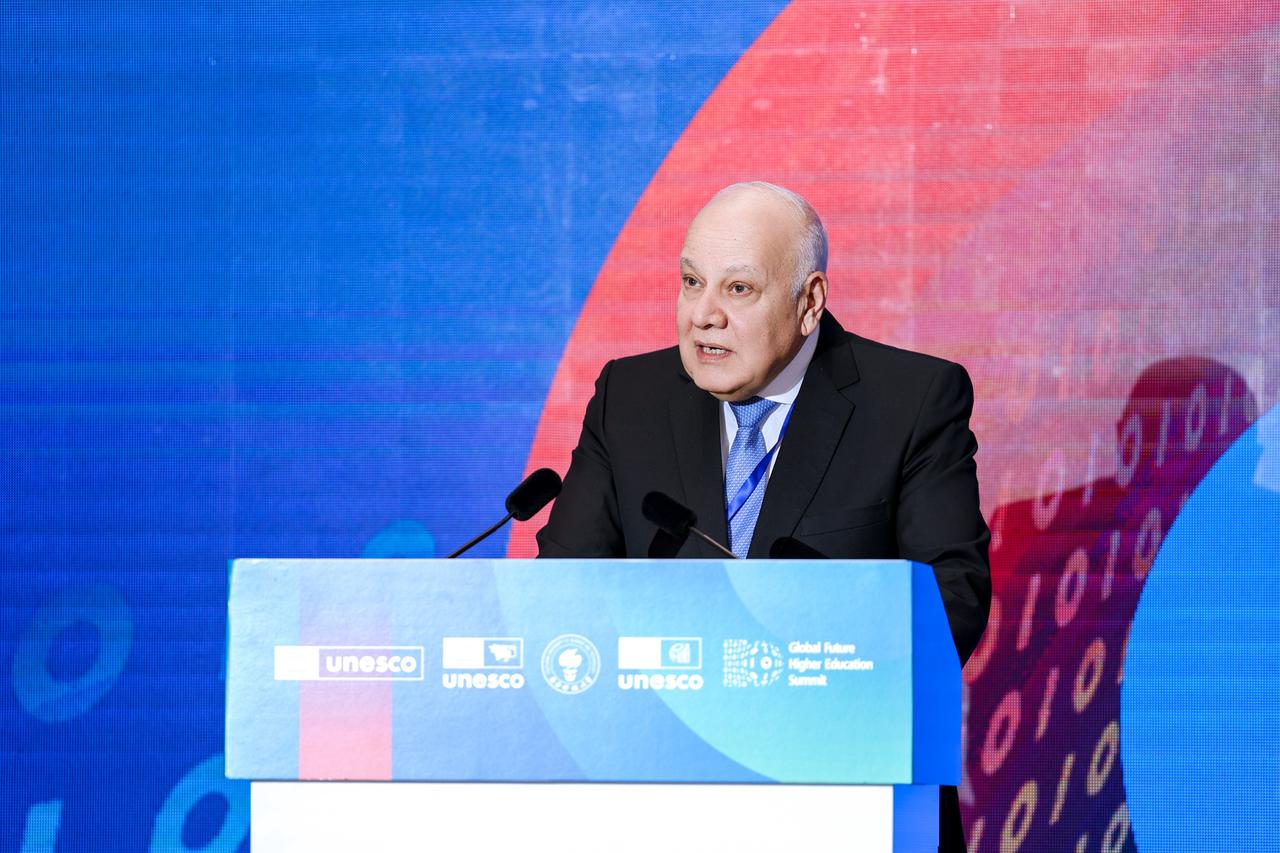
H.E. Prof. Amr Ezzat Salama Secretary-General, Association of Arab Universities
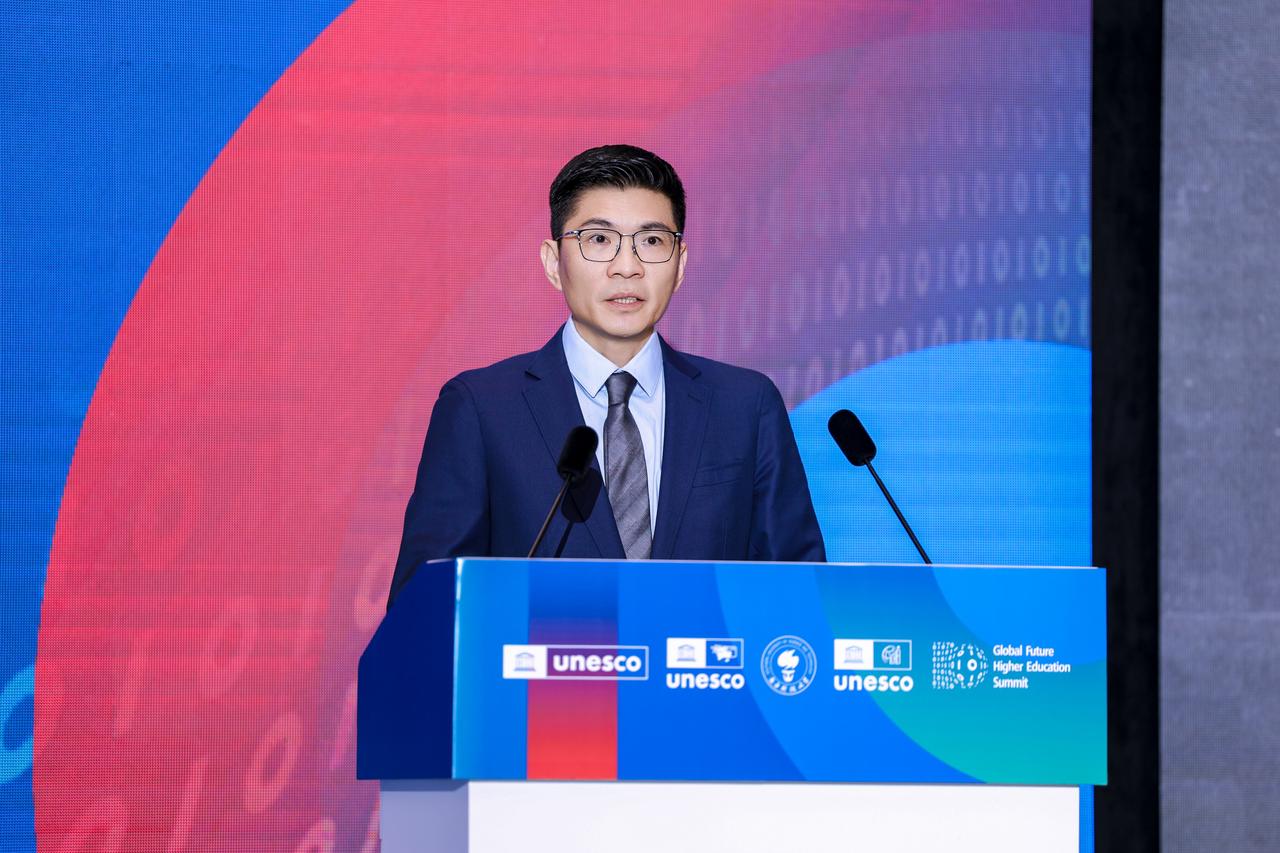
Mr. HUANG Chunxiao Vice President, Education Business Unit, Huawei
Session 1
This session focused on global trends in the digital transformation of higher education, with representatives from Africa, the Arab region, Central Asia, South Asia, Southeast Asia, and Europe sharing regional practices and insights into digitalisation and AI-empowered higher education. Dr. Shafika Isaacs moderated the session.
During the report release, Mr. SIT Fung, Assistant Director and Chief of Global Partnership and Programme Office, UNESCO-ICHEI, launched the report "From Digitalisation to AI Empowerment – The Future of Higher Education across the Global South." The report offers a reference for Global South countries in formulating digital transformation policies and advancing implementation at the institutional level, helping higher education develop in a more equitable, pragmatic, and sustainable direction.
During the publication launch, Prof. Jimmy LIU, Chair Professor, Department of Computer Science and Engineering, Southern University of Science and Technology, launched "Introduction to Artificial Intelligence in Education," a publication co-authored by teams from SUSTech and UNESCO-ICHEI. The book puts forward the theory of "Education Intelligence (EI)," offering a systematic theoretical reference for the deep integration of AI and education. As a next step, the book will be made available in multiple languages and brought into university classrooms. Alongside the book, the team has also worked with IIOE to develop a multilingual "AI + Education" micro-certification course, open to learners worldwide.
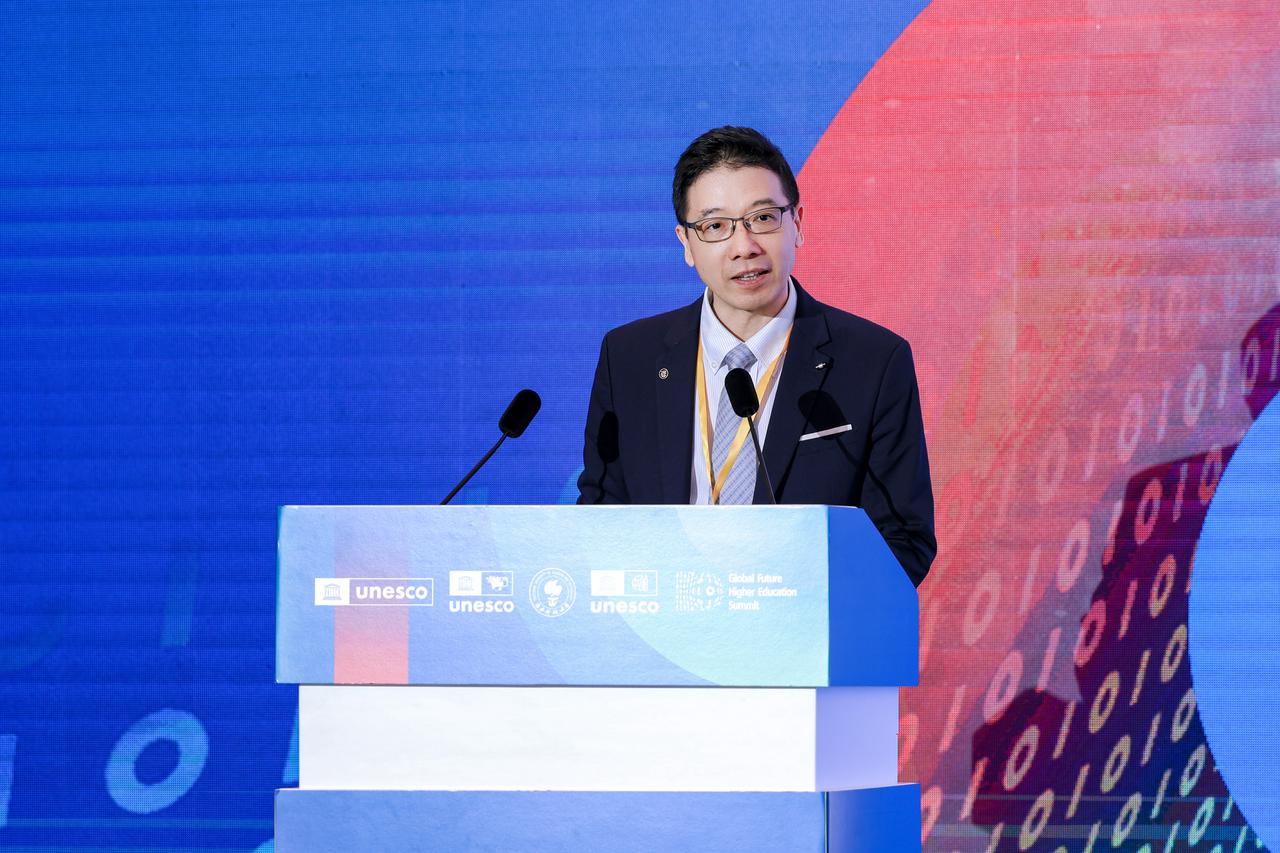
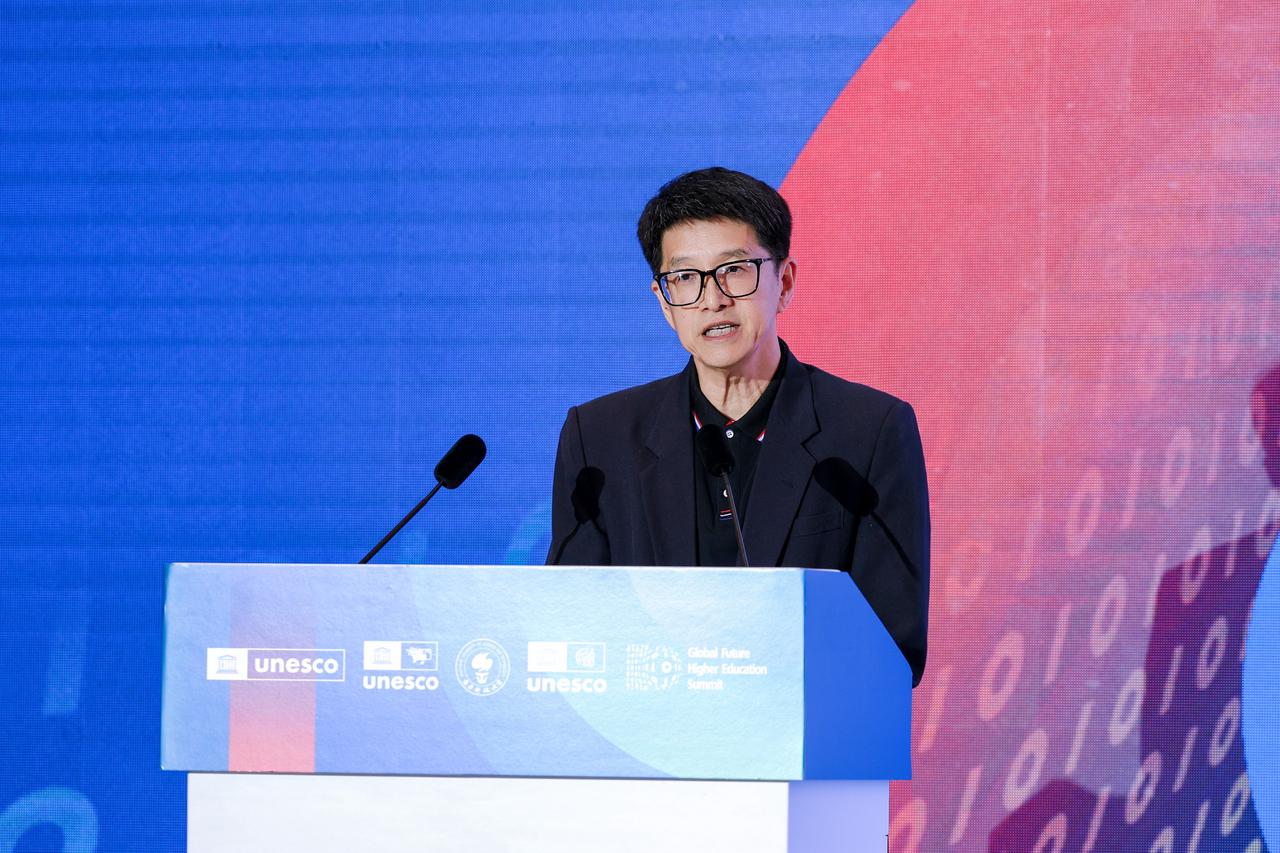
In the thematic presentation on regional insights into higher education digital transformation, representatives shared practices from their respective countries and regions. The speakers were:
Prof. Georges Loum, Deputy Director-General, Institut National Polytechnique Félix Houphouët-Boigny, Côte d'Ivoire; Prof. Mohamed Jemni, Director, ICT Department, Arab League Educational, Cultural and Scientific Organization (ALECSO); Prof. Makhkamov Bakhtiyor Shukhratovich, Rector, Tashkent University of Information Technologies named after Muhammad al-Khwarizmi, Uzbekistan; Prof. Danaa Ganbat, Director, Open Education Institute, Mongolian University of Science and Technology; Director, IIOE Mongolia National Centre; Prof. Chitra Bahadur Budhathoki, Professor, Central Department of Education, Tribhuvan University, Nepal; Coordinator, IIOE Nepal National Centre; Prof. Hong T.M. Bui, Director of Education Management, VinUniversity, Vietnam; Prof. Francesc Pedró, Professor, Department of Politics and Social Sciences, Pompeu Fabra University, Spain; Former Director, UNESCO International Institute for Higher Education in Latin America and the Caribbean (IESALC).
The speakers broadly noted that, in advancing the digital and intelligent transformation of higher education, Global South countries face shared challenges—gaps in digital infrastructure and funding, shortages of AI-capable faculty, urban-rural divides, and a disconnect between policies as designed and as implemented—and are responding through measures such as national strategies, institution-level transformation plans, micro-certifications, and industry-academia-research collaboration, while looking to regional and international cooperation to share experience and bridge the digital divide.
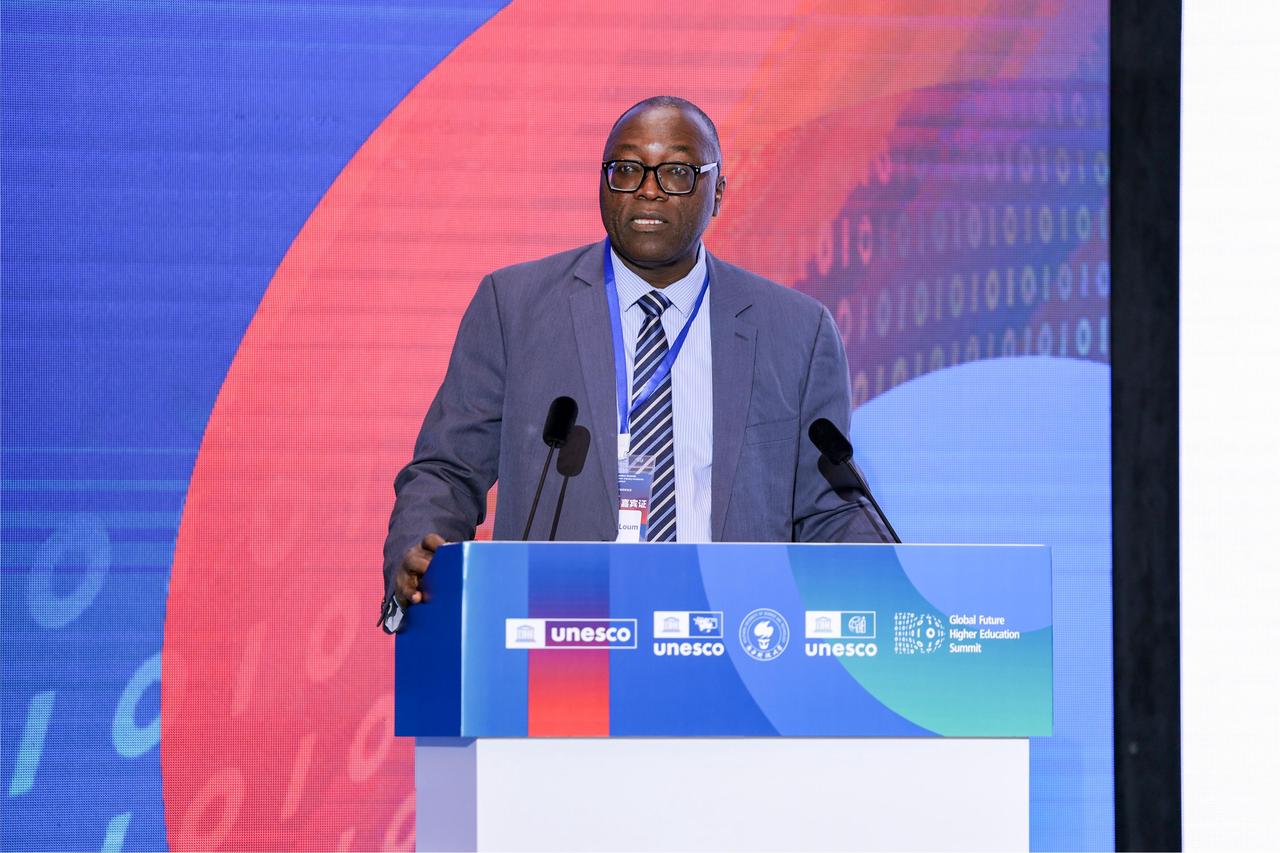
Prof. Georges Loum Deputy Director-General, Institut National Polytechnique Félix Houphouët-Boigny, Côte d'Ivoire
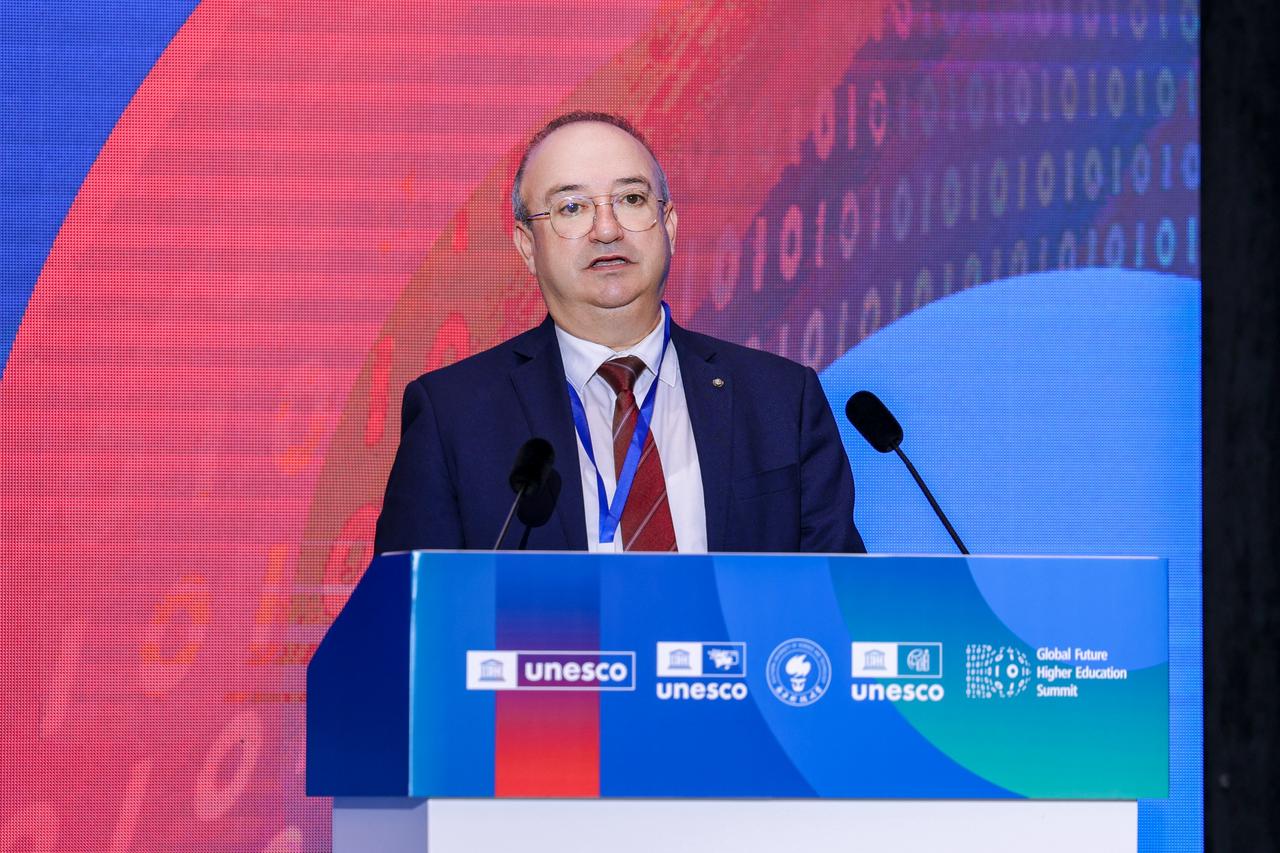
Prof. Mohamed Jemni Director, ICT Department, Arab League Educational, Cultural and Scientific Organization
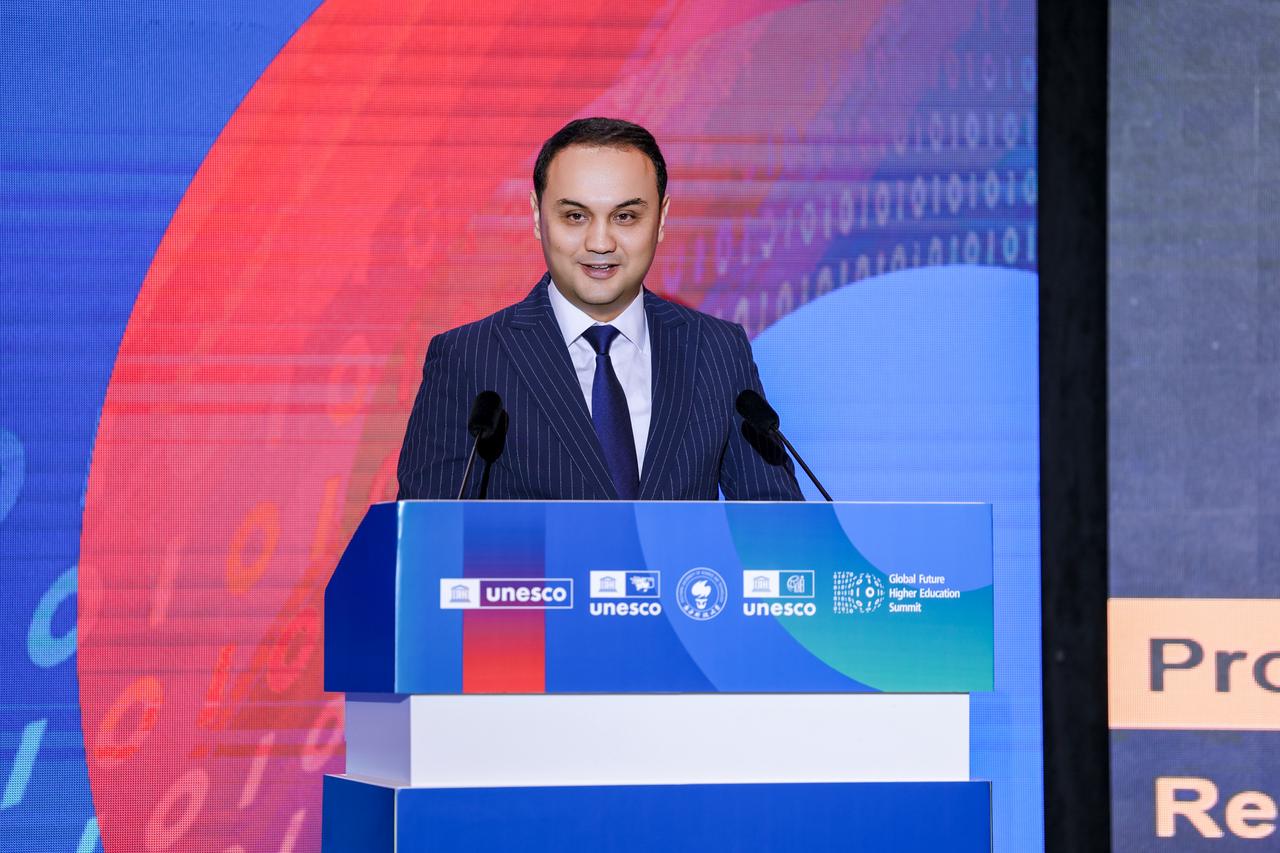
Prof. Makhkamov Bakhtiyor Shukhratovich Rector, Tashkent University of Information Technologies named after Muhammad al-Khwarizmi, Uzbekistan
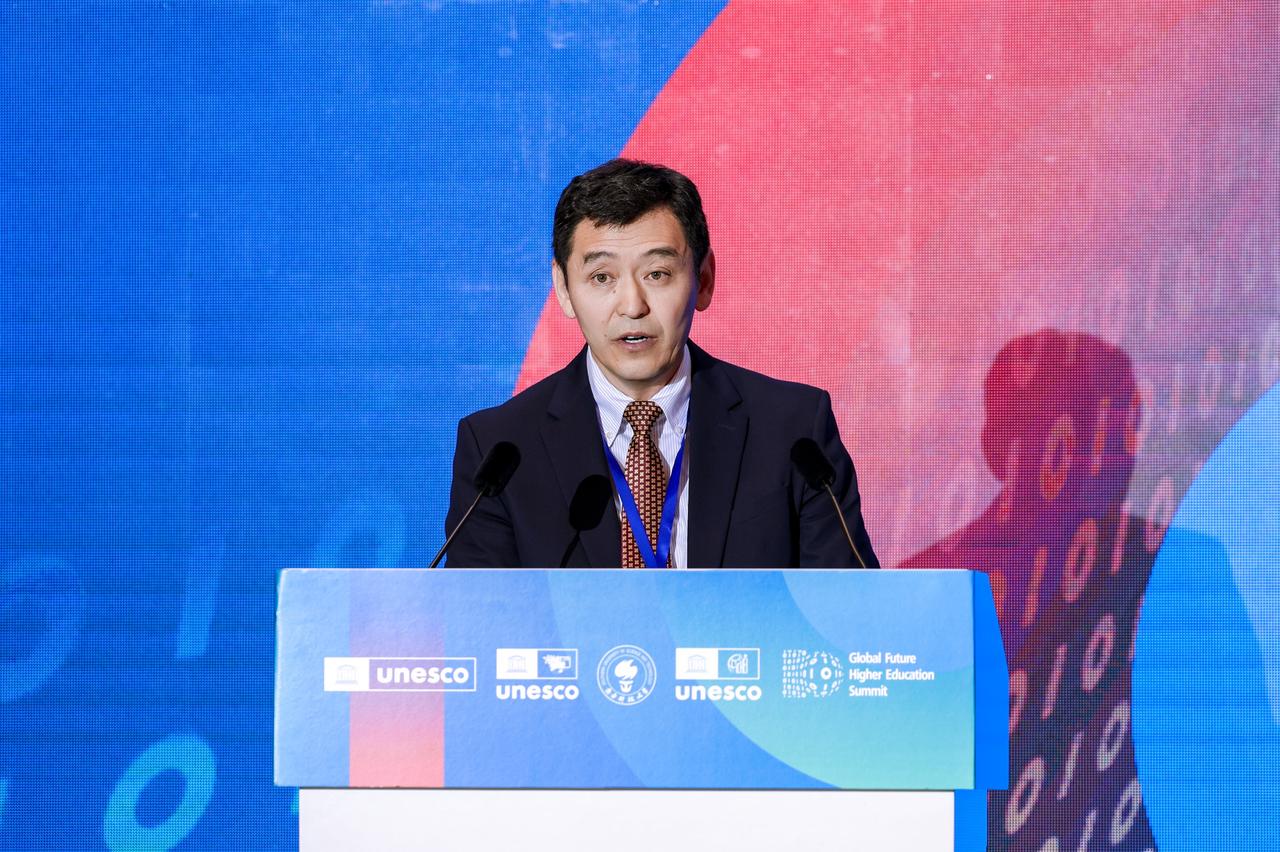
Prof. Danaa Ganbat Director, Open Education Institute, Mongolian University of Science and Technology, Mongolia; Director, IIOE Mongolia National Centre
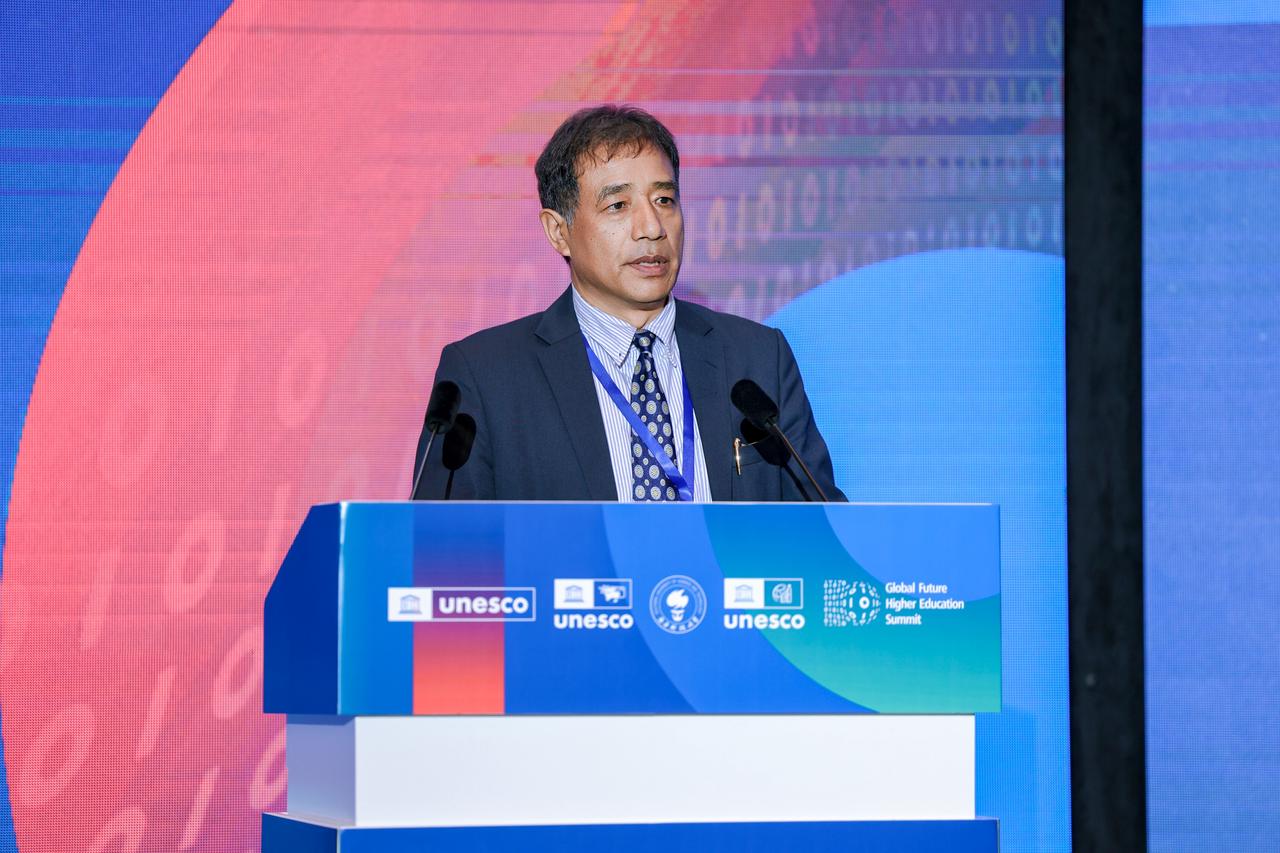
Prof. Chitra Bahadur Budhathoki, Professor, Central Department of Education, Tribhuvan University, Nepal; Coordinator, IIOE Nepal National Centre
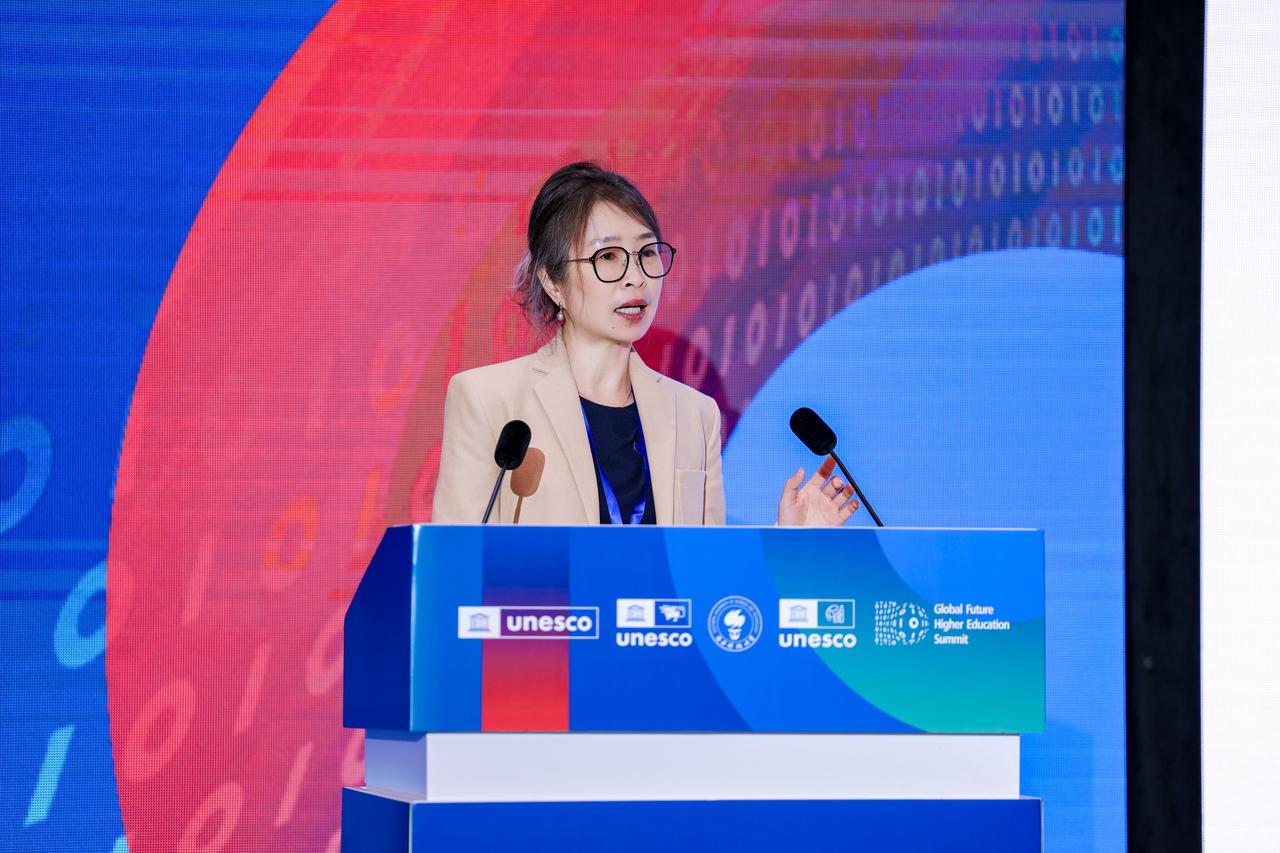
Prof. Hong T.M. Bui Director of Education Management, VinUniversity, Vietnam
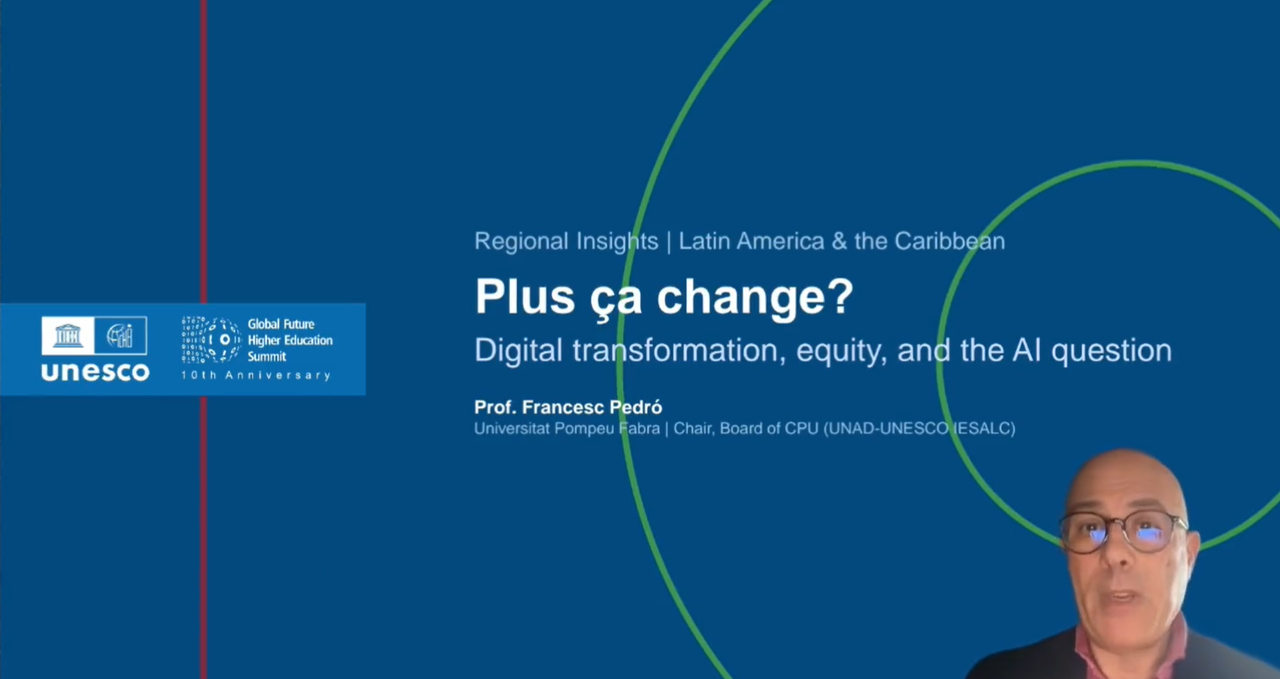
Prof. Francesc Pedró Professor, Department of Politics and Social Sciences, Pompeu Fabra University, Spain
Session 2
This session centred on building a talent ecosystem amid the deep integration of AI and industry, exploring how enterprise-led, school-enterprise collaboration can rapidly cultivate applied talent and align industrial demand with talent supply, and saw the launch of three IIOE "AI + Industry" micro-cretification programmes. Prof. Paulina Pannen, Senior Expert, Indonesia Cyber Education Institute, moderated the session.
Dr. Abdullayev Alisher, Director, Center for the Development of Digital Education and Artificial Intelligence, Ministry of Higher Education, Science and Innovation of the Republic of Uzbekistan, presented how Uzbekistan connects academia and industry through a digital platform. Its micro-certification scheme for teachers is supported by UNESCO-ICHEI, with international collaboration advanced on the basis of shared international standards. Dr. TANG Min, Former Counsellor, State Council of the People's Republic of China; Chairman, China Cross-Border E-Commerce 50 People Forum, used cross-border e-commerce to argue that talent cultivation in the AI era faces tight timelines, vast scope, and heavy demands, requiring enterprise-led, school-enterprise collaboration to rapidly train applied talent in the short term. He noted that he is working with UNESCO-ICHEI to develop "AI + Cross-Border E-Commerce" micro-certification courses and open to over 100 institutions across more than 40 countries among IIOE ecosystem alliance. Dr. YIN Ye, Member of the Board and Chief Executive Officer, BGI Group, in his address "We Are Like Superhumans: Who Defines the Education of Superhumans?", argued that as knowledge is democratised, education must return to the essence of "nurturing," calling for a humanistic renaissance and technology for good. Drawing on its collaboration with IIOE, BGI launched the "AI + Life Sciences" micro-certification programme, bringing real laboratory and clinical data into Global South higher education.
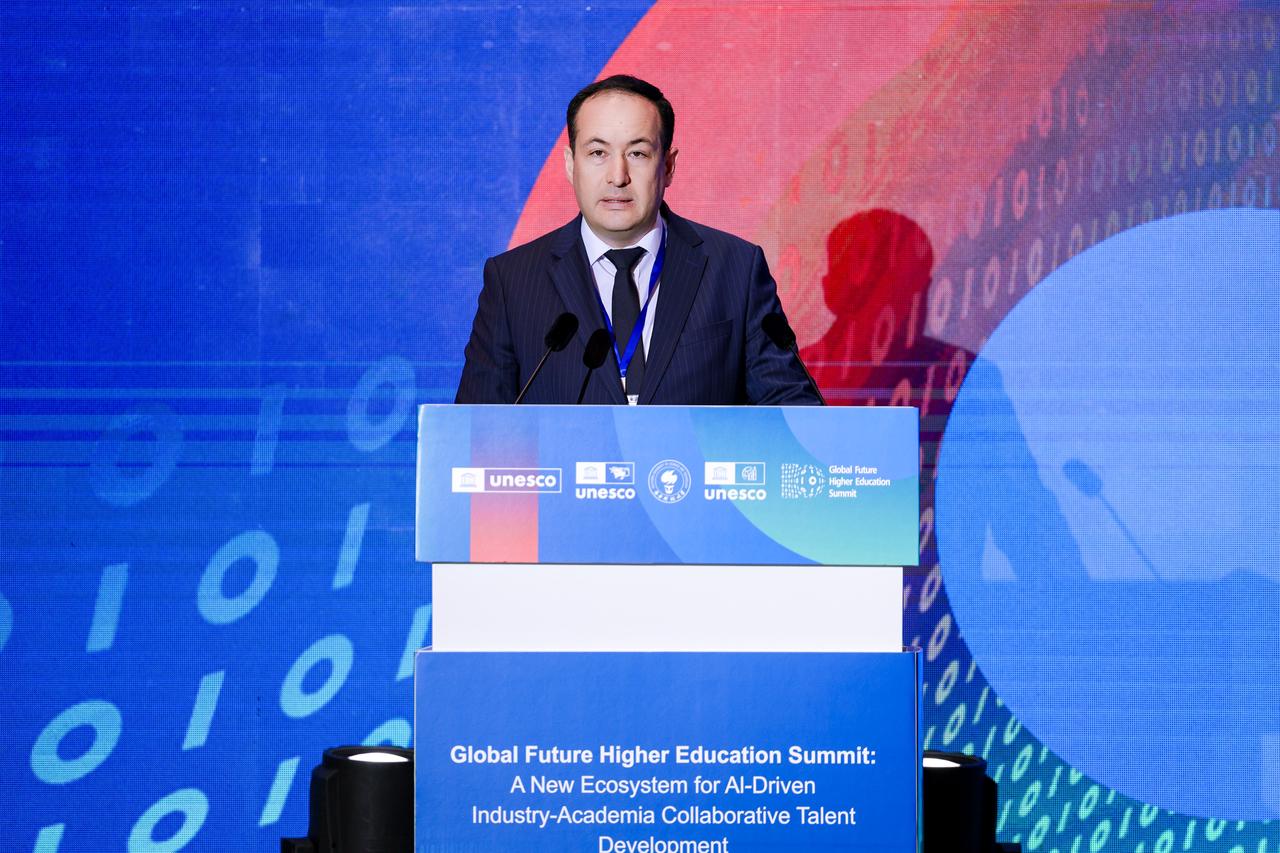
Dr. Abdullayev Alisher Director, Center for the Development of Digital Education and Artificial Intelligence, Ministry of Higher Education, Science and Innovation of the Republic of Uzbekistan
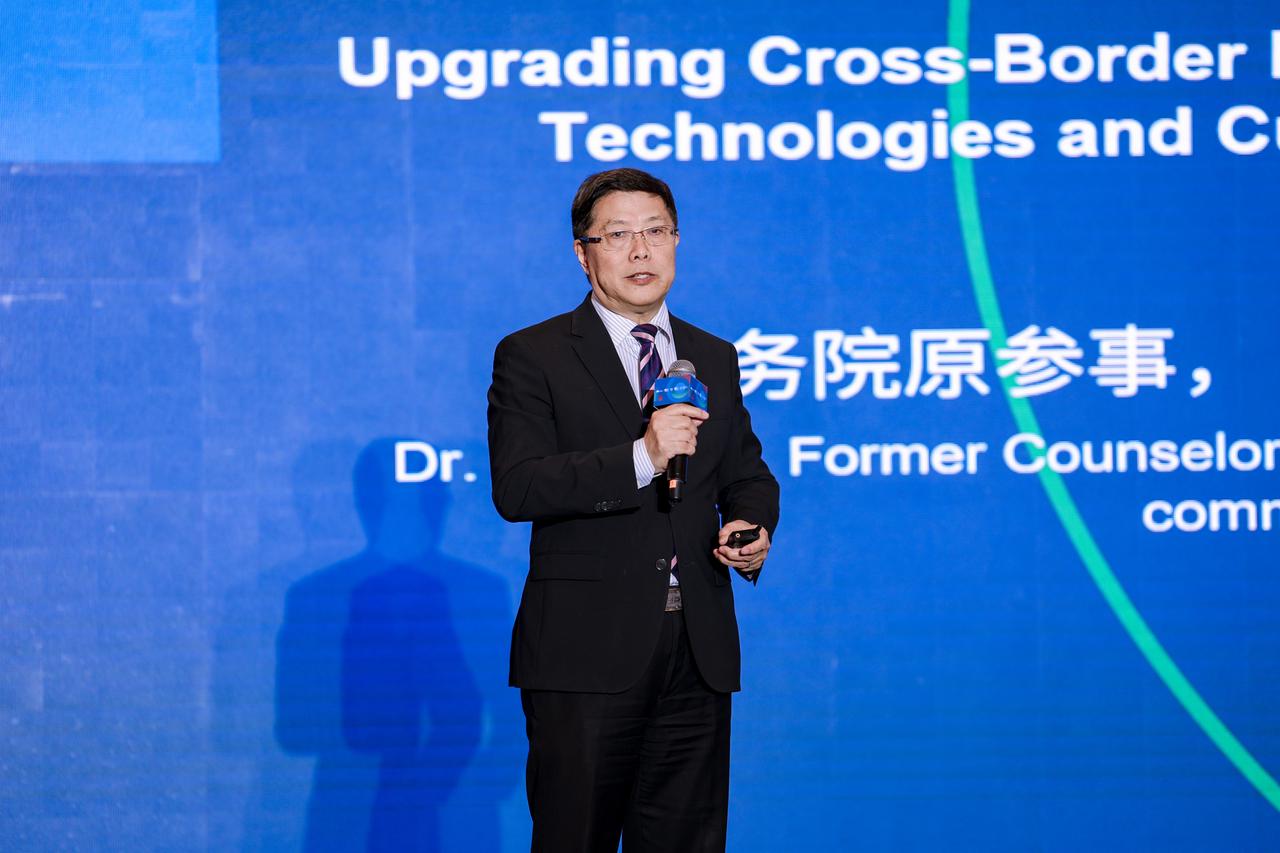
Dr. TANG Min Former Counsellor, State Council of the People’s Republic of China; Chairman, China Cross-Border E-Commerce 50 People Forum
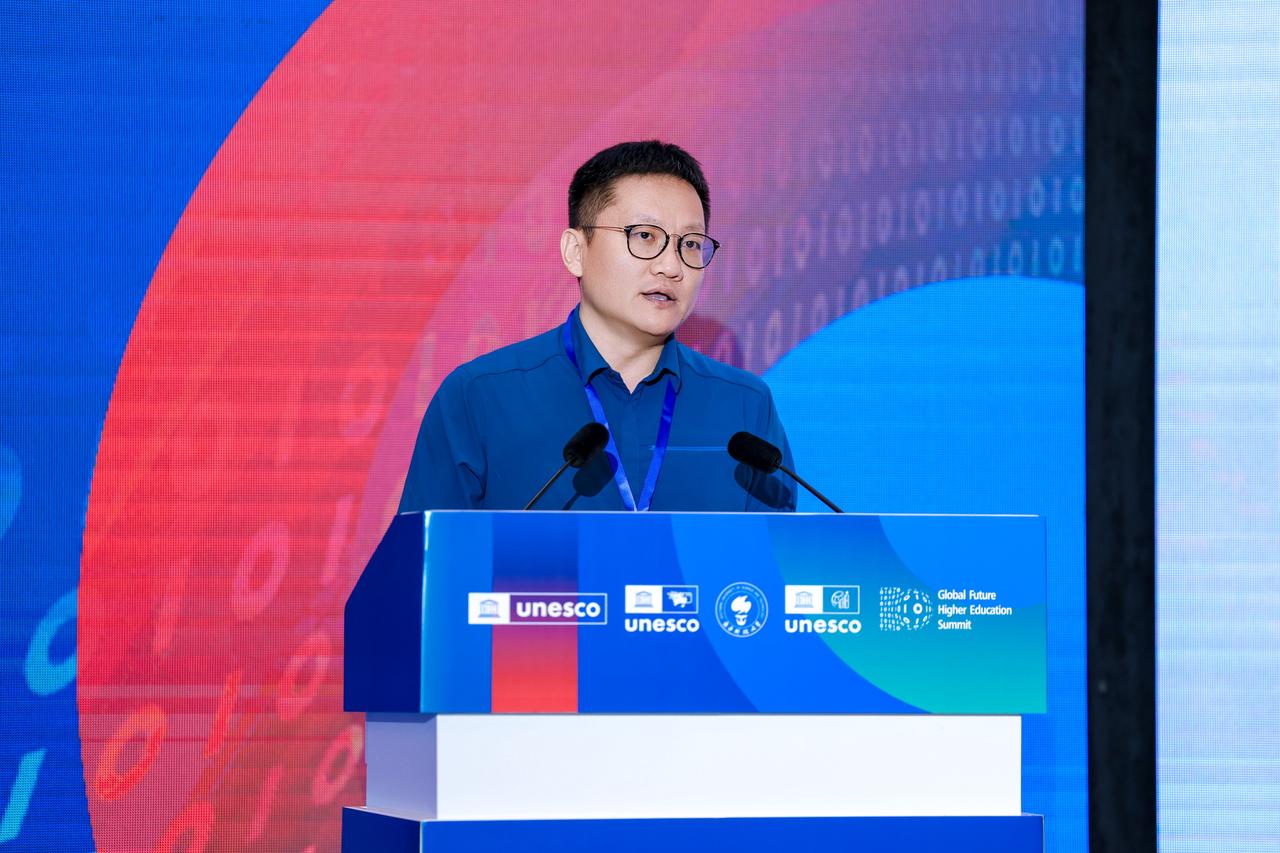
Dr. YIN Ye Member of the Board and Chief Executive Officer, BGI Group
Frontier Dialogue
In the Frontier Dialogue, panellists from academia and industry discussed how to align industrial demand with talent supply. The panellists were: Prof. Ali Muktiyanto, Rector, Universitas Terbuka, Indonesia and Chairman, Indonesia Cyber Education Institute Consortium; Mr. SUN Xiangyang, Director, Technical Committee of Cross-Border E-Commerce, China Customs Society; Dr. CUI Kailong, Vice President, Jiangxi KMAX Industrial Co. Ltd.; Ms. Chye Connsynn, Director, Alibaba Global Initiatives; and Dr. LI Zhengrong, Chairman, Shenzhen iLATA Talent Service Co., Ltd. and Founder, New3s Technology Group. The panellists broadly agreed that AI is an empowering tool to be mastered, and that talent cultivation should emphasise information discernment and critical thinking. Aligning industrial demand with talent supply hinges on breaking down the barriers between academia and industry and staying closely attuned to real industrial needs.
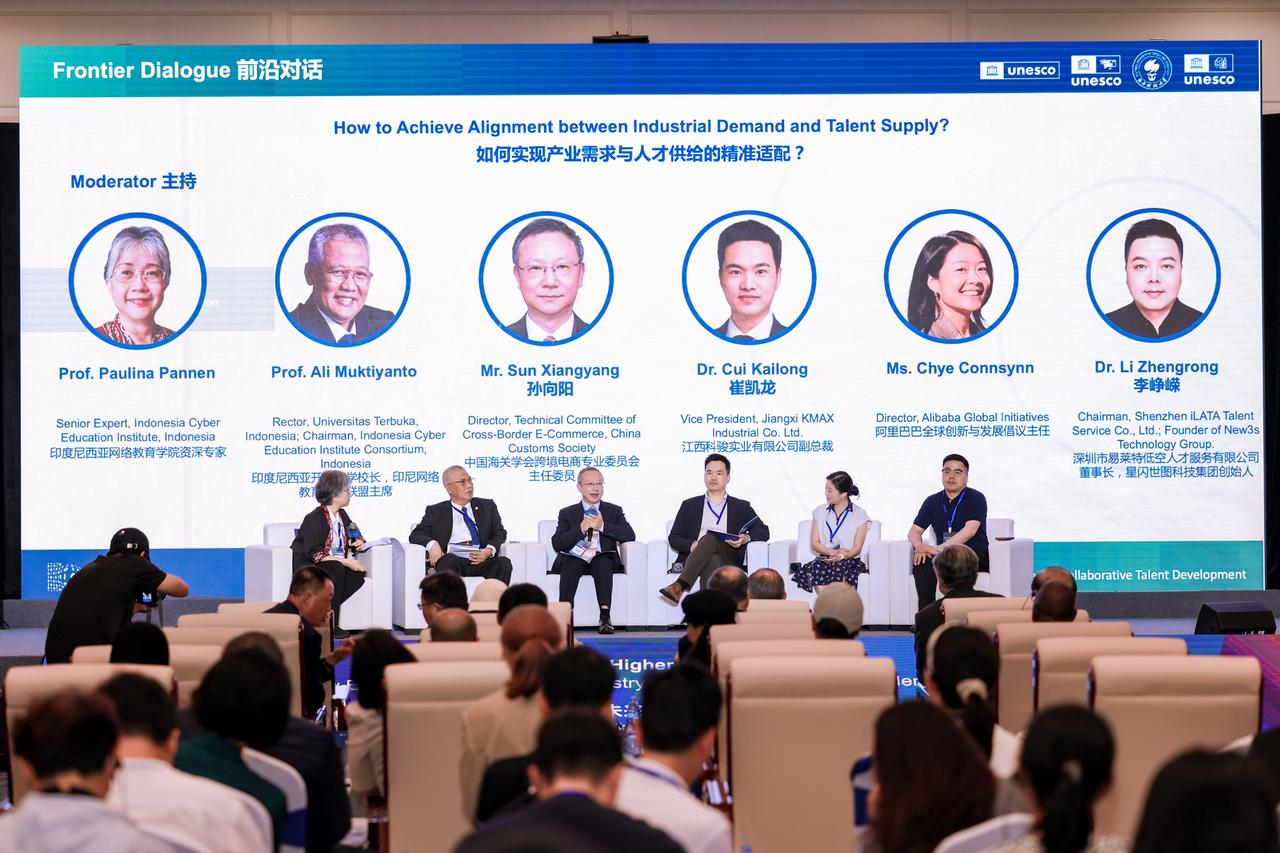
Session 2:Frontier Dialogue
"AI + Industry" Programme Launch
The Summit launched three IIOE "AI + Industry" training programmes on frontier technological application and industrial integration. IIOE, in partnership with the China Association of Trade in Services, launched the "AI + Cross-Border E-Commerce" micro-certification programme; with BGI Group, launched the "AI + Life Sciences" micro-certification programme; and with Universiti Putra Malaysia, launched the "AI + Agricultural Technology" micro-certification programme.
Prof. JING Guifei, Vice President, China Association of Trade in Services; Dr. XIAO Minfeng, Executive Dean, BGI College and Special Scientist, BGI-Research; Prof. Ismi Arif Ismail, Professor, Faculty of Educational Studies, Universiti Putra Malaysia and Senior Researcher, IIOE Malaysia National Centre, spoke as representatives of the partner industry association, enterprise, and university, respectively.
These three "AI + Industry" micro-certification programmes are grounded in real-world scenarios of the deep integration of AI with industries such as cross-border e-commerce, life sciences, and agricultural technology, drawing on real data and frontier technologies to develop micro-certification courses that provide a valuable complement to traditional curricula. As concrete fruits of IIOE industry-academia collaboration, the programmes will be made available to Global South universities through the IIOE platform, bringing quality training resources to a broader community of learners and helping to bridge the gap between talent supply and industrial demand.
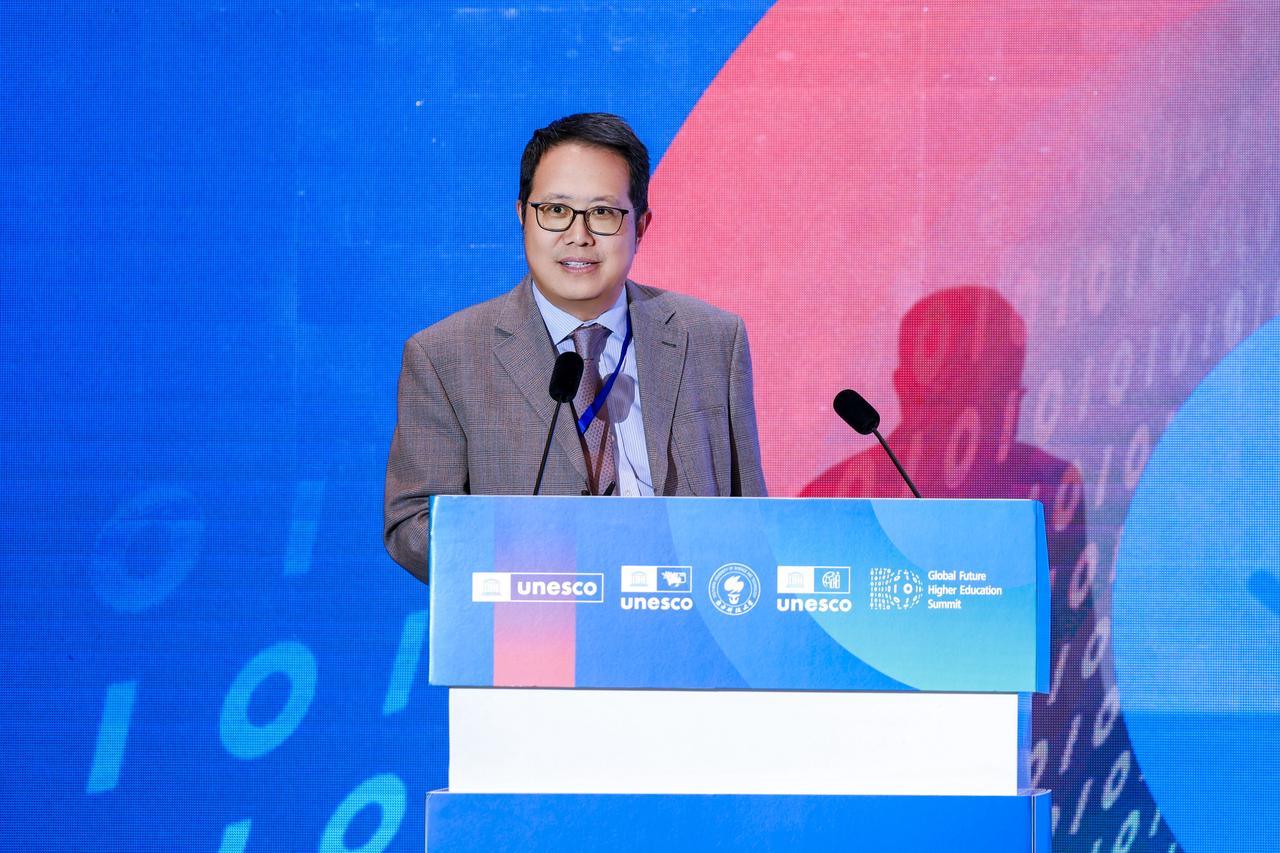
Prof. JING Guifei Vice President, China Association of Trade in Services
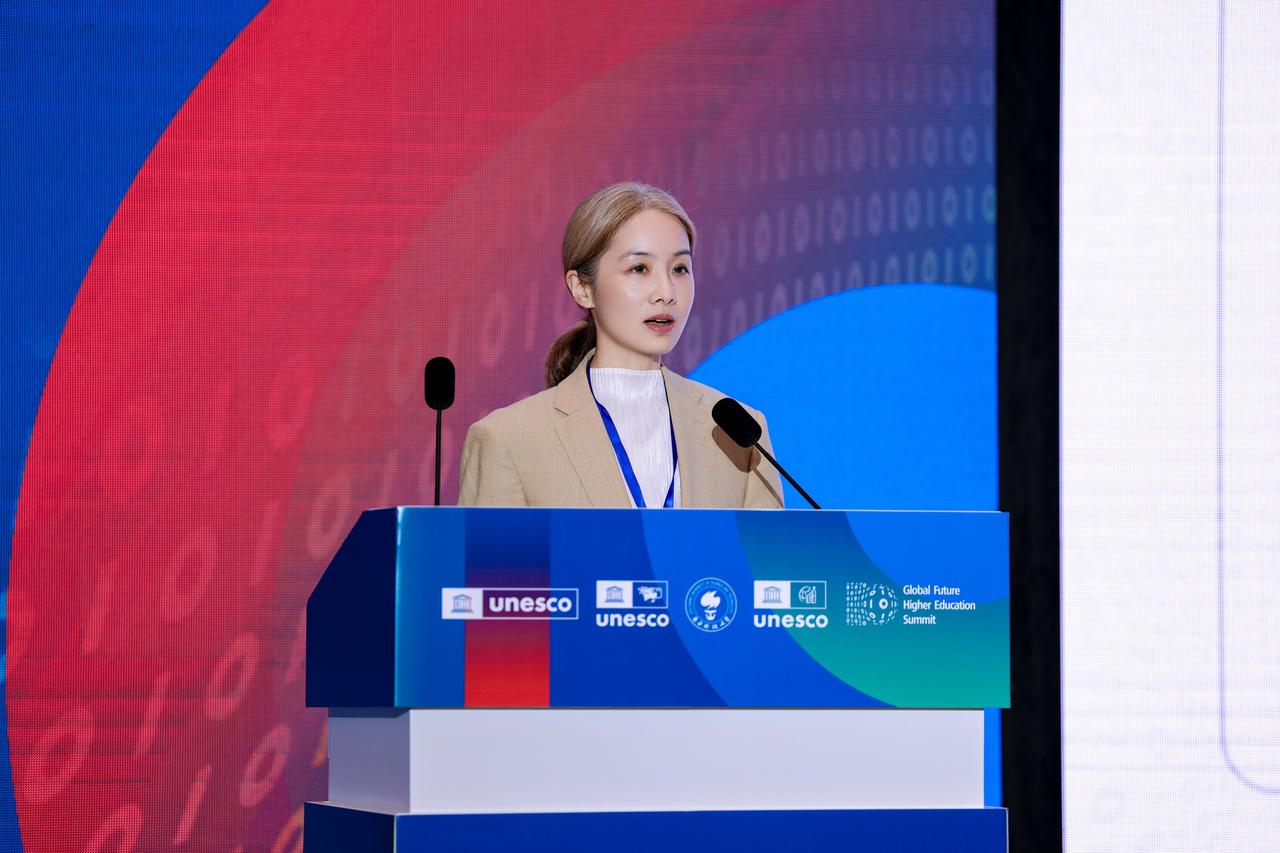
Dr. XIAO Minfeng Executive Dean, BGI College; Special Scientist, BGI-Research
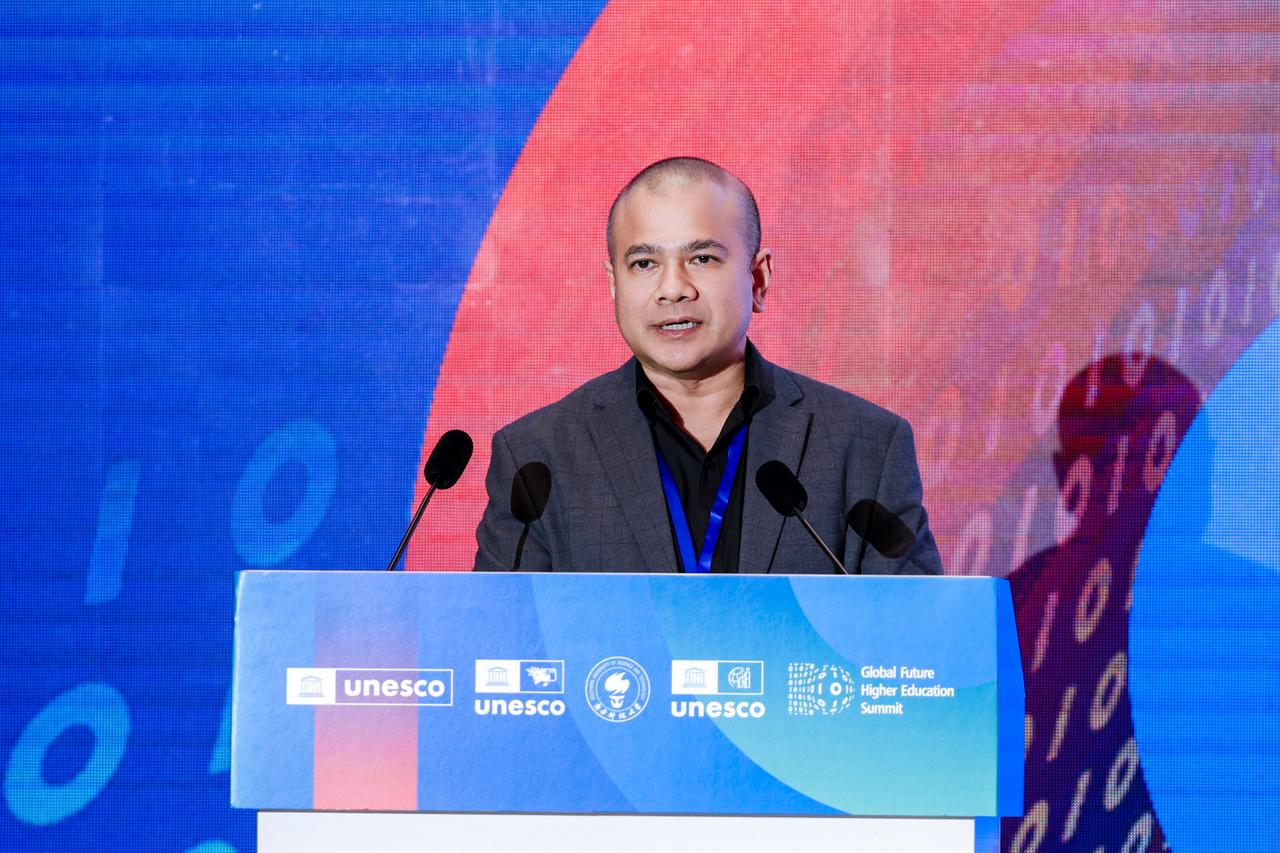
Prof. Ismi Arif Ismail Professor, Faculty of Educational Studies, Universiti Putra Malaysia, Malaysia; Senior Researcher, IIOE Malaysia National Centre
Session 3
This session examined talent upskilling and reskilling driven by technological change, with representatives from universities, vocational education, and industry analysing the capabilities required in the AI era and how to build synergy between educational institutions and industry to advance reskilling and curriculum innovation. Prof. Lim Cher Ping, Chief Expert, IIOE; Chair Professor of Learning Technologies and Innovation, Education University of Hong Kong, moderated the session.
Assoc. Prof. Dr. Thanapan Laiprakobsup, Executive Director, ASEAN University Network (AUN), in his address "Upskilling and Reskilling in the AI Era," argued that upskilling and reskilling in the AI era must be advanced through multilateral "thematic networks". He noted that AUN is working with UNESCO-ICHEI to carry out, through these thematic networks, the development of AI governance ethics frameworks and lifelong-learning cooperation among ASEAN universities. Mr. WANG Duanrui, Chairman, WEDON-Demos Group; Chairman, Hong Kong Industry and Commerce Association, argued that universities and enterprises should move from "relay-style" to "collaborative" cultivation, and proposed six dimensions of the talent capability system for the AI era. As a long-standing partner of the IIOE ecosystem alliance, he called on universities, enterprises, and the international community to jointly explore new models of industry-education collaboration in the AI era. Ms. SHI Mei, Vice President, Tencent Cloud; Head, Tencent Education, presented Tencent Education's "teacher–student–machine" triadic agent platform "LearnBuddy," which helps teachers shift from knowledge transmitters to learning facilitators. She expressed Tencent's readiness to act as a "connector," co-building, sharing, and opening up a course ecosystem with UNESCO-ICHEI and universities worldwide so that students can access borderless learning resources.
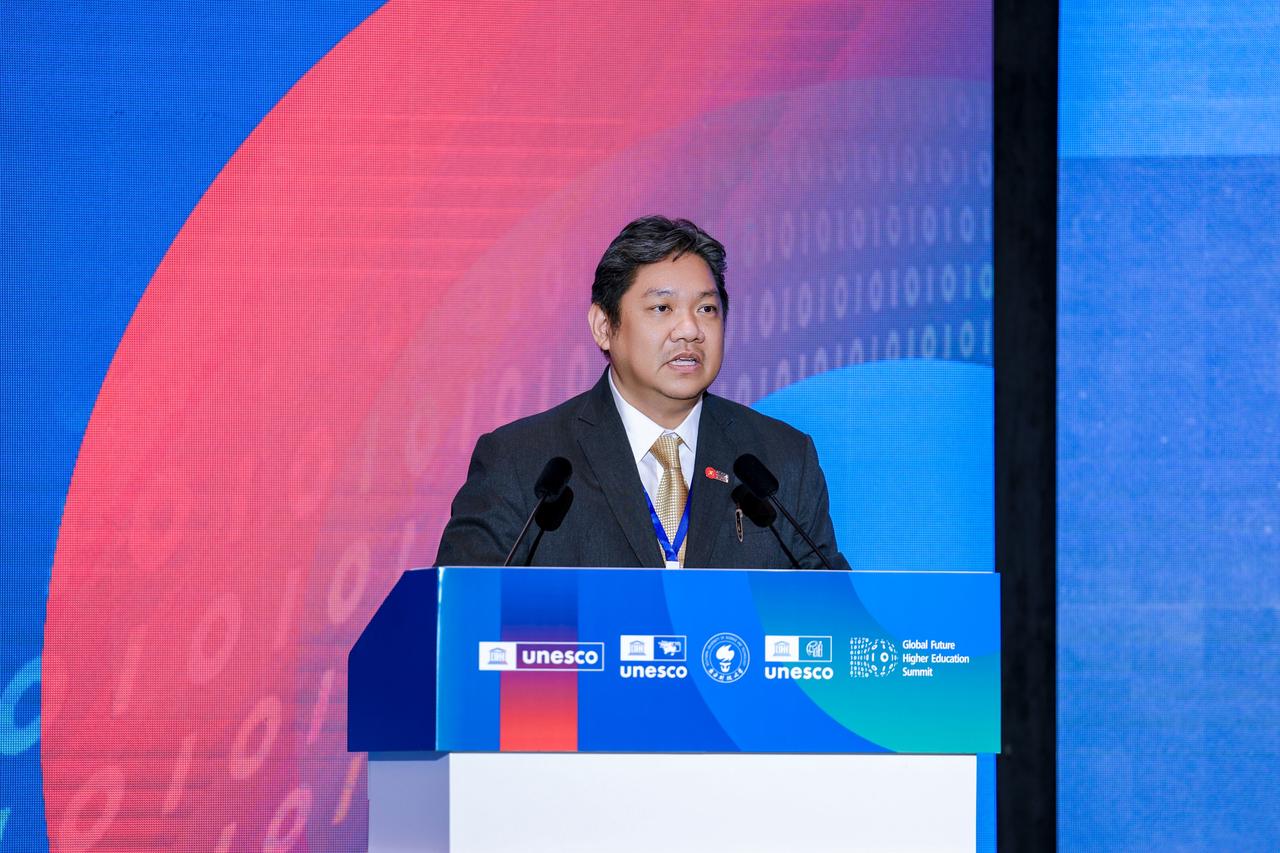
Assoc. Prof. Dr. Thanapan Laiprakobsup Executive Director, ASEAN University Network
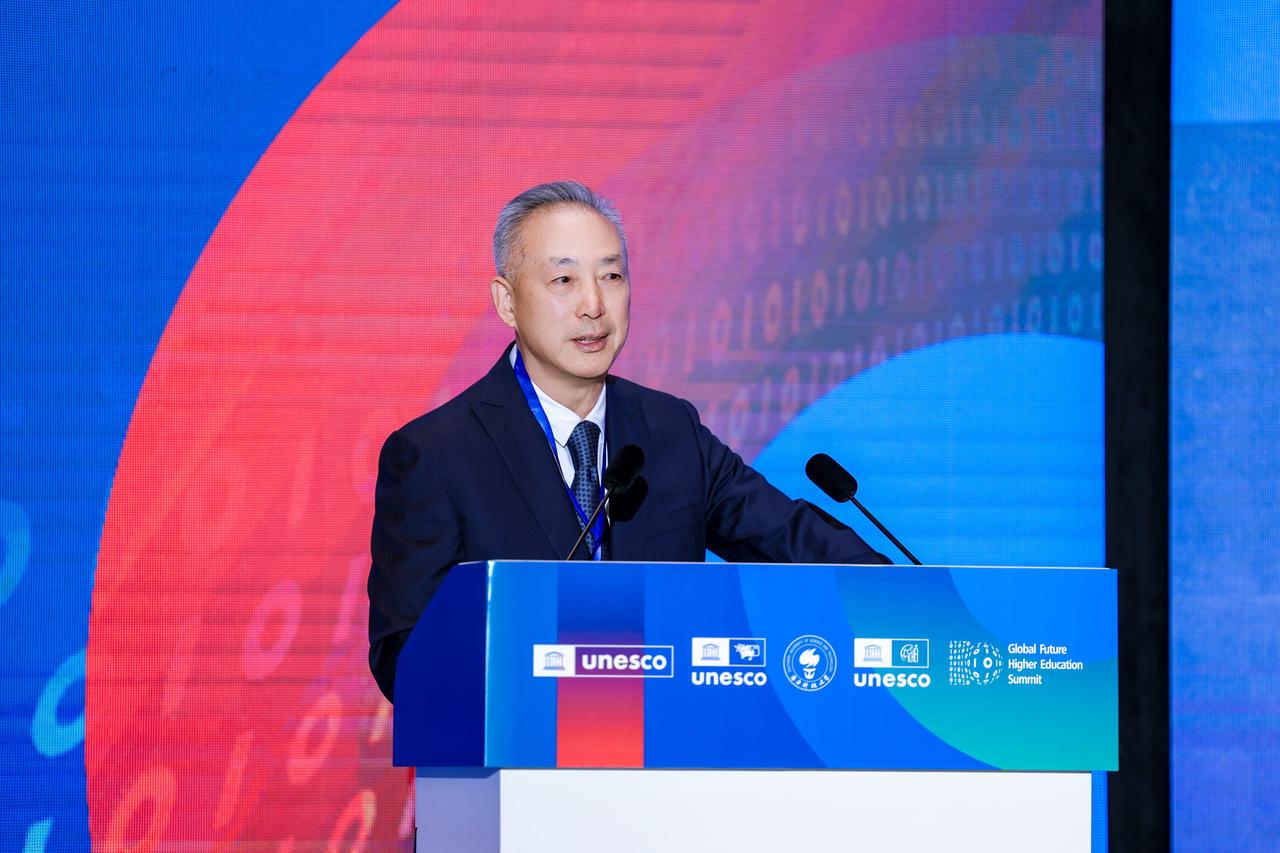
Mr. WANG Duanrui Chairman, Weidong-Demos Group; Chairman, Hong Kong Industry and Commerce Association
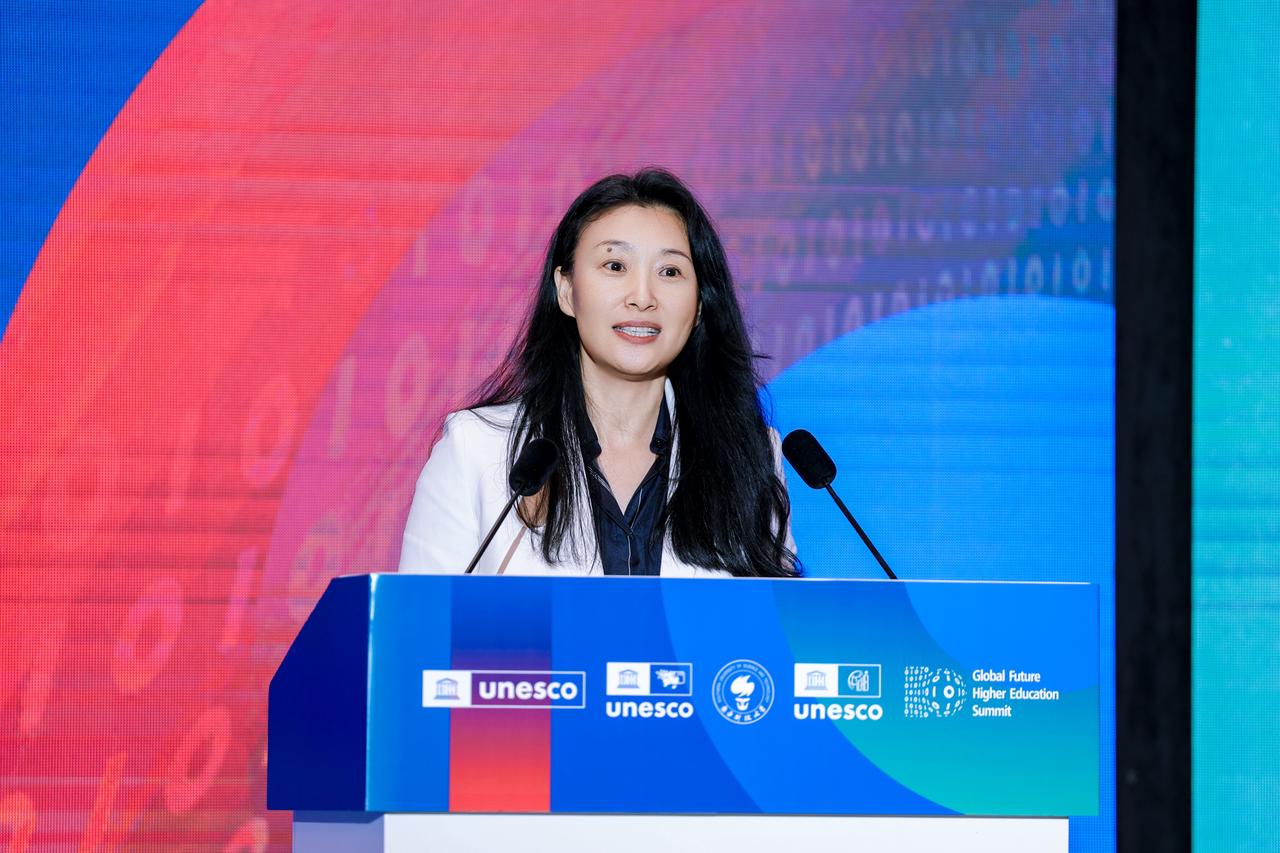
Ms. SHI Mei Vice President, Tencent Cloud; Head, Tencent Education
Frontier Dialogue
In the Frontier Dialogue, panellists from universities, vocational education, and industry exchanged views on cultivating future-ready talent amid rapid technological change. The panellists were: Dr. Nasser Salim Al Baimani, Deputy Vice Chancellor for Postgraduate Studies, Scientific Research and Innovation, University of Technology and Applied Sciences, Oman; Prof. XI Chuanwu, Chair Professor, Vice Provost for Global Engagement, Dean of the School of Environment and Sustainable Engineering, Eastern Institute of Technology, Ningbo, China; Prof. Bouchra Lebzar, Dean, National School of Business and Management Marrakech, Cadi Ayyad University, Morocco; Director, IIOE Morocco National Centre; Prof. Michael Boakye-Yiadom, Director-General, Institute for Educational Planning and Administration under the auspices of UNESCO, University of Cape Coast, Ghana; Director, IIOE Ghana National Centre; Mr. YAO Yichun, Chairman, Integration of Industry and Education Committee, World Federation of UNESCO Clubs, Centres and Associations; Chairman and President, China POCY Group; Mr. LI Qihan, General Manager of the Overseas Business Division, GuangZhou Dazzleview Intelligent Technology Co., Ltd.
The panellists broadly stressed that cultivating future-ready talent must rest on a complete ecosystem, remain human-centred, and give equal weight to hard and soft skills while valuing ethics, social responsibility, and the humanities; at the same time, teacher capacity-building should be a prerequisite, school-enterprise co-developed curricula should be deepened, and cultivation should be highly localised to each country's circumstances.
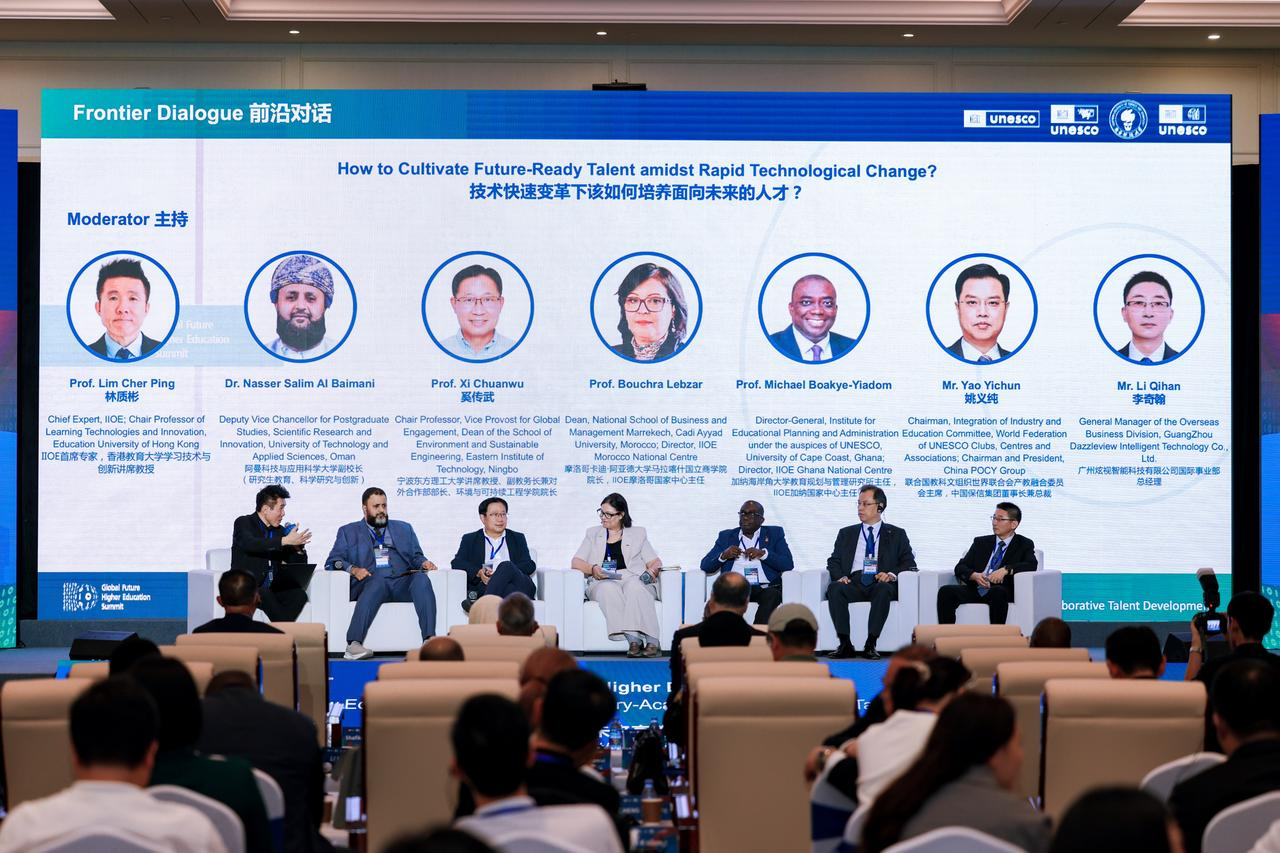
Session 3: Frontier Dialogue
Session 4
This session showcased the technology empowerment practices of the IIOE global ecosystem, where the release of the report and remarks from IIOE national and regional centre representatives illustrated how IIOE leverages micro-credentials and localised operations to advance digital transformation and AI empowerment across Global South higher education. Amb. Prof. Royson M. Mukwena, Vice Chancellor, Mulungushi University, Zambia (IIOE Rotating Presidency Unit 2026), moderated the session.
During the report release, Ms. BI Xiaohan, Deputy Director, UNESCO-ICHEI, released the "International Institute of Online Education (IIOE) Development Report (2019–2026)."
The report systematically reviews seven years of IIOE development and achievements—anchored in the three pillars of technology leadership, local adaptation, and multilateral cooperation—in building the digital and AI capabilities of higher education professionals and advancing the digital and intelligent transformation of universities. Looking ahead, IIOE will continue to advance technology empowerment, multilateral collaboration, local operations, and mutual benefit, working to translate SDG 4's vision of inclusive, equitable, and quality education into intrinsic momentum for the development of higher education across the Global South.
In the thematic presentation, Prof. Idris A. Rai, Acting Executive Secretary, Inter-University Council for East Africa, stressed that global resources cannot be copied wholesale but must be localised before they can be applied at scale. He noted that the Inter-University Council for East Africa and UNESCO-ICHEI plan to combine IIOE platform content with locally developed East African teaching cases and to carry out training programmes together to cultivate AI-capable educators for East Africa. Prof. Mona Abdel-Aal Elzahry, Vice Dean for Education and Student Affairs, Faculty of Medicine, University of East Capital, Egypt; Director, IIOE Arab Regional Centre, stated that digital and AI competence has become the "fourth pillar" of higher education, after teaching, research, and community service. Drawing on UNESCO-ICHEI's IIOE platform and "AI + Disciplines" courses, the IIOE Arab Regional Centre works with the Association of Arab Universities to bridge the gap between digital literacy and academic excellence.
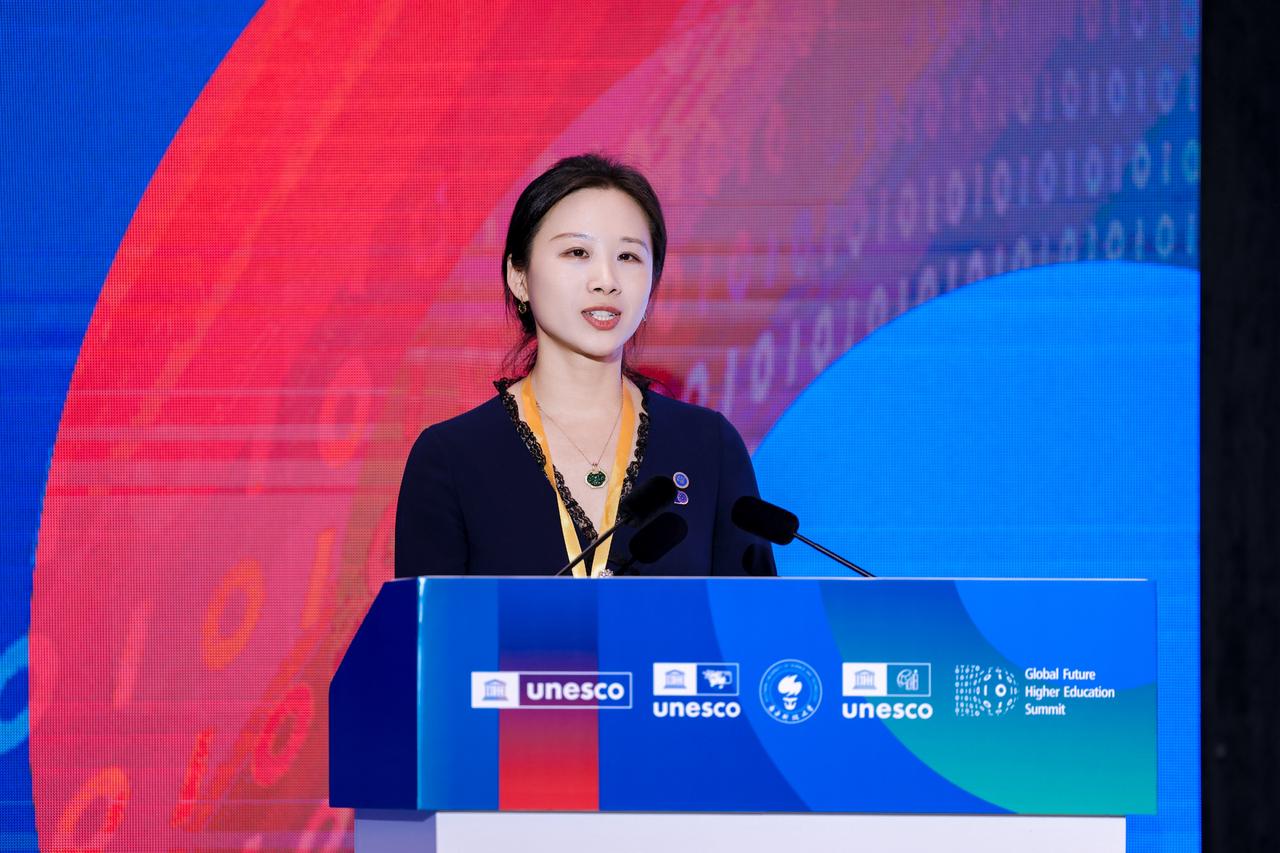
Ms. BI Xiaohan Deputy Director, UNESCO-ICHEI
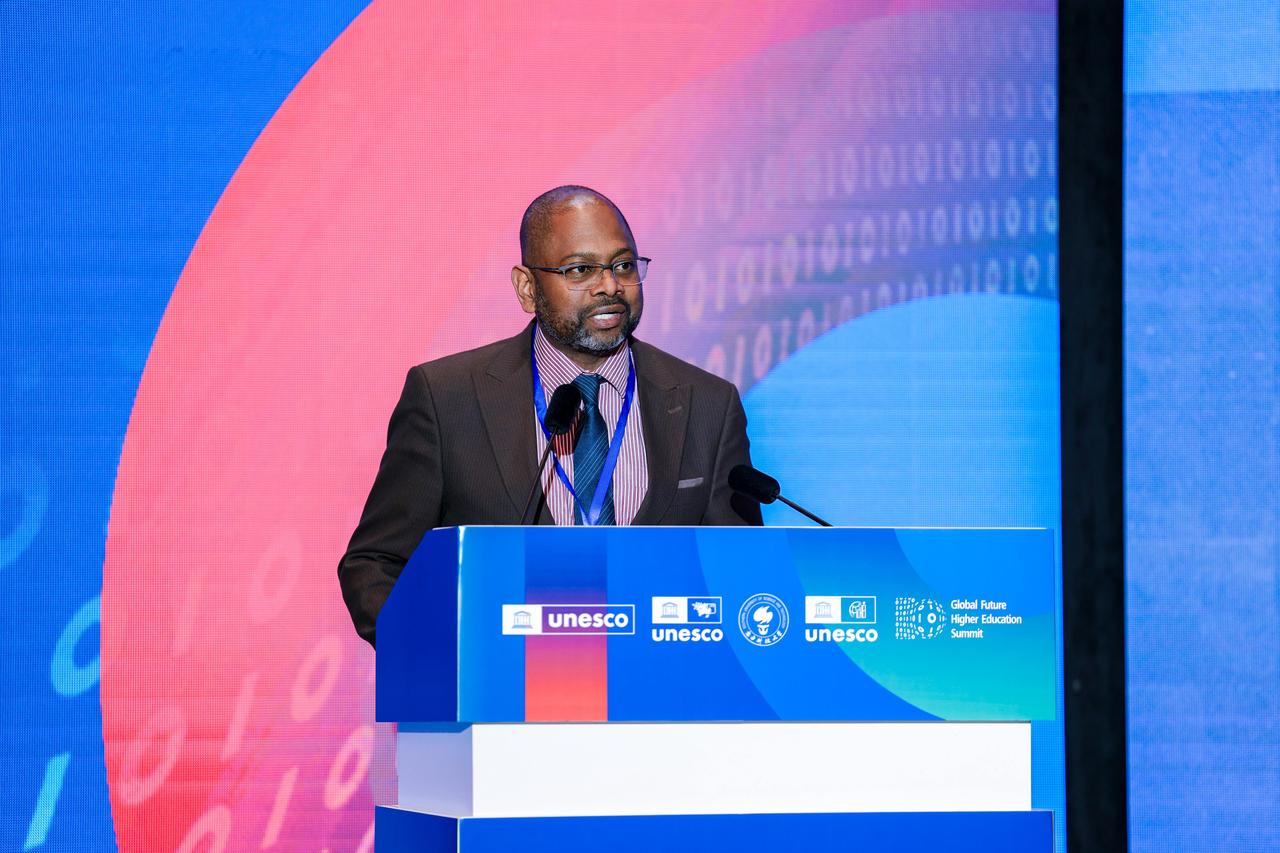
Prof. Idris A. Rai Acting Executive Secretary, Inter-University Council for East Africa
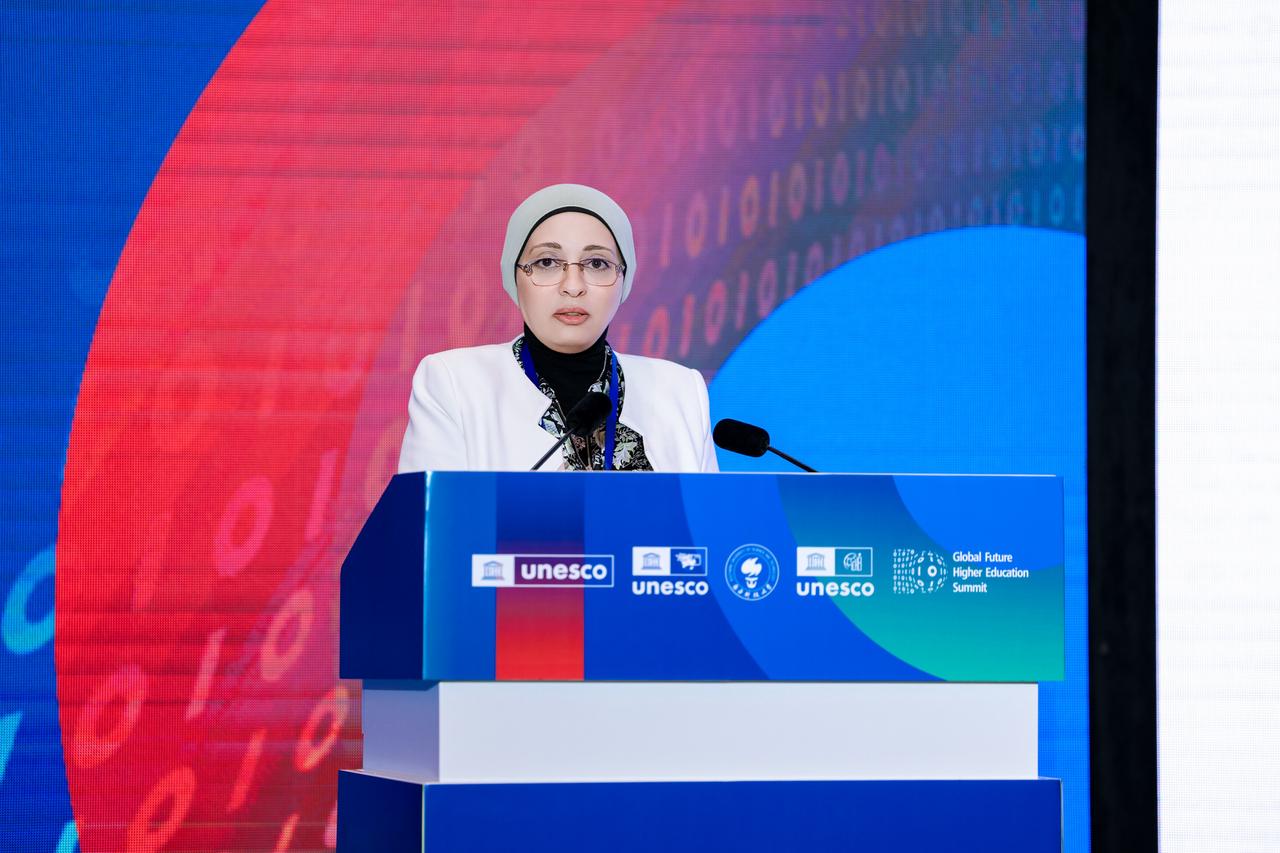
Prof. Mona Abdel-Aal Elzahry Vice Dean for Education and Student Affairs, Faculty of Medicine, University of East Capital, Egypt; Director, IIOE Arab Regional Centre
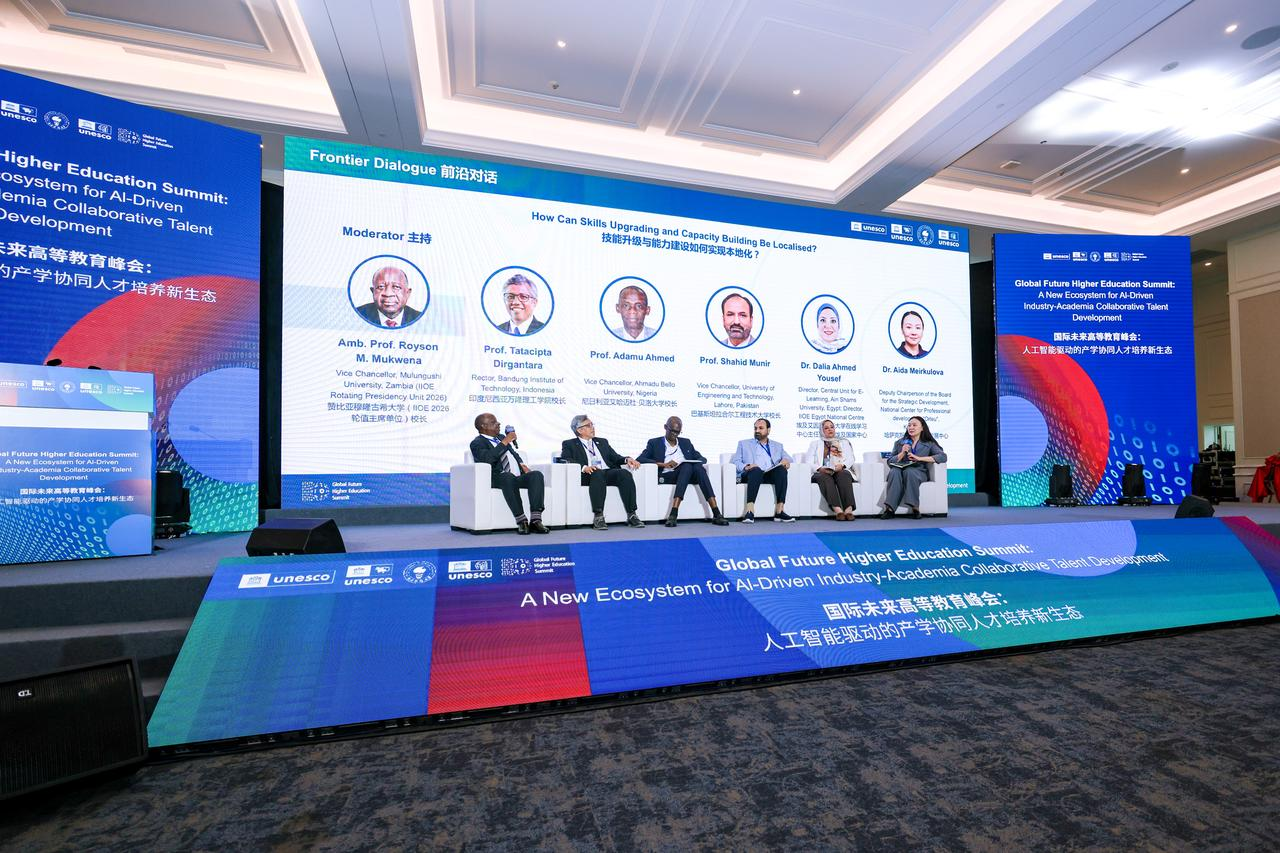
Frontier Dialogue
In the Frontier Dialogue, representatives of IIOE National and Regional Centres from Asia, Africa, and beyond shared localised pathways for skills upgrading and capacity building. The panellists were: Prof. Tatacipta Dirgantara, Rector, Bandung Institute of Technology, Indonesia; Prof. Adamu Ahmed, Vice Chancellor, Ahmadu Bello University, Nigeria; Prof. Shahid Munir, Vice Chancellor, University of Engineering and Technology, Lahore, Pakistan; Dr. Dalia Ahmed Youssef, Director, Central Unit for E-Learning, Ain Shams University, Egypt; Director, IIOE Egypt National Centre; Dr. Aida Meirkulova, Deputy Chairperson of the Board for Strategic Development, National Center for Professional Development "Orleu", Kazakhstan. The panellists broadly noted that high-quality global resources cannot simply be copied wholesale, but must be localised through translation, adaptation of local cases, and alignment with national strategies—drawing on the platform of UNESCO-ICHEI and IIOE, micro-certification, and national-centre mechanisms—turned into scalable solutions tailored to local needs.
Inauguration Ceremony
The Summit held the inauguration ceremony of the IIOE Arab Regional Centre and the IIOE Southeast Asia Regional Centre.
H.E. Prof. Amr Ezzat Salama, Secretary-General, Association of Arab Universities, Prof. Mona Abdel-Aal Elzahry, Vice Dean for Education and Student Affairs, Faculty of Medicine, University of East Capital, Egypt; Director, IIOE Arab Regional Centre and Prof. LI Ming, Founding Director, UNESCO-ICHEI; Secretary-General, IIOE Secretariat, Ms. BI Xiaohan, Deputy Director, UNESCO-ICHEI, jointly unveiled the IIOE Arab Regional Centre.
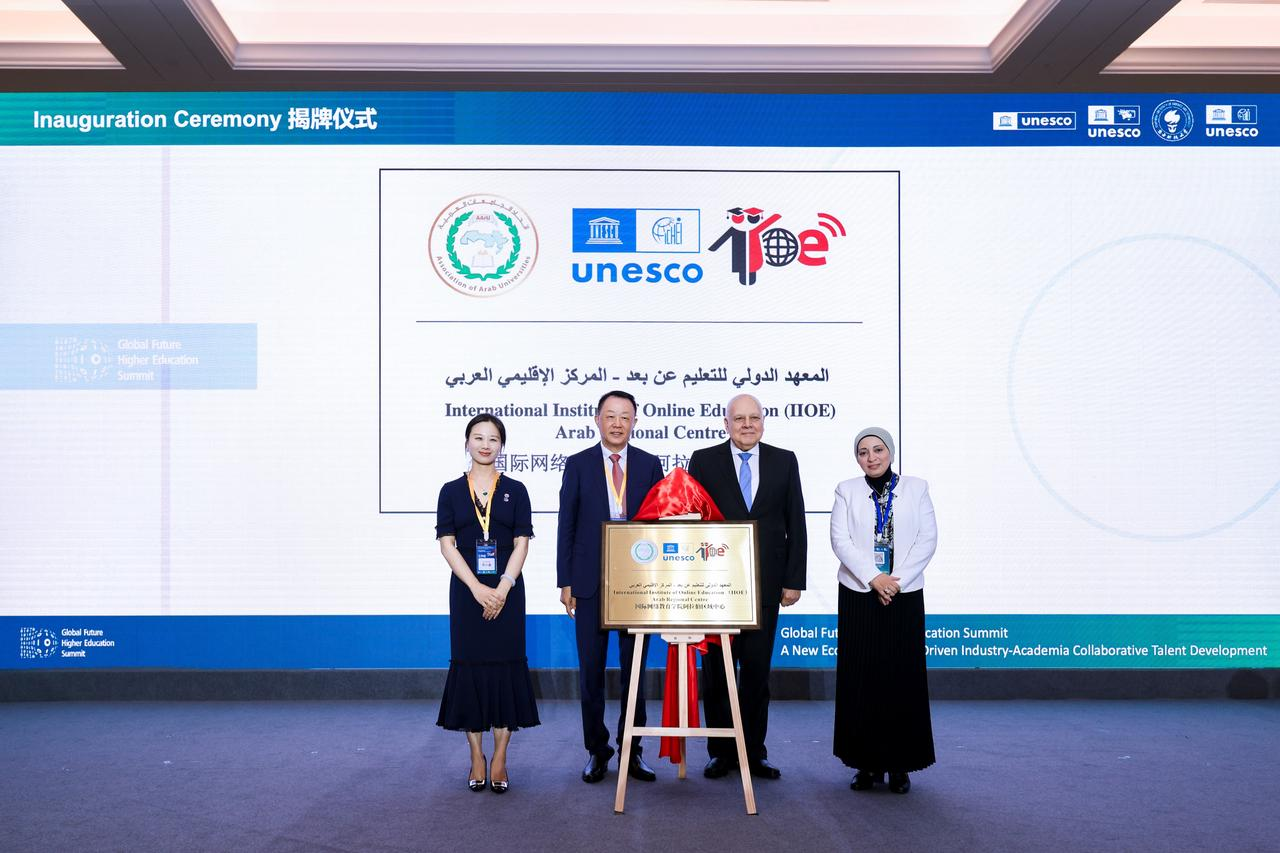
Inauguration ceremony of the IIOE Arab Regional Centre
Datuk Dr. Habibah Abdul Rahim, Director, SEAMEO Secretariat, Mr. Carlo Fernando, Learning Innovation and Information Specialist, SEAMEO Secretariat, Prof. LI Ming and Ms. BI Xiaohan jointly unveiled the IIOE Southeast Asia Regional Centre.
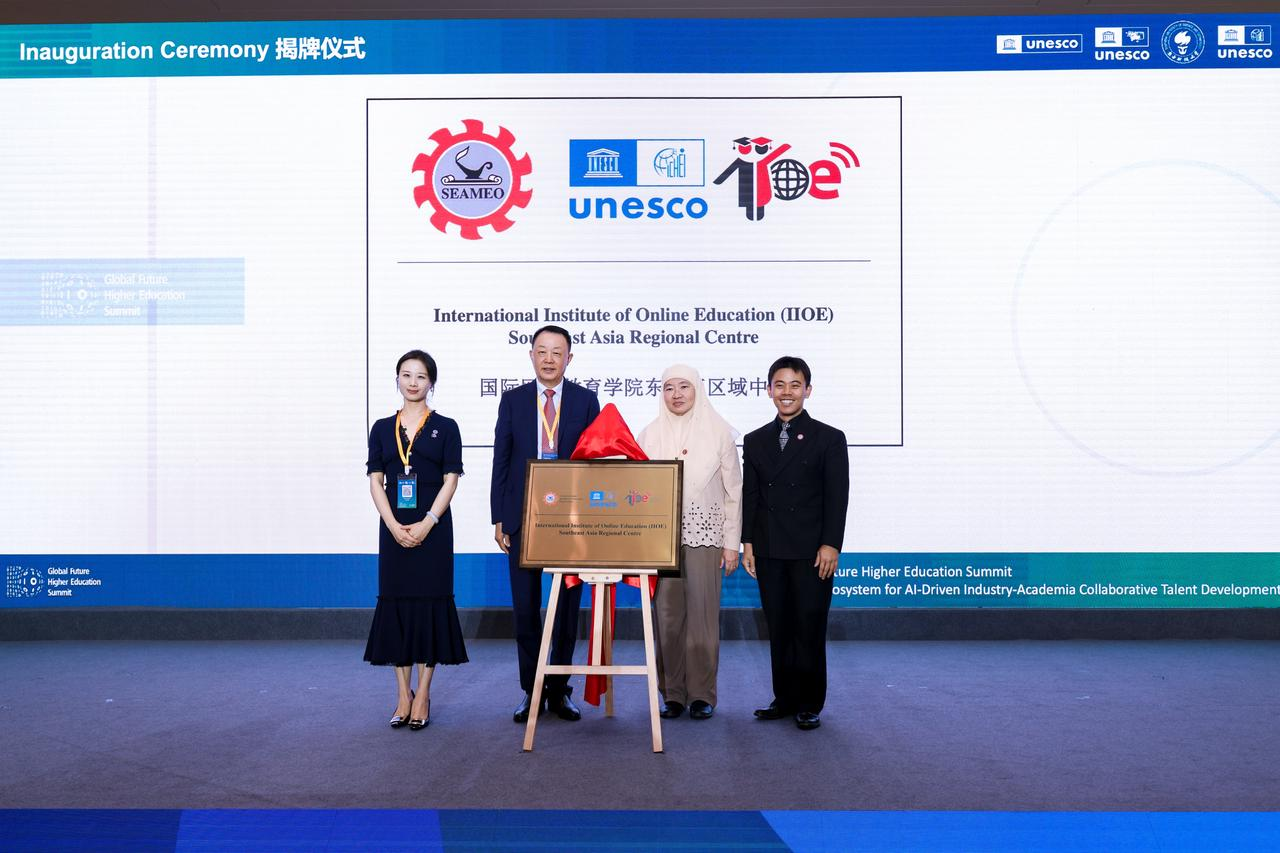
Inauguration ceremony of the IIOE Southeast Asia Regional Centre
As key components of IIOE's multi-tier operating system of national centres, training centres, and regional centres, the two IIOE Regional Centres will draw on their respective locational strengths to accelerate the sharing of quality resources and deepen regional policy coordination, integrating globally sourced quality resources with the policy frameworks, teaching contexts, and industry needs of their regions, and injecting sustained momentum into the digital and intelligent transformation of higher education in the Arab region and Southeast Asia.
Release of the Consensus of the IIOE Ecosystem Partners
Amb. Prof. Royson M. Mukwena, Vice Chancellor, Mulungushi University, Zambia (IIOE Rotating Presidency Unit 2026), presented the Consensus of the IIOE Ecosystem Partners to participants. Grounded in SDG 4 and the Education 2030 Framework for Action, the Consensus brings together the shared vision of IIOE ecosystem partner institutions, enterprises, and related organisations, committing to priority actions—advancing technology empowerment, deepening multilateral collaboration, strengthening local operations, and promoting mutual benefit—so as to keep narrowing gaps in the digital literacy and AI capabilities of university teachers and students, bridge the digital divide, and jointly advance the realisation of the Education 2030 agenda and the Futures of Education vision.
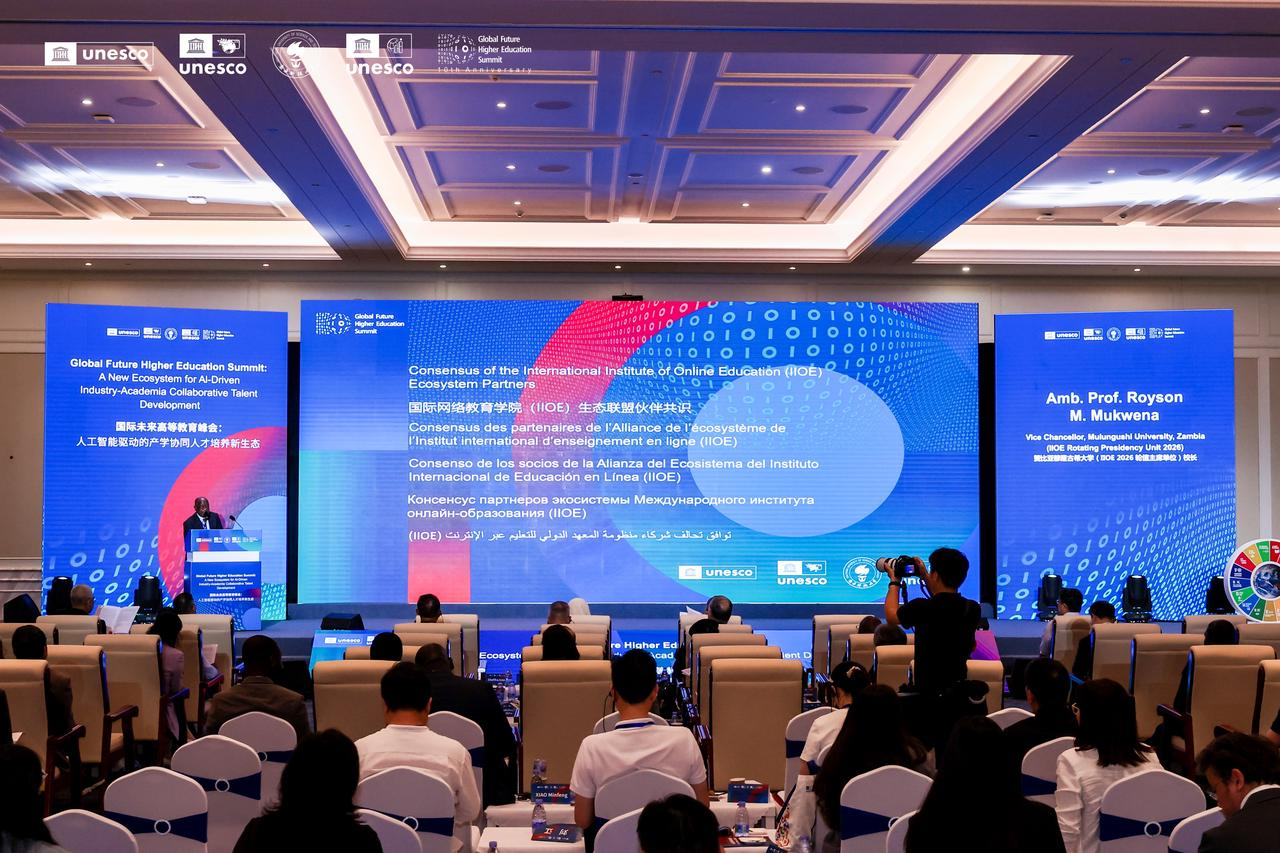
Release of the Consensus of the IIOE Ecosystem Partners
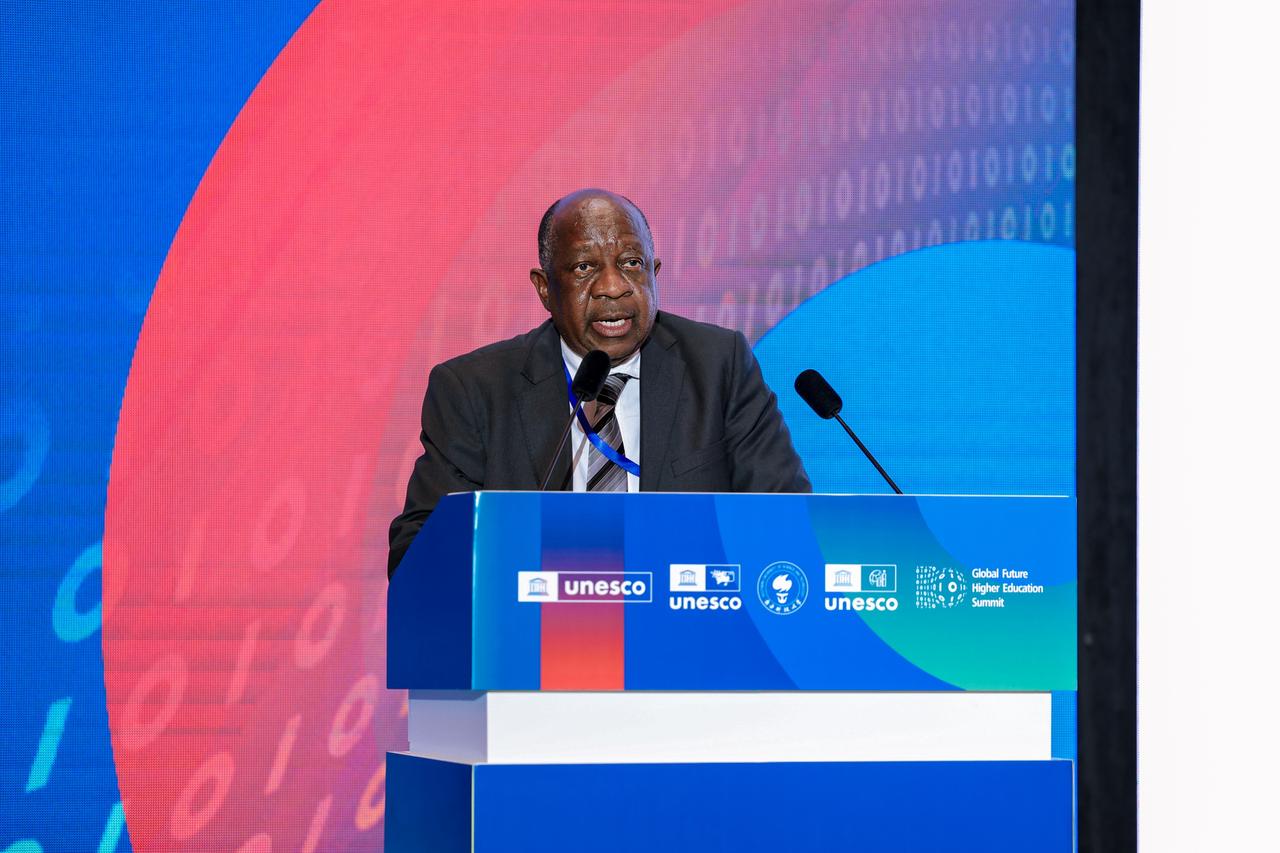
Amb. Prof. Royson M. Mukwena Vice Chancellor, Mulungushi University, Zambia (IIOE Rotating Presidency Unit 2026)
Closing Remarks
Prof. LI Ming, Founding Director, UNESCO-ICHEI; Secretary-General, IIOE Secretariat, in his closing remarks, noted that traditional talent-cultivation models struggle to keep pace because of long knowledge-transfer cycles and a time lag behind the industrial frontier. He stressed that IIOE will continue to deepen its work along the lines of advancing technology empowerment, deepening multilateral collaboration, strengthening local operations, and promoting mutual benefit. Looking ahead, building on its work across the Global South, IIOE will further expand towards South-North-South cooperation—introducing more quality higher-education resources from developed countries and building bridges between North and South.
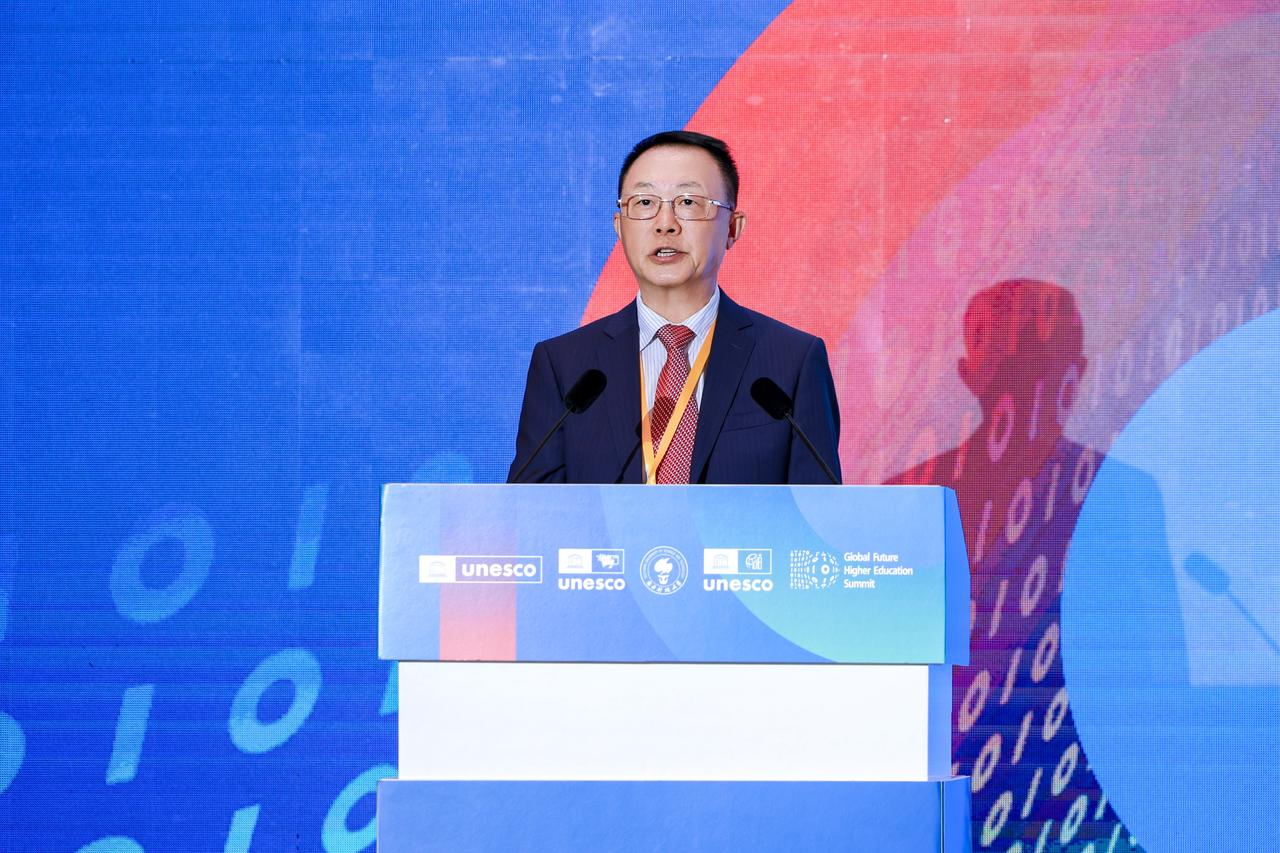
Prof. LI Ming, Founding Director, UNESCO-ICHEI; Secretary-General, IIOE Secretariat
The Summit built a multilateral platform for dialogue between frontier industry and higher education professionals, centring on AI-driven industry-academia collaborative talent development and encouraging all parties to jointly explore curriculum innovation, the cultivation of practical skills, and lifelong-learning mechanisms. Through the release of joint research outcomes and exemplary cases from technology enterprises, it offered higher education stakeholders an actionable and replicable model for building an AI-era industry-academia collaborative ecosystem for talent development, forging broad consensus on the digital transformation of higher education.