"Women Leading Change in Africa" Project Launched in Zambia
In 2025, the International Centre for Higher Education Innovation under the auspices of UNESCO (UNESCO-ICHEI), in collaboration with the UNESCO Institute for Information Technologies in Education (UNESCO IITE), jointly launched the project "Women Leading Change in Africa: Future Higher Education Professionals and Leadership in the Intelligence Era" (hereinafter referred to as the Women Empowerment in Africa Project), which has been implemented in several African countries.
As a key country of the Women Empowerment in Africa Project, Zambia hosted the launch ceremony of the "Women Leading Change in Africa: Future Higher Education Professionals and Leadership in the Intelligence Era" project on 6 March 2026 in Livingstone, Zambia. The event was jointly organized by Mulungushi University, UNESCO-ICHEI, and the International Institute of Online Education (IIOE). The launch of the project marks an important step toward advancing women’s leadership in higher education and promoting the digital transformation in the era of artificial intelligence (AI).
The launch ceremony brought together more than 30 experts and scholars from higher education institutions (HEIs) and government officials across Zambia. Distinguished guests attending the event included Hon. Douglas Munsaka Syakalima, Minister of Education of Zambia; Hon. Credo Nanjuwa, Minister for Southern Province of Zambia; Amb. Prof. Royson M. Mukwena, Vice Chancellor of Mulungushi University and Dr. Brian Halubanza, Director of the IIOE Zambia National Centre. Representing UNESCO-ICHEI were Ms. BI Xiaohan, Deputy Director; Mr. SIT Fung, Assistant Director & Chief of the Global Partnership and Programme Office; and Mr. ZHANG Boyi, Programme Officer of the Global Partnership and Programme Office. The event was moderated by Prof. Mwaka Siluonde, Acting Dean of the School of Education at Mulungushi University.
From left to right: Hon. Credo Nanjuwa, Minister for Southern Province, Zambia; and Hon. Douglas Munsaka Syakalima, Minister of Education, Zambia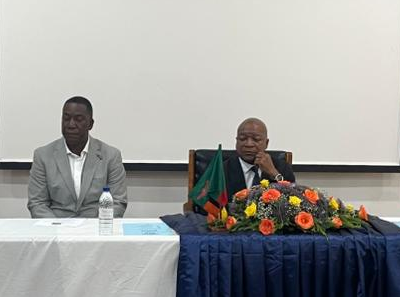
Amb. Prof. Royson M. Mukwena, mentioned in his opening remarks that as the 2026 IIOE Rotating Presidency Unit and host of the IIOE Zambia National Centre, the University bears an important responsibility not only to promote the professional development of women educators and strengthen collaboration among higher education institutions within Zambia, but also to serve as a model within the global higher education community in advancing gender equality and educational innovation. He emphasized that the Women Empowerment in Africa Project is one of Mulungushi University's priorities for 2026. The University will work closely with UNESCO-ICHEI and collaborate with other universities across Zambia to organize a series of training and exchange activities aimed at continuously enhancing the professional capacities and leadership of women faculty in higher education.
Amb. Prof. Royson M. Mukwena, Vice Chancellor of Mulungushi University, delivered the opening remarks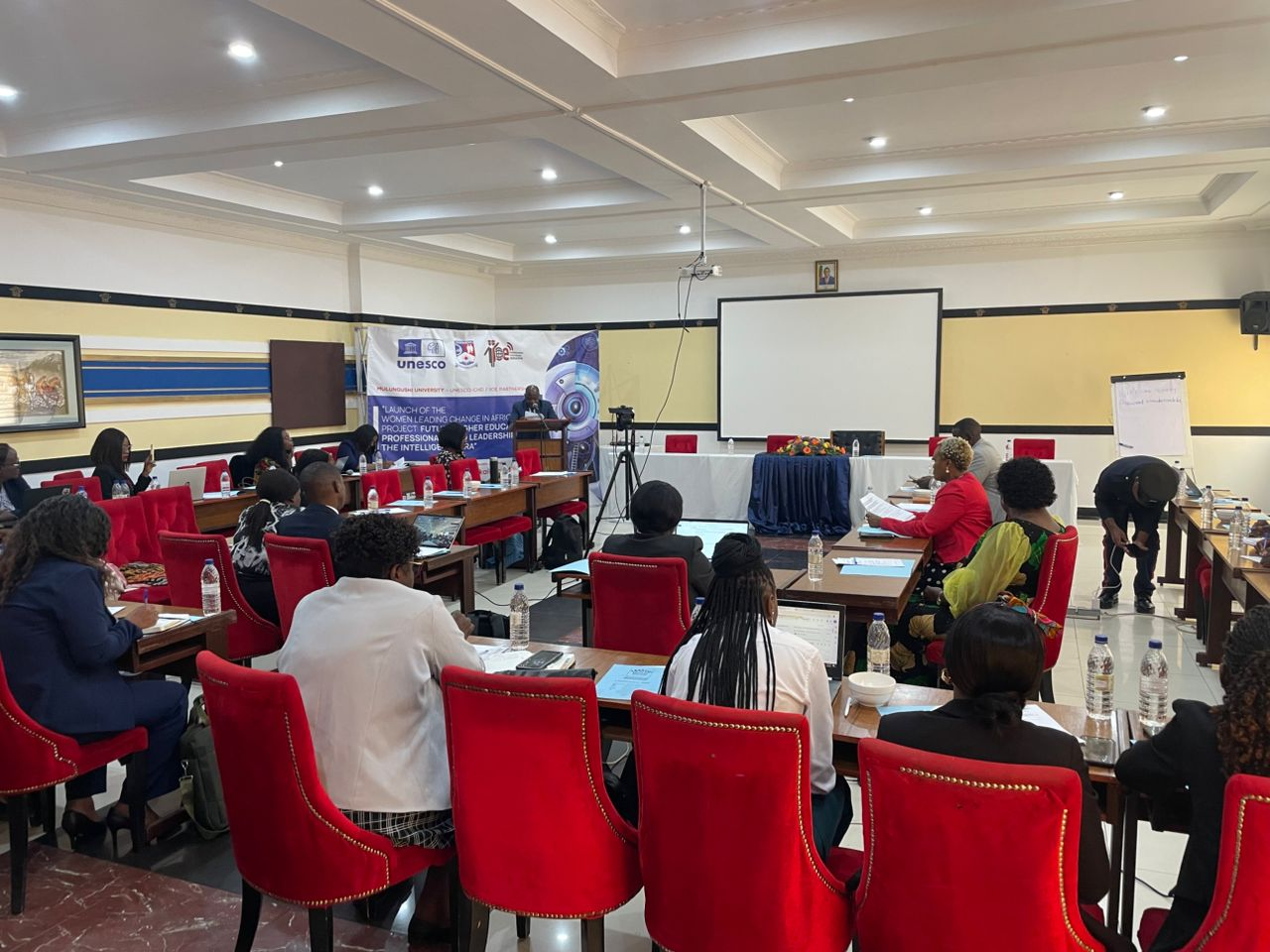
Hon. Douglas Munsaka Syakalima, Minister of Education of Zambia, officially announced the launch of the Women Empowerment in Africa Project in Zambia during the meeting. He noted that women remain underrepresented in leadership positions within Zambia’s higher education sector, particularly in emerging fields such as digital transformation and AI. The project directly responds to the practical challenges faced by women professionals in Zambia and brings together key issues—including policy development, capacity building, and gender equality—into a comprehensive plan that provides a platform for promoting inclusive development in the country’s higher education sector. The Minister further emphasized that the Ministry of Education will work closely with Mulungushi University, UNESCO-ICHEI, and other partners to advance the application of emerging technologies such as AI in higher education through practical actions, while ensuring that potential risks related to data protection and ethical governance are carefully addressed.
Hon. Douglas Munsaka Syakalima, Minister of Education, Zambia, officially announced the launch of the project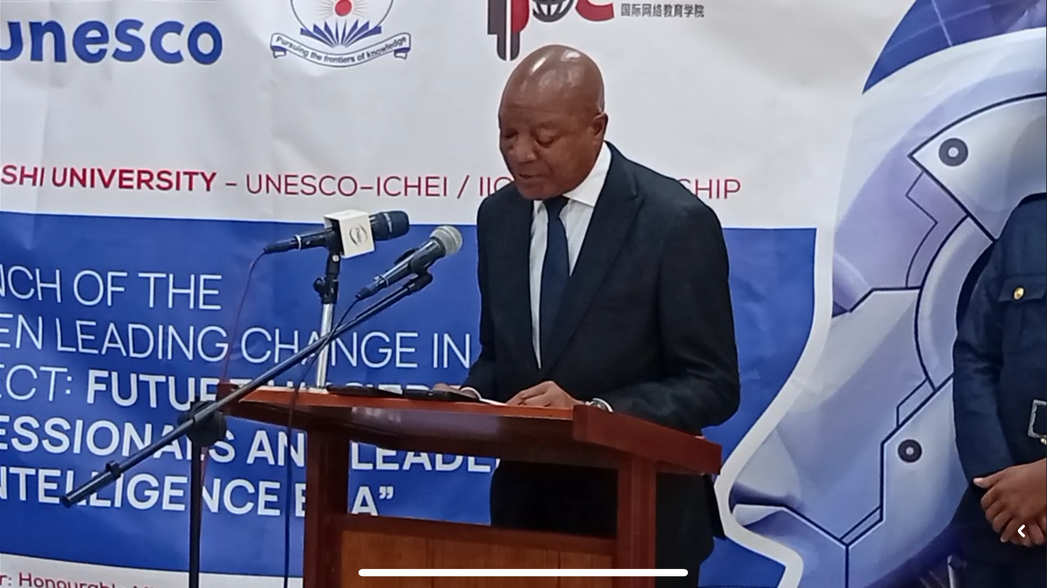
Ms. BI Xiaohan, Deputy Director of UNESCO-ICHEI, noted in her keynote address that the Women Empowerment in Africa Project directly responds to two of UNESCO’s global priorities — Africa and Gender Equality —and is closely aligned with the 2030 Agenda for Sustainable Development (SDGs). By promoting women's development in digital competencies and educational leadership, the project will make an important contribution to achieving SDG 4 (Quality Education) and SDG 5 (Gender Equality).
Ms. BI Xiaohan, Deputy Director; Mr. SIT Fung, Assistant Director & Chief of the Global Partnership and Programme Office; and Mr. ZHANG Boyi, Programme Officer of the Global Partnership and Programme Office, attended the meeting virtually on behalf of UNESCO-ICHEI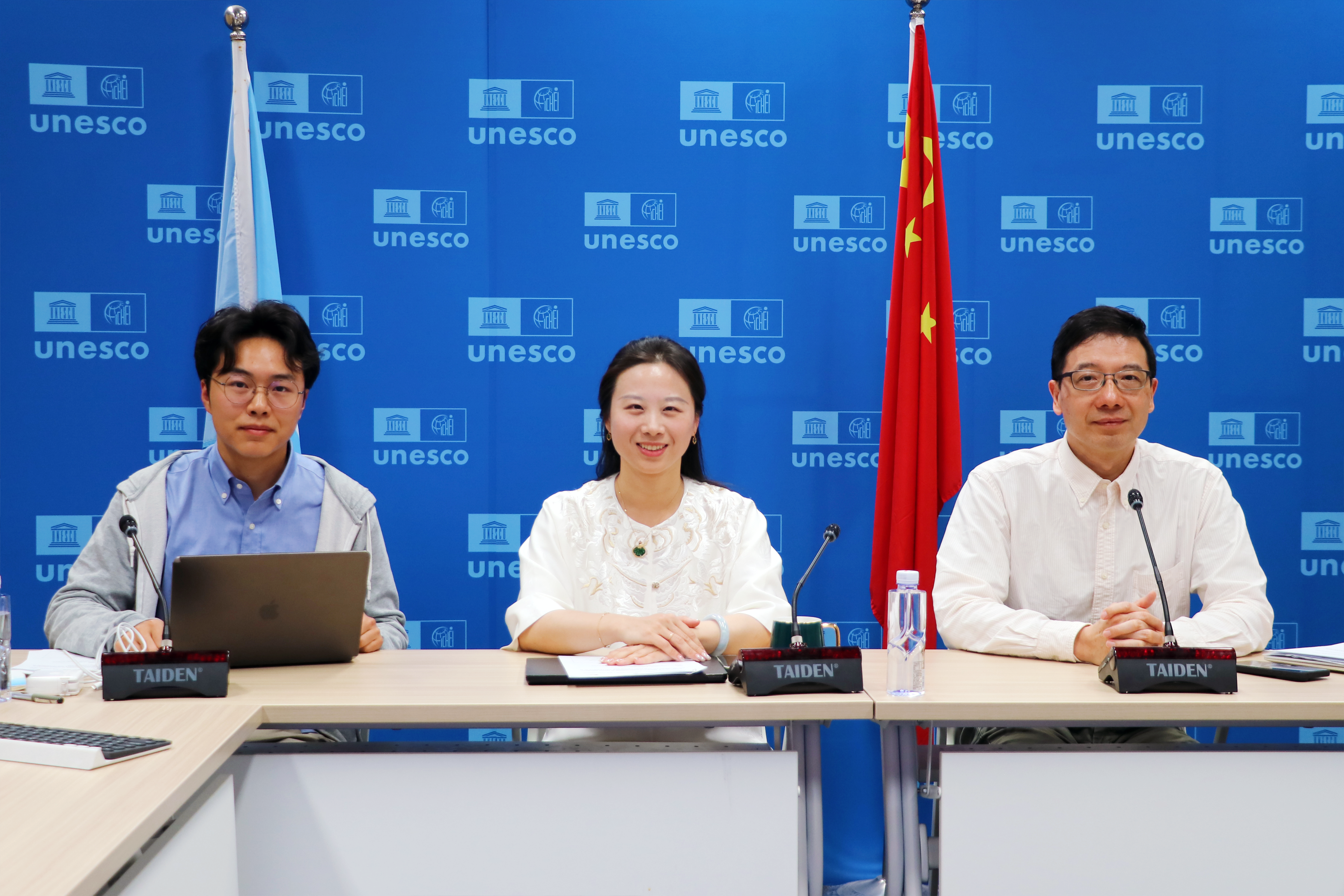
Ms. BI Xiaohan also highlighted the project's achievements in other African countries. For instance, Ain Shams University, the IIOE Egypt National Centre, has engaged 3,514 women educators in project training; Ahmadu Bello University, the IIOE Nigeria National Centre, has attracted 2,338 women educators to participate; while Addis Ababa University, the IIOE Ethiopia National Centre, has already benefited 501 women professionals. Among these institutions, Ain Shams University and Addis Ababa University have formally integrated the IIOE micro-certification courses into their internal Teacher Development system, which demonstrates how international resources can be localized and embedded within existing institutional structures. Meanwhile, Ahmadu Bello University has shown remarkable self-operational capacity. The university has established an active local faculty community where educators regularly exchange experiences, discuss AI applications, and support one another. The high level of engagement reflects a healthy, internally driven development mechanism.
After Ms. BI's speech, Mr. SIT Fung provided a detailed overview of the project's overall objectives and activities. He explained that the Women Empowerment in Africa Project places capacity-building at its core and will systematically enhance the competencies of women professionals in higher education through an integrated approach that combines online learning, offline training, and practical application. In light of Zambia's development needs, Mr. SIT Fung also introduced several key micro-certification courses developed by UNESCO-ICHEI, including "AI + Agricultural Technology" and "AI + Cross-Border E-Commerce," as well as initiatives such as the GenAI-Responsive Competency Framework for University Teachers. These courses and tools will provide important support for women educators in Zambia to strengthen their digital teaching and research capacities.
Participants widely agreed that the project provides an important platform for supporting women's professional development in higher education while also exploring new models of collaboration for educational innovation in the AI era. Looking ahead, UNESCO-ICHEI will continue to work closely with the Ministry of Education of Zambia, Mulungushi University, and regional partners to further advance the project through multi-stakeholder collaboration, supporting a more inclusive and sustainable digital and AI transformation of higher education systems across Africa.