IWD 2026 | Shaping an Equitable Future for Higher Education
Happy International Women's Day
to all women globally!
— UNESCO-ICHEI (Shenzhen, China)
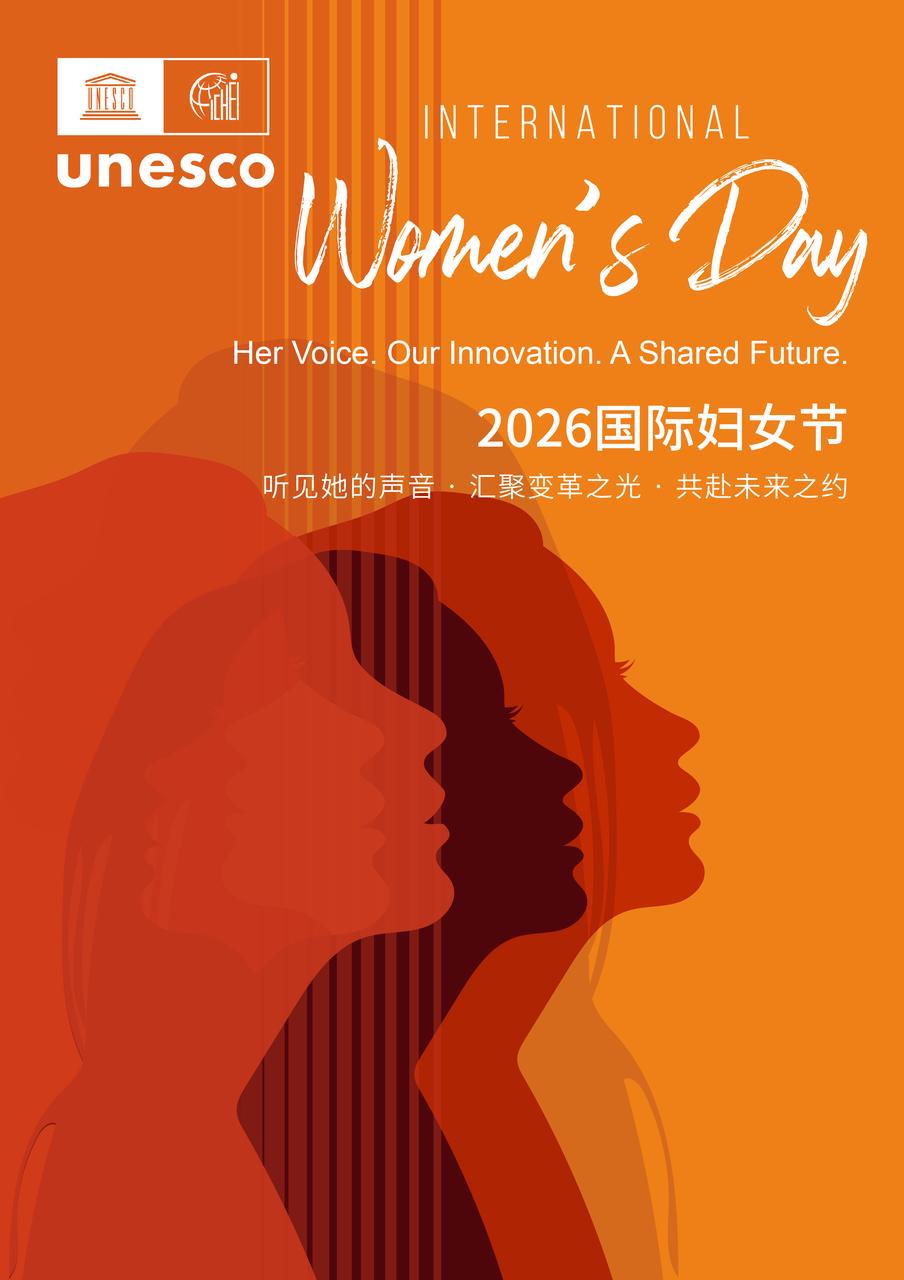
As Artificial Intelligence drives global transformation, closing the gender digital divide and enhancing female leadership in higher education have become core issues in achieving educational equity. Public platforms and targeted initiatives are the core engines ensuring that women in developing countries deeply participate in the digital transformation, thereby reshaping global educational equity. Women's profound involvement in higher education and technology governance goes beyond mere gender balance; it is a critical driving force for innovation, inclusivity, and sustainable development in the AI era. The theme for International Women's Day 2026 is "Rights. Justice. Action. For ALL Women and Girls," calling on the global community to take concrete actions to remove structural challenges hindering equal justice and social rights [1]. In the rapidly advancing field of Artificial Intelligence, structural inequalities remain stark: in higher education environments, only 28% of female students consider themselves to have proficient AI skills, compared to a staggering 73% of male students [2]. Facing this challenge, the UNESCO International Centre for Higher Education Innovation (UNESCO-ICHEI), guided by UN Sustainable Development Goal 4 (SDG 4) and UNESCO's two Global Priorities (Africa and Gender Equality), is committed to enhancing women's digital participation and achieving educational equity through technological empowerment. To this end, UNESCO-ICHEI has launched several initiatives, including the "Women Leading Change in Africa: Future Higher Education Professionals and Leadership in the Intelligence Era," co-initiated and implemented with the UNESCO Institute for Information Technologies in Education (UNESCO IITE), as well as open capacity-building training on the International Institute of Online Education (IIOE) platform. These targeted capacity-building efforts aim to bridge the digital divide. Through open platforms and training, female educators worldwide are empowered to become the backbone leading the digital transformation of higher education.
Multidimensional Collaboration: Building a New Engine for the Digital Empowerment of African Women The "Women Leading Change in Africa: Future Higher Education Professionals and Leadership in the Intelligence Era" aims to comprehensively promote the digital and AI capabilities of female teaching staff, management leadership, and teaching support personnel in African higher education. As a vital component of UNESCO's "Priority Africa" and "Gender Equality" strategies, the project is planned to be rolled out in at least 10 African countries. This includes 7 IIOE National Centre host countries (such as Egypt, Nigeria, and Kenya), alongside Côte d'Ivoire, Gambia, and Namibia—three countries with a long history of collaboration with UNESCO-ICHEI. Leveraging expert consultation and core course resources provided by UNESCO-ICHEI, the project is structured around five major activities: capacity-building training, workshops and policy dialogues, community building, guideline development, and joint research. This framework not only provides localized and customized training for female educators but also fosters regional professional communities to promote peer support and leadership, ultimately driving partner institutions to achieve inclusive digital transformation at the institutional level. High-Level Policy Dialogue in Africa: "Advancing the Implementation of Higher Education Strategies in the AI Era"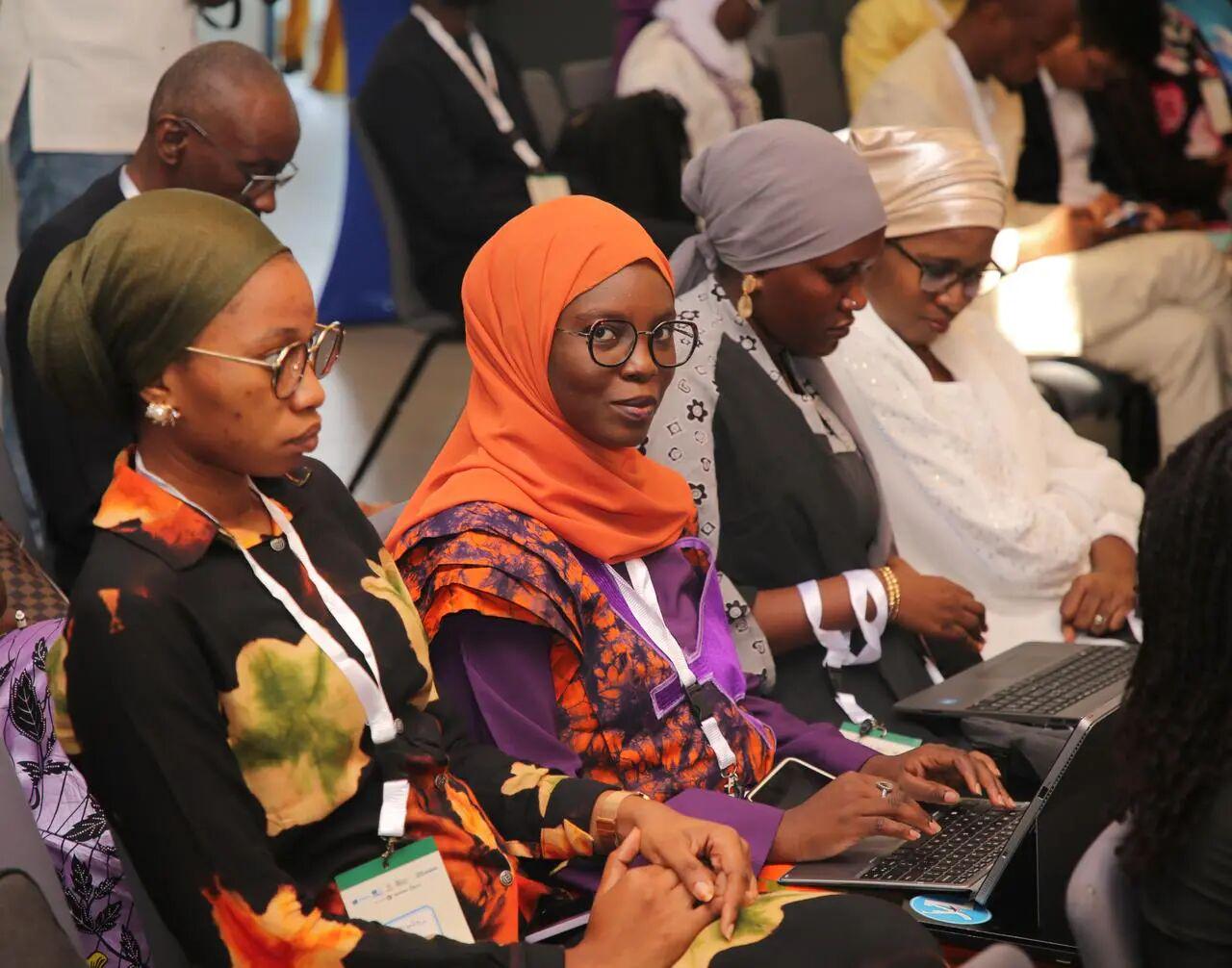
From Pilot to Deep Cultivation: Vivid Practices of African Partner Institutions In practical implementation, African partner institutions have demonstrated vibrant and impactful practices. The IIOE Egypt National Centre has shown remarkable initiative. The initial project report released by Ain Shams University (ASU) shows that the training has reached 3,514 participants, with women accounting for a remarkable 66%. This significant data not only marks the widespread popularization of digital skills but also reflects the strong desire of women in Egyptian higher education to reshape academic leadership—they are transitioning from traditional teaching participants to strategic leaders of digital transformation by mastering AI decision-making tools.
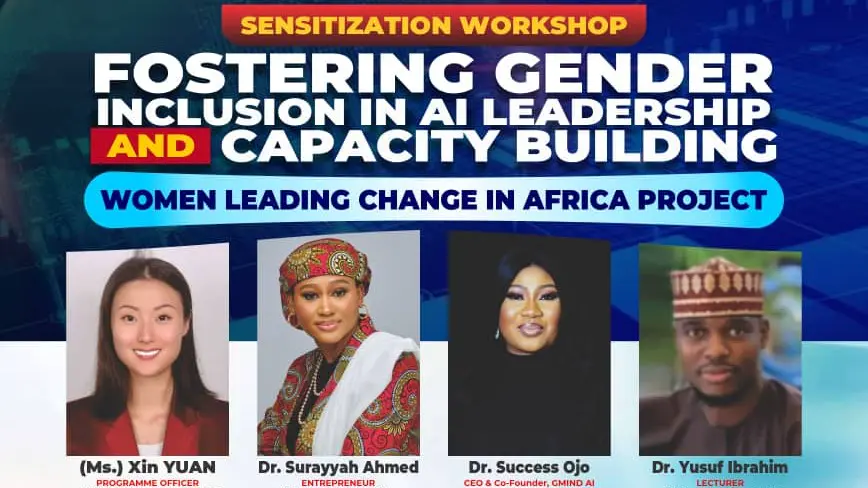
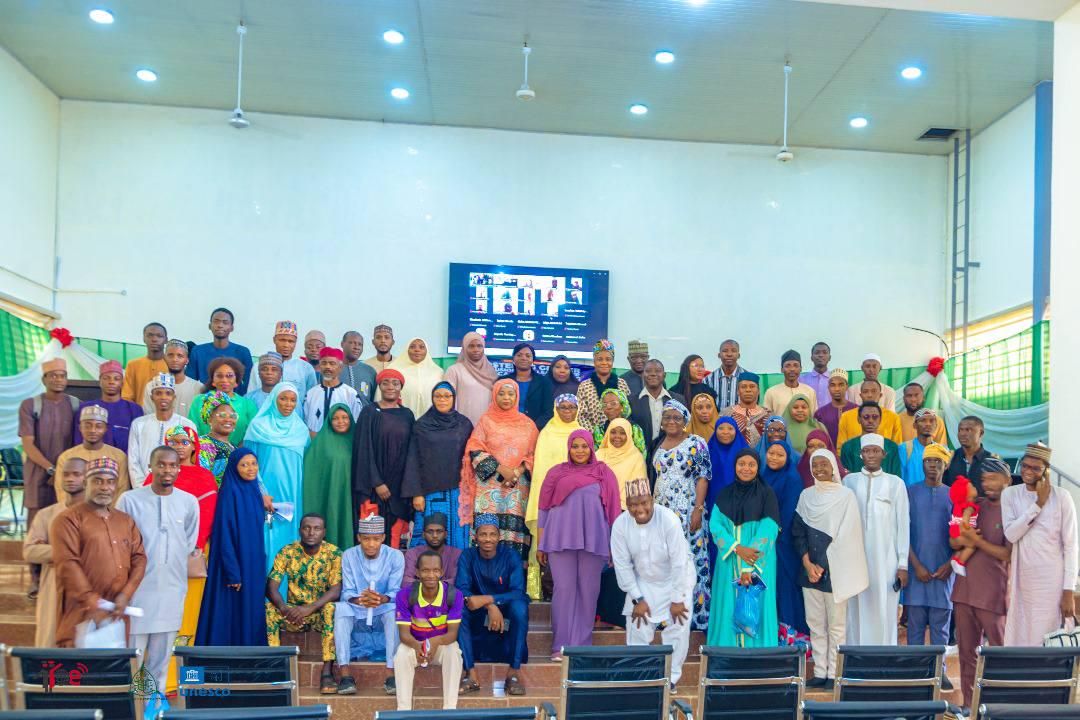
Bi Xiaohan, Deputy Director of UNESCO-ICHEI (fourth from left), with the IIOE Egypt National Centre Team (2023) Simultaneously, institutional empowerment is deepening. Addis Ababa University (AAU) in Ethiopia became the second institution to integrate IIOE micro-credential courses into its internal "Continuous Professional Development" system and complete the certification process, providing a solid institutional guarantee for the career advancement and long-term leadership cultivation of female teachers. Digital technology is no longer just an auxiliary teaching tool; it is a powerful instrument for African female scholars to transcend career limitations, overcome professional barriers, and achieve a leap in self-worth. The IIOE Nigeria National Centre, in collaboration with UNESCO-ICHEI, is driving the "Women Leading Change in Africa" project, dedicated to providing fairer AI literacy enhancement and leadership development opportunities for women in academia. By combining skills training with micro-credentials, the project ensures that women (teachers, administrators, and technical support teams) can actively participate in shaping the AI future of education. A series of integrated online and offline activities has been planned, attracting nearly 1,300 participants and significantly enhancing the visibility and influence of women in Nigeria's AI and digital transformation sector. More importantly, a continuously growing AI practice community of female educators and managers is taking shape. They are not only accumulating digital capabilities but actively applying what they have learned to curriculum innovation, institutional leadership, and policy advocacy. Promotional Seminar for the "Women Leading Change in Africa" Project Ahmadu Bello University (ABU) in Nigeria serves as an excellent benchmark for project execution. According to the latest report, ABU has successfully reached 2,338 participants, including 1,108 female educators. Through concrete actions, the IIOE Nigeria National Centre has significantly increased women's participation in the digital advancement of higher education. As of February 2026, the specific women's project initiated by the center has successfully covered 312 individuals, with the female participation rate jumping substantially from 45.2% in 2025 to 61.5%, precisely addressing the urgent need to narrow the gender digital divide. With the official addition of the Nigerian College of Aviation Technology as a secondary partner institution, the project's coverage has further expanded into the realm of professional and technical education. Recently, the center conducted four intensive thematic training sessions covering topics such as "The Ethical Use of AI in Teaching and Research," "The Ethical Use of AI in Engineering," "The Use of AI Tools," and "Micro-credential Guidelines," benefiting a total of 291 educators. This comprehensive empowerment, from awareness to concrete skills, is tangibly elevating women's academic voice and technological leadership in the digital era. "Women Leading Change in Africa" Project Workshop at the IIOE Nigeria National Centre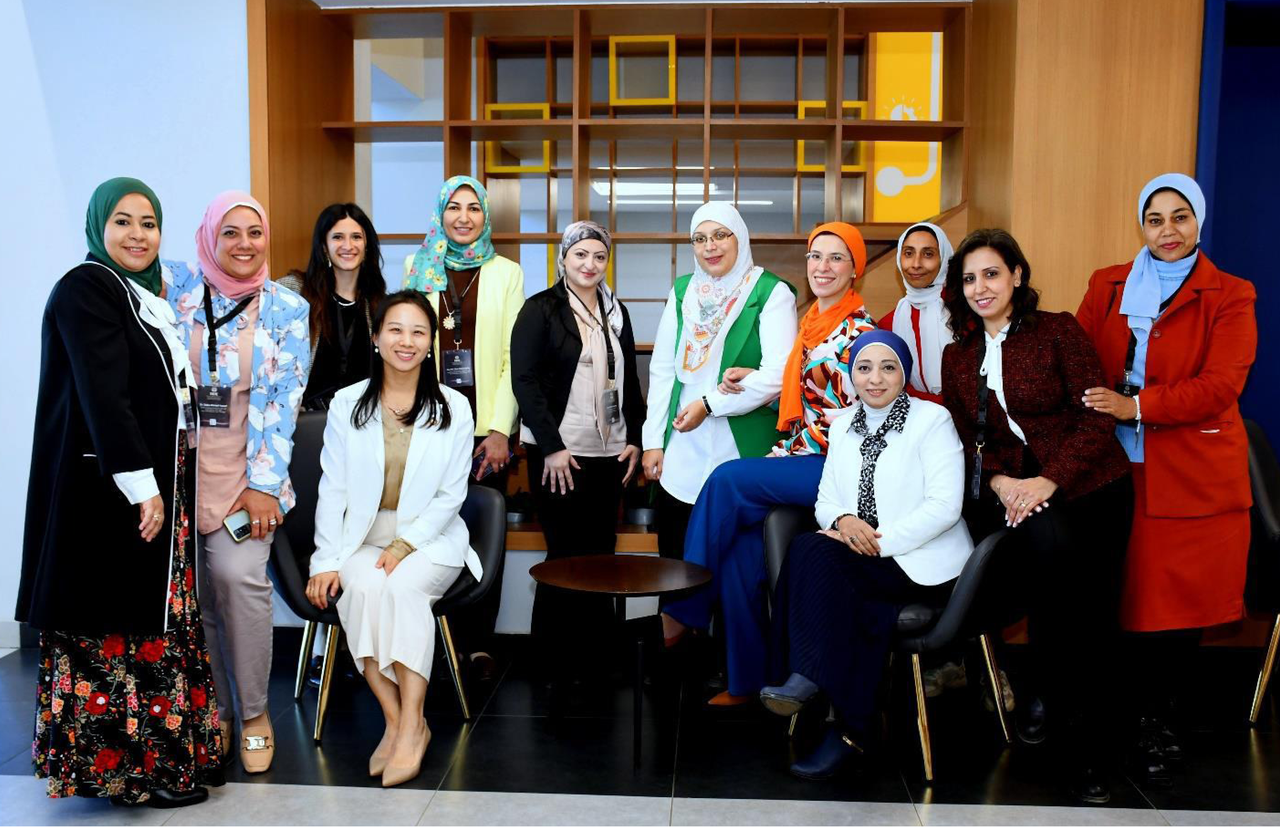
Global Women's Empowerment Practices Under the IIOE Network Through the global network of IIOE, the "Women Leading Change in Africa" project is empowering women comprehensively with a forward-looking vision, helping them achieve high-quality employment and career advancement in a dynamic labor market. As a model of the project's implementation in North Africa, the National School of Business and Management of Marrakech (ENCG Marrakech) at Cadi Ayyad University (UCA) in Morocco will host a special International Women's Day event themed "W4I: Women For Impact" on Wednesday, March 11, 2026. The seminar closely aligns with the core proposition of "Women's Empowerment and Its Impact on Moroccan Society," bringing together multiple national-level functional institutions, including the National Agency for the Promotion of Employment and Competencies (ANAPEC), to jointly explore effective pathways for promoting female employment. By organically integrating "Leadership, Empowerment, and Entrepreneurship," the project not only equips women with professional strategies to tackle workplace challenges but also identifies and dismantles structural challenges hindering women's career development through interactive formats like workshops and data analysis. This empowerment model, deeply integrating public resources with academic research, effectively strengthens women's professional competitiveness in the digital age, ensuring they can drive the transformation and prosperity of African society not just as participants, but as leaders. In Central and East Asia, under the promotion of current Chair Aidana Shilibekova, the Kazakhstan National Center for Professional Development "Orleu" fully utilized IIOE course resources to launch bilingual AI literacy training, resulting in 324,000 teachers registering nationwide, of which 252,000 successfully obtained national certification. Given that female teachers account for the vast majority (over 80%) of basic education in Kazakhstan, this training of 324,000 teachers is effectively a massive female digital empowerment movement. The IIOE Kyrgyzstan National Centre launched the "Violence-Free Digital Space" initiative, specifically targeting female teachers in remote areas with digital literacy and safety governance training. Meanwhile, the IIOE Mongolia National Centre established "Women in STEM" scholarships, aiming to eliminate gender stereotypes in science and engineering and strengthen women's professional performance in STEM fields through digital tools. Practices in Southeast Asia similarly demonstrate the crucial role of women in the digital transformation of higher education. The Institute of Technology of Cambodia (ITC) highlighted "Women in ICT" during its Girls in ICT Day 2025 event, setting a goal to ensure at least 50% female participation. Concurrently, ITC and the Cambodian Cyber University Network (CCUN) are utilizing digital collaborative networks to deeply enhance the professional competitiveness of female educators in higher education management and policy governance. The Indonesia Cyber Education Institute (ICE-I) has built a national-level micro-credential ecosystem, providing female teachers and students with micro-credential courses in AI basics and data analysis, helping them achieve academic and career leaps in the digital workplace. In Malaysia, through the systematic implementation of agricultural tech education, "Smart Agriculture Digital Platform Application" training is being conducted for rural female smallholder farmers, effectively ensuring their core participation in agricultural modernization and technology application. These multilateral collaborations spanning the globe not only precisely respond to the equity demands of the digital age but also forge practical new pathways for realizing gender equality in global higher education. Female officials from the Indonesian government visiting the Indonesia Cyber Education Institute (ICE-I) on Batik Day (Source: ICE Institute)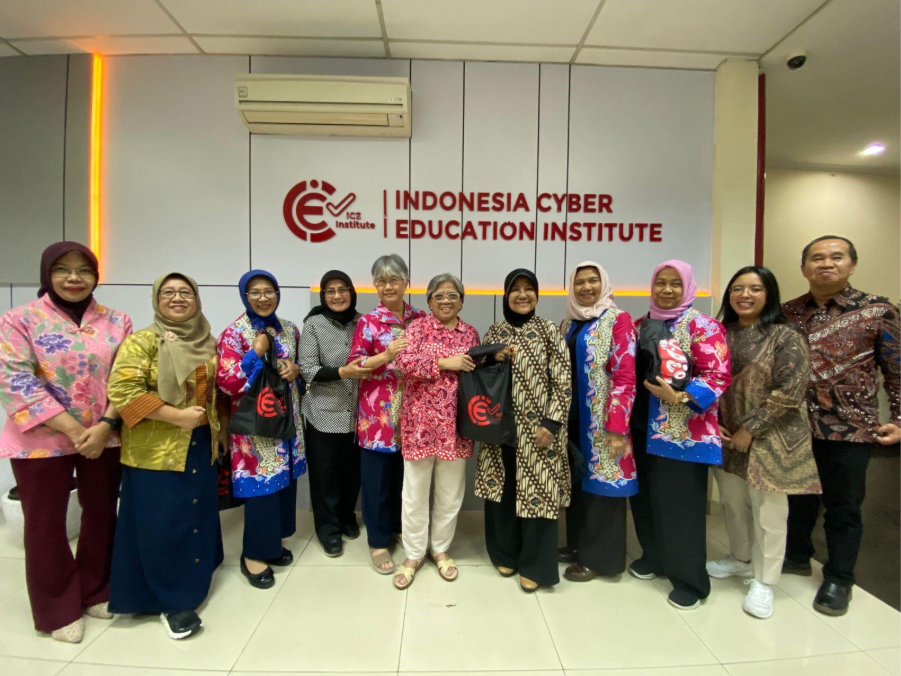
IIOE: Building a Globally Gender-Inclusive Digital Ecosystem Expanding from the African perspective to the global stage, the IIOE platform has become a vital hub for empowering female higher education personnel in developing countries. Latest data reveals that of the platform's 24,361 total users, approximately one-third are women; meanwhile, in IIOE micro-credential training, female learners account for 48%, reflecting their strong endogenous motivation to pursue professional digital competency certification. To specifically address gender-related policy challenges, UNESCO-ICHEI launched the micro-credential course AI, Gender, and Public Policies, developed by Professor Fatima Roumate. The French version is now online. This course delves into cutting-edge issues such as how AI can serve as a protective shield against gender violence and elevate women's status in political participation and diplomatic decision-making. Through multilingual localized resources and expert support, IIOE is helping female educators in Africa and worldwide transition from mere "users" of technology to "leaders" of higher education transformation in the intelligent era. IOE Micro-credential Course: "AI, Gender, and Public Policies"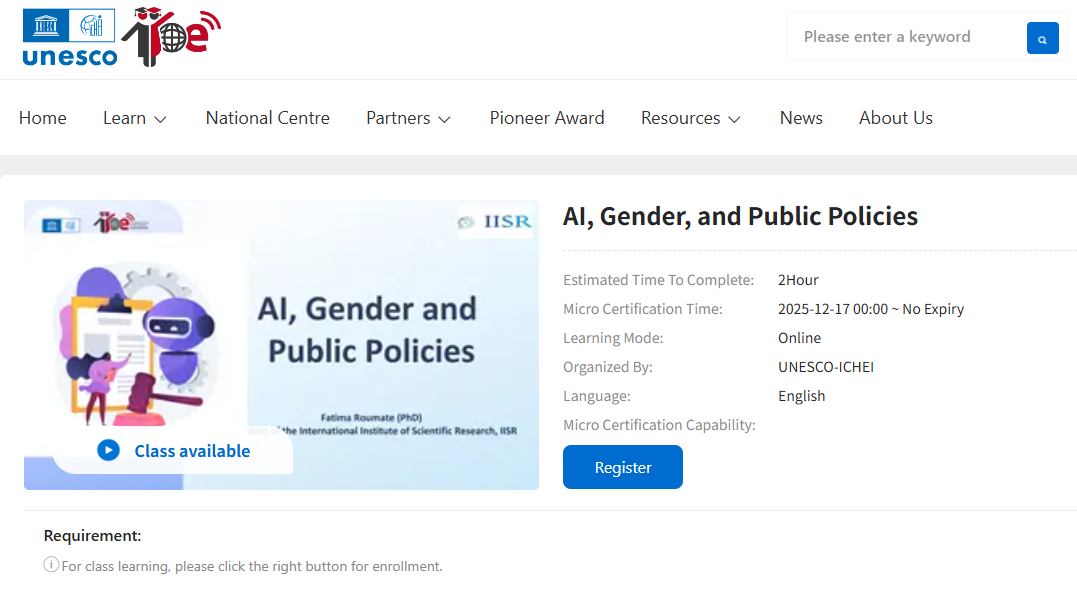
Conclusion
References:
[1] UN Women (2026). International Women's Day 2026 Theme Announced.
[2] GOV.UK (2026). AI Skills for Life and Work Summary Report.